
Arctic Council Nations Navigate Geopolitical Tensions Amid Ocean Resource Competition
- Barbara Wilson

- May 3
- 9 min read
The Arctic Council, designed as the premier forum for circumpolar cooperation, finds itself in a precarious geopolitical position in 2026. Two years after Finland and Sweden's NATO accession, the region faces heightened military postures and renewed resource competition, all while the Council's political functions remain largely suspended. International contractors and export managers eyeing opportunities in the Arctic must contend with a complex mosaic of national defense strategies, evolving international law interpretations, and limited multilateral engagement, making regional intelligence from platforms like TendersGo more critical than ever for identifying viable cross-border projects amidst the geopolitical chill.
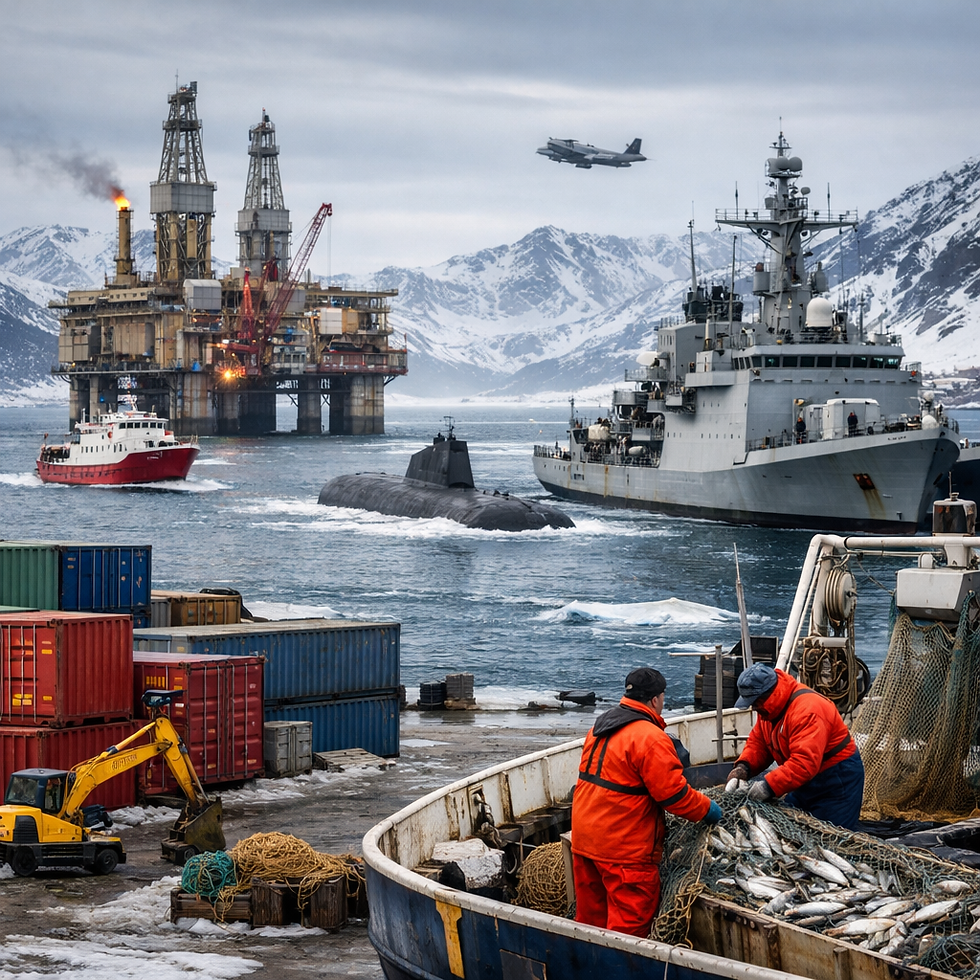
The core challenge stems from Russia's 2022 invasion of Ukraine, which led to the pausing of the Council's political-level operations. While scientific and Working Group meetings have cautiously resumed, often virtually, the Senior Arctic Officials Chair navigates a delicate balance to facilitate dialogue among all eight member states and the Indigenous Permanent Participants. This situation forces Western Arctic nations—the United States, Canada, Denmark/Greenland, Norway, Iceland, Finland, and Sweden—to simultaneously isolate Russia through sanctions and NATO expansion, while maintaining a minimal level of engagement on pressing circumpolar environmental and social issues. The November 2025 US National Security Strategy, which signaled potential de-escalation pathways, offers a glimmer of hope for future diplomatic thawing, but concrete actions remain elusive in early 2026.
Arctic Geopolitical Tensions and Regional Defense Postures in 2026
The military landscape across the Arctic has undergone a dramatic transformation since 2022, notably with Finland and Sweden abandoning decades of neutrality to join NATO in 2023 and 2024, respectively. This strategic shift has prompted all eight Arctic Council nations to draft and release updated Arctic Strategies for 2026, each emphasizing enhanced defense capabilities and maritime security. Russia, for its part, has aggressively remilitarized its Arctic territories under its "Bastion" initiative. This program has seen the construction of over 400 new military facilities and the rebuilding of dozens of Soviet-era sites along more than 50% of its Arctic Ocean coastline. These actions are clearly designed to assert Moscow's dominance and deter any perceived NATO encroachment.
The Western response has been equally robust. Norway, a long-standing NATO member with extensive Arctic borders, continues to lead large-scale exercises like Cold Response, which routinely involves over 25,000 personnel from multiple allied nations. These exercises are not merely symbolic; they test interoperability and readiness in extreme Arctic conditions. The heightened military presence across the region now includes sophisticated Russian nuclear and air defense systems, mirrored by expanded Western surveillance capabilities. For international suppliers of defense technology, surveillance equipment, and logistics support, these national Arctic strategies represent a significant, albeit sensitive, procurement opportunity. While specific tender details for 2026 remain under wraps, the strategic intent is clear: nations are investing heavily in their Arctic defense infrastructure. Companies specializing in cold-weather engineering, advanced radar systems, and secure communication technologies should monitor defense procurement portals for emerging requirements from Ottawa, Washington, Copenhagen, Oslo, Reykjavik, Helsinki, and Stockholm, alongside general alerts on TendersGo for these specific countries.
A particularly challenging dynamic has emerged from the United States under a second Trump administration, which intensified its threats to acquire Greenland in early 2026. These repeated overtures directly conflict with Danish sovereignty and the principles of self-determination for Greenlanders, causing significant friction within the transatlantic alliance. European nations view these moves as a dangerous overreach of national security interests, further complicating the already strained geopolitical environment. This specific tension has, for instance, led to increased EU scrutiny of US military presence in the North Atlantic, potentially impacting future joint procurements or infrastructure projects in the region. The procurement implications here are less about direct tenders and more about the political risk assessment for any long-term investment or project in Greenland or the broader Danish realm, requiring careful analysis of diplomatic signals.
Arctic Ocean Resources Competition and International Maritime Law
The accelerating melt of Arctic sea ice continues to reveal vast untapped resources and open new shipping lanes, intensifying competition and challenging existing international legal frameworks. Russia's aggressive claims over the Northern Sea Route (NSR), which it considers internal waters, directly parallel Canada's long-standing assertion of sovereignty over the Northwest Passage. The US, along with many other maritime nations, views both routes as international straits, subject to transit passage rights. This fundamental disagreement creates persistent legal uncertainty for international shipping and resource extraction projects.
Beyond transit routes, the scramble for hydrocarbon and mineral resources is palpable. While no specific trade volumes or project budgets for 2026 have been reported, the strategic importance of these resources cannot be overstated. Russia, capitalising on the Council's paralysis since 2022, has deepened its "no limits" partnership with China. This bilateral alliance allows Moscow to secure much-needed investment and technological expertise for its Arctic resource development, effectively circumventing Western sanctions and expanding Beijing's influence in the region. This partnership focuses on energy projects, particularly liquefied natural gas (LNG) and oil, and the development of port infrastructure along the NSR, creating opportunities for specialized engineering and construction firms willing to operate under these geopolitical conditions.
Further west, specific flashpoints include activity around Svalbard, where Norway's sovereignty is recognized, but the 1920 Svalbard Treaty grants signatory nations equal rights to commercial activities. Russia, a signatory, has consistently challenged Norway's interpretation of its Fisheries Protection Zone around the archipelago, leading to ongoing diplomatic and maritime tensions. These disputes, while not immediately translating into open tenders, create a volatile environment for fishing companies, energy explorers, and infrastructure developers. The absence of a fully functional Arctic Council has created governance gaps, allowing alternative frameworks and bilateral agreements to emerge, often favoring actors willing to navigate complex political risks. For companies tracking these developments, monitoring country-specific tender portals on TendersGo for Norway, Russia, and even EU member states can provide early indicators of resource-related procurement, particularly in sectors like maritime research, environmental monitoring, or port services.
Denmark's 2026 Arctic Council Chairship and Indigenous Focus
Denmark assumes the Chairship of the Arctic Council in 2026, inheriting a deeply fractured institution. Copenhagen's stated priorities emphasize resilience, human and social issues, environmental protection, and inclusive dialogue, aiming to keep the core work of the Council alive despite the geopolitical headwinds. Crucially, no large-scale diplomatic meetings are planned, with the focus instead shifting to virtual Working Group progress. This pragmatic approach acknowledges the current limitations, prioritizing the continuity of essential scientific and social initiatives over high-level political posturing.
A central tenet of the Danish Chairship is facilitating the voices of the Indigenous Permanent Participants. These groups, representing the diverse Indigenous peoples of the Arctic, remain actively engaged through the Senior Arctic Officials facilitation process. Their focus on human and social issues continues unabated, with all Indigenous voices prioritized in virtual formats. While geopolitical rupture limits broader cross-border collaboration, the emphasis on Indigenous self-determination and well-being presents opportunities for organizations specializing in social development, community infrastructure, and cultural preservation projects. These might not be traditional multi-million dollar infrastructure tenders, but rather smaller, community-led initiatives focused on health, education, and sustainable livelihoods, often funded through national grants or specific development programs. Identifying these opportunities requires granular searching, potentially using CPV codes related to social services or community development on TendersGo for countries like Canada, Denmark/Greenland, Norway, and the US.
The Danish Chairship will also have to contend with the ongoing US pressure regarding Greenland. The persistent threats of acquisition by the second Trump administration, intensified in early 2026, directly undermine Denmark's efforts to foster stability and cooperation. This external pressure complicates internal Danish-Greenlandic relations and adds another layer of complexity to regional governance. While no specific cross-border Indigenous projects or funding amounts have been announced for 2026, the continued engagement of Permanent Participants signals a critical, albeit limited, area for international collaboration focused on the needs of Arctic residents. Development consultants and NGOs with expertise in Indigenous engagement and sustainable development should monitor announcements from the Arctic Council Working Groups and national Indigenous organizations for potential partnerships or project funding calls.
Maritime Security Cooperation Challenges and Environmental Action
Maritime security in the Arctic remains a critical and increasingly complex domain. While all eight Arctic nations are drafting or releasing their 2026 Arctic Strategies with defense at their core, genuine multilateral cooperation on maritime security is hampered by geopolitical tensions. The long-standing disagreement between Canada and the US over the legal status of the Northwest Passage persists, now intensified by the implications of melting ice, which makes the route more navigable. Similarly, Norway and Russia continue to navigate sensitive maritime zone disputes, particularly concerning fishing rights and resource exploration in the Barents Sea.
Despite these bilateral frictions, the broader trend is one of increased national surveillance and military presence. Western nations are expanding their capabilities to monitor Russian naval and air activities, while Russia continues to invest in its Northern Fleet and Arctic air defense systems. This creates a demand for advanced maritime surveillance technologies, ice-capable patrol vessels, and specialized search and rescue equipment. However, the lack of new 2026 cooperation agreements or specific tenders for joint maritime security initiatives highlights the current limitations on multilateral action. Procurement in this sector is predominantly national, driven by individual defense budgets and strategic priorities.
The environmental dimension of maritime security, particularly concerning climate change, has also been sidelined. Since 2022, the boycott of meetings on climate and oil drilling has effectively stalled collective action on these urgent issues. This means that opportunities for international suppliers in areas like Arctic environmental monitoring, oil spill response technologies, or sustainable shipping solutions, which would typically be driven by multilateral initiatives, are currently limited. There are no identified procurement RFPs, prequalification notices, or development bank projects (e.g., from the World Bank or Asian Development Bank) specifically for these environmental aspects in 2026. This forces companies focused on these sectors to seek out national-level programs or bilateral agreements, often in collaboration with research institutions, rather than large-scale international tenders. Utilizing TendersGo's sector-specific filters for environmental services or maritime equipment can help identify these more localized opportunities.
Procurement and Policy Context Implications for International Suppliers
The policy drivers shaping the Arctic in 2026 are complex: Russia is isolated but remains partially engaged in scientific and Indigenous-focused Council work; all eight nations are recalibrating their defense postures with new Arctic strategies; and the US's renewed interest in Greenland is causing significant diplomatic strain. For international contractors, export managers, and business development teams, this environment presents a unique set of challenges and opportunities.
The most immediate observation for 2026 is the reported absence of open tenders, RFPs, or prequalification requirements directly from the Arctic Council or large-scale multilateral maritime/resource projects. This reflects the institutional strain and the shift away from grand, unified regional initiatives. Instead, procurement is largely driven by individual national defense budgets and bilateral agreements. Companies must therefore focus their efforts on monitoring national procurement portals and defense industry publications of the Arctic Council member states. For instance, defense contractors should track announcements from the Norwegian Defence Materiel Agency (NDMA), Public Services and Procurement Canada, or the US Department of Defense for Arctic-specific requirements. Similarly, infrastructure developers should watch for port expansion projects along Russia's Northern Sea Route, often tied to Chinese investment, even if these are not publicly tendered through international platforms.
While trade data, development bank loans, and ministerial agreements with concrete USD figures or P-numbers for late 2025/2026 are scarce, the underlying economic drivers remain powerful. The pursuit of energy resources, the strategic importance of shipping routes, and the need for enhanced defense capabilities continue to fuel national investments. This necessitates a more proactive and targeted approach to business development. Companies should leverage advanced tender search engines like TendersGo's advanced search capabilities, using specific CPV or NAICS codes related to cold-weather construction, maritime engineering, surveillance systems, or environmental technologies, and setting up unlimited alerts for individual Arctic nations.
Navigating a Fragmented Arctic Procurement Landscape
The fragmented nature of Arctic governance and procurement in 2026 means that success for international firms will depend on their ability to adapt to a highly politicized and nationally driven environment. The shift from multilateral cooperation to bilateral agreements, particularly between Russia and China, creates distinct market segments. Western companies will find opportunities primarily in the defense and infrastructure sectors of NATO members and their allies, often requiring adherence to strict export controls and sanctions regimes. Projects related to climate adaptation, scientific research, and Indigenous community development may still emerge through national funding bodies or specialized grants, though these are typically smaller in scale and more localized.
The lack of a unified Arctic procurement strategy also means that companies must conduct thorough due diligence on geopolitical risks associated with any project. The US's Greenland ambitions, for example, introduce an unpredictable element into the Danish-Greenlandic economic landscape. Similarly, tensions between Norway and Russia over maritime zones can impact investment decisions for offshore energy or fishing operations. Firms must be prepared for potential shifts in policy, export restrictions, and diplomatic pressures. Utilizing TendersGo's AI-powered insights can offer valuable context by summarizing complex tender documents and identifying key stakeholders, even in a fragmented procurement environment.
Ultimately, the Arctic in 2026 remains a region of immense strategic and economic importance, but one where the traditional multilateral avenues for procurement are largely constrained. International businesses must navigate this landscape with a clear understanding of national priorities, geopolitical fault lines, and the specific, often localized, opportunities that arise from individual state actions rather than collective regional initiatives. The emphasis remains on detailed market intelligence and targeted engagement with national agencies and specific industry players across the circumpolar north.





