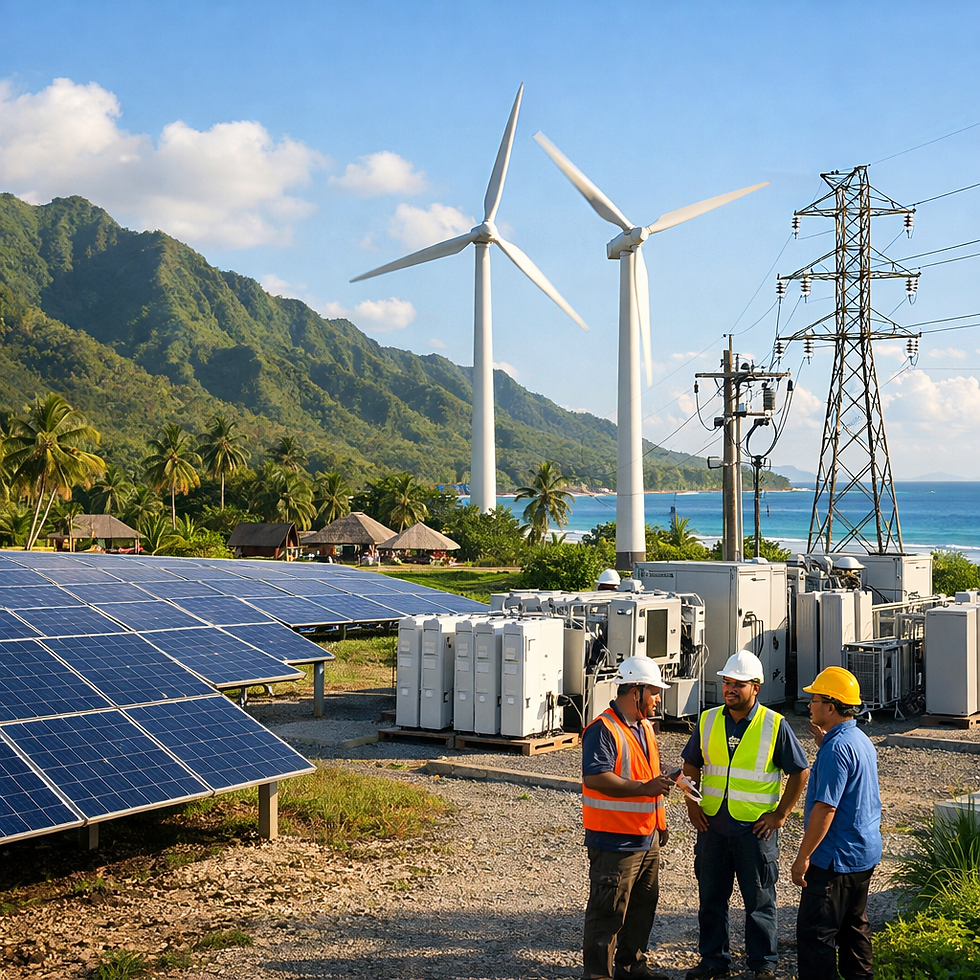
Asia’s Power Grid Push Gains Pace as Cross-Border Projects Scale Up

The Asian power grid landscape is undergoing a significant transformation in 2026, driven by a concerted push from multilateral development banks and regional blocs to scale up cross-border electricity trade. This initiative, spearheaded by the Asian Development Bank (ADB), aims to foster greater energy security, integrate substantial renewable energy capacity, and unlock new economic opportunities across the continent. International contractors, export managers, and development consultants tracking infrastructure procurement should note the clear signals emanating from this accelerated regional integration.

The ADB’s newly launched Pan-Asia Power Grid Initiative, announced in May 2026, sets an ambitious target of mobilizing approximately $50 billion for cross-border power infrastructure by 2035. This substantial financial commitment underscores the strategic importance placed on regional grid connectivity. The initiative projects the integration of about 20 GW of renewable energy across borders, the construction of 22,000 circuit-kilometers of new transmission lines, and improvements in energy access for 200 million people, alongside the creation of 840,000 jobs by 2035. These figures represent a significant pipeline for international suppliers of power generation, transmission, and distribution equipment, as well as engineering and construction services. TendersGo users can set up specific alerts for these infrastructure categories, filtering by region and project type, to capture emerging opportunities in real-time at app.tendersgo.com .
Pan-Asian Connectivity: ADB's Strategic Push and ASEAN's Operational Models
The ADB's Pan-Asia Power Grid Initiative is not operating in a vacuum; it builds upon and complements existing regional efforts, particularly within the Association of Southeast Asian Nations (ASEAN). An ADB-linked financing effort specifically for the ASEAN Power Grid (APG) highlights an existing interconnection capacity of about 7.7 GW across 9 of 18 priority projects. The plan aims to more than double this capacity to 17.6 GW by 2040, necessitating an estimated $16 billion in investment for these 18 interconnection projects on an NPV basis. This investment is poised to generate significant procurement activity across Southeast Asia, from system studies and equipment supply to construction and operational services for these vital links.
One of the clearest operational models for this cross-border trade is the Lao PDR–Thailand–Malaysia–Singapore Power Integration Project (LTMS-PIP). In January 2026, Électricité Du Laos (EDL), Electricity Generating Authority of Thailand (EGAT), and Tenaga Nasional Berhad (TNB) signed an Energy Wheeling Agreement Phase 2. This agreement expanded the total traded electricity capacity from 100 MW to up to 200 MW, with additional power supplied from Malaysia to Singapore over a two-year contract period. Lao PDR now exports up to 100 MW to Singapore via Thailand and Malaysia, demonstrating the viability of multi-country power wheeling arrangements. This expansion of LTMS-PIP 2.0 exemplifies the shift from bilateral power swaps to more complex subregional trading mechanisms, offering a blueprint for future projects across Asia. The success of this corridor provides a tangible example for other nations considering similar arrangements, and the procurement associated with its expansion, such as grid upgrades and control systems, signals future demand.
Emerging Corridors and Cross-Border Energy Trade Expansion
Beyond the operational LTMS-PIP, several other significant cross-border corridors are under active discussion or in early-stage planning, indicating a robust pipeline of future projects. A priority corridor involves a Vietnam-to-Singapore route, potentially via Malaysia, with a focus on integrating offshore wind supplies. While still in early discussion stages in 2026, this concept signals a growing interest in leveraging diverse renewable energy sources across the region and the need for long-distance subsea and terrestrial transmission infrastructure. Such projects would require advanced HVDC technology, specialized cabling, and significant marine construction expertise, opening up specialized procurement opportunities.
Further east, the Brunei–Indonesia–Malaysia–Philippines (BIMP) interconnection is being treated as another major future ASEAN power trade corridor. This initiative, still in its nascent planning phases, aims to connect island nations and regions within the BIMP-EAGA subregion, fostering greater energy security and economic integration. The Philippines, during its 2026 ASEAN chairmanship, is expected to prioritize APG integration, including discussions on grid interconnection with Malaysia. These discussions will likely lead to feasibility studies, environmental impact assessments, and preliminary engineering designs, all of which represent early-stage procurement opportunities for consulting firms and technical experts. International firms specializing in grid planning, regulatory frameworks, and project financing should monitor these developments closely, using platforms like continents.tendersgo.com/asia to track regional policy and project updates.
Institutional Frameworks and Funding Mechanisms Driving Procurement
The institutional architecture supporting this regional power grid expansion is multifaceted, involving a blend of multilateral development banks, national utilities, and regional coordination bodies. The ADB stands as the primary multilateral sponsor and convenor of the 2026 push, with its Pan-Asia Power Grid Initiative designed to collaborate with governments, utilities, the private sector, and other development partners. This collaborative approach means procurement will likely be channeled through various entities, requiring a granular understanding of individual country procurement rules and multilateral bank guidelines.
For Southeast Asia specifically, the ADB has launched a dedicated Regional Connectivity Fund, supported by contributions from Australia, Canada, Germany, the United Kingdom, and the European Union. This fund provides a clear financing mechanism for projects within the ASEAN Power Grid framework. In Singapore, the Energy Market Authority (EMA) renewed its Memorandum of Understanding with ADB in May 2026 to further support cross-border energy projects in ASEAN, including exports to Singapore. These agreements directly influence tender specifications and funding availability for projects aimed at enhancing Singapore's energy resilience and renewable energy imports.
The operational entities like Électricité Du Laos (EDL), Electricity Generating Authority of Thailand (EGAT), and Tenaga Nasional Berhad (TNB) are key players in the LTMS corridor. Their involvement indicates that national utility companies will be primary contracting authorities for specific project components within their respective territories. The ASEAN Power Grid (APG) and the ASEAN Centre for Energy (ACE) provide the overarching coordination layer, supported by ESCAP and other development partners. These bodies are instrumental in regulatory harmonization, system studies, and pilot project development, generating tenders for consultancy services, technical assistance, and capacity building programs. Firms specializing in energy policy, market design, and regulatory frameworks will find opportunities in these areas.
Policy and Strategic Alignment for Future Projects
The ADB’s 2026 platform is structured around four pillars: infrastructure development, regulatory harmonization, innovative financing, and institutional readiness. This holistic approach signals that procurement opportunities will extend beyond physical infrastructure to include significant demand for services related to policy development, legal frameworks, and financial structuring. Regulatory harmonization, in particular, is critical for enabling seamless cross-border electricity trade, and tenders for legal and consulting services in this domain are anticipated.
ASEAN discussions in 2026 emphasize that the APG is moving beyond simple bilateral power swaps toward subregional power-trading pilots and complex wheeling arrangements. This evolution necessitates advanced grid management systems, sophisticated dispatch coordination platforms, and robust cybersecurity solutions for interconnected grids. The APG is increasingly framed as both an energy-security and an energy-transition instrument. This dual mandate means projects will prioritize both reliability and the integration of renewable energy sources, driving demand for smart grid technologies, energy storage solutions, and advanced forecasting tools. Firms with expertise in these areas should pay close attention to the evolving requirements detailed in APG strategy documents.
The broader context of ADB’s Asia connectivity program also aligns with other regional frameworks, such as the South Asia Economic Cooperation (SASEC), BIMSTEC grid interconnection planning, and the Central Asia Regional Economic Cooperation Energy Strategy 2030. This confluence of regional initiatives suggests a continent-wide push for grid integration, creating a vast market for international suppliers. Companies can use TendersGo's advanced search filters to monitor tenders across multiple regional blocs and countries simultaneously, ensuring they capture all relevant opportunities as they emerge on www.tendersgo.com/tenders-by-country .
Procurement Implications and Project Pipeline Details
The immediate and high-probability procurement activity will center on transmission lines, substations, grid digitalization, energy storage solutions, and interconnection upgrades under the ADB’s Pan-Asia Power Grid platform. The target of 22,000 circuit-kilometers of transmission lines by 2035 translates into substantial demand for cables, towers, insulators, and associated civil works. Substation projects will require transformers, switchgear, control systems, and protection equipment. Grid digitalization efforts will drive tenders for SCADA systems, advanced metering infrastructure (AMI), and smart grid software platforms.
For existing ASEAN corridors like LTMS, the focus extends beyond new-build generation assets to encompass wheeling agreements, interconnector operation services, detailed system studies, and dispatch coordination systems. The 9 existing interconnections within ASEAN, which represent 7.7 GW of capacity, are identified as needing upgrades. This indicates significant tenders for grid reinforcement, control system modernization, and possibly new converter stations. These projects often involve specialized engineering firms and equipment manufacturers with proven experience in high-voltage direct current (HVDC) and flexible alternating current transmission systems (FACTS) technologies.
The planned expansion of ASEAN trade corridors also signals future requirements for cross-border tariff arrangements, transmission-access rules, and regulatory harmonization workstreams. This will generate opportunities for legal consultants, energy economists, and regulatory advisors. The estimated $16 billion required for ASEAN’s 18 interconnection projects by 2040, alongside ADB's $50 billion mobilization target, underscores the scale of investment and the corresponding procurement volume. International firms should prepare for a sustained period of tender activity in these areas, leveraging platforms like search.tendersgo.com to identify specific opportunities by CPV codes or keywords.
Country-Specific Relevance and Market Screening Data
Understanding the role of individual countries within this regional framework is crucial for effective market screening. Lao PDR serves as a key export origin for the operational LTMS corridor, indicating continued investment in its generation capacity and domestic transmission infrastructure to support exports. Thailand and Malaysia are critical transit and system-integration markets, acting as electricity wheelers. This means their national grids will require continuous upgrades and sophisticated control systems to manage the increased flow of cross-border electricity. Singapore remains an anchor demand market and a policy driver for renewable energy imports, offering opportunities for suppliers of clean energy technologies and associated grid infrastructure.
Indonesia, Brunei, and the Philippines are central to the emerging BIMP interconnection concept. As this concept moves from planning to implementation, these nations will see substantial investment in their domestic grids and new interconnections. Vietnam is also emerging as a candidate exporter in next-wave corridor discussions, particularly for offshore wind, signaling future demand for offshore wind farm development, subsea cables, and associated grid integration components. These country-specific roles provide a geographical focus for business development teams targeting specific segments of the power sector.
The numbers most likely to matter for tender and market screening include the ADB’s $50 billion mobilization target by 2035 and the 20 GW target for renewable energy integration. The 22,000 circuit-kilometers of targeted transmission buildout represents a tangible metric for equipment suppliers and construction firms. Within ASEAN, the $16 billion estimated NPV requirement for 18 interconnection projects by 2040, aiming to increase interconnection capacity from 7.7 GW to 17.6 GW, provides a clear financial scale for regional opportunities. The 100 MW / 200 MW expansion of LTMS-PIP 2.0 serves as a concrete example of immediate operational growth. Companies should monitor these metrics closely to assess the market size and trajectory of procurement within Asia’s expanding power grid. TendersGo provides granular data and alerts for specific sectors and countries, enabling businesses to pinpoint these opportunities effectively at sectors.tendersgo.com .