Australasia’s $200B ASEAN trade shift goes from talks to projects

The Australasian trade pivot towards Southeast Asia, long a subject of policy papers and diplomatic communiqués, has solidified into a tangible pipeline of funded projects and procurement opportunities in 2026. Australia and New Zealand are actively translating their strategic alignment with ASEAN into concrete economic cooperation, particularly across energy transition, critical minerals, and digital trade facilitation. This shift, driven by diversification imperatives and supply chain resilience, is generating significant cross-border activity for international contractors, export managers, and business development teams tracking Australasia ASEAN trade and investment projects 2026.

Australia’s commitment is underscored by substantial financial allocations, including the AUD 204 million Aus4ASEAN Futures Initiative and an additional AUD 500 million earmarked for ASEAN-Australia Special Summit initiatives. New Zealand, in concert with Australia, is channeling its support through programs like the AANZFTA Implementation Support Program, funded by a portion of their combined $53.3 million RT4D (Regional Trade for Development) program. These financial commitments are not merely aspirational; they are now funding specific projects and capacity-building efforts across the ten ASEAN member states, signaling a robust and sustained engagement from Canberra and Wellington.
Operationalizing ASEAN-Australasia Economic Integration
The upgraded ASEAN-Australia-New Zealand Free Trade Area (AANZFTA) architecture is the foundational framework for much of this activity. The Second Protocol is already in force, and significantly, the AANZFTA Implementation Support Program Economic Cooperation Work Plan received approval in 2026. This work plan outlines specific areas for technical assistance, capacity building, and regulatory harmonization, creating immediate avenues for international consulting firms and specialized service providers. Australia’s Department of Foreign Affairs and Trade (DFAT) is central to driving this implementation, managing the Aus4ASEAN Futures program, which currently supports over 35 projects. These projects span diverse areas, from assisting with the ASEAN Strategy on Carbon Neutrality to developing a Digital Economy Framework Agreement and launching an ASEAN Tariff Finder.
The ASEAN Tariff Finder, for instance, represents a direct procurement opportunity for digital solution providers specializing in trade data aggregation and user interface development. Such tools are critical for small and medium-sized enterprises (SMEs) in both Australasia and ASEAN to effectively utilize the tariff reductions and trade facilitation measures enshrined in AANZFTA. Similarly, the Digital Economy Framework Agreement work will require expertise in regulatory harmonization, cybersecurity frameworks, and digital infrastructure planning. International legal firms, IT consultants, and digital policy advisors should monitor DFAT’s procurement notices closely for these types of engagements. The Australian and New Zealand leaders’ meeting in June 2026 explicitly linked deepened regional economic ties to diversification and expanded economic cooperation, reinforcing the long-term strategic intent behind these initiatives.
Regional Energy Security and Supply Chains: A Collaborative Framework
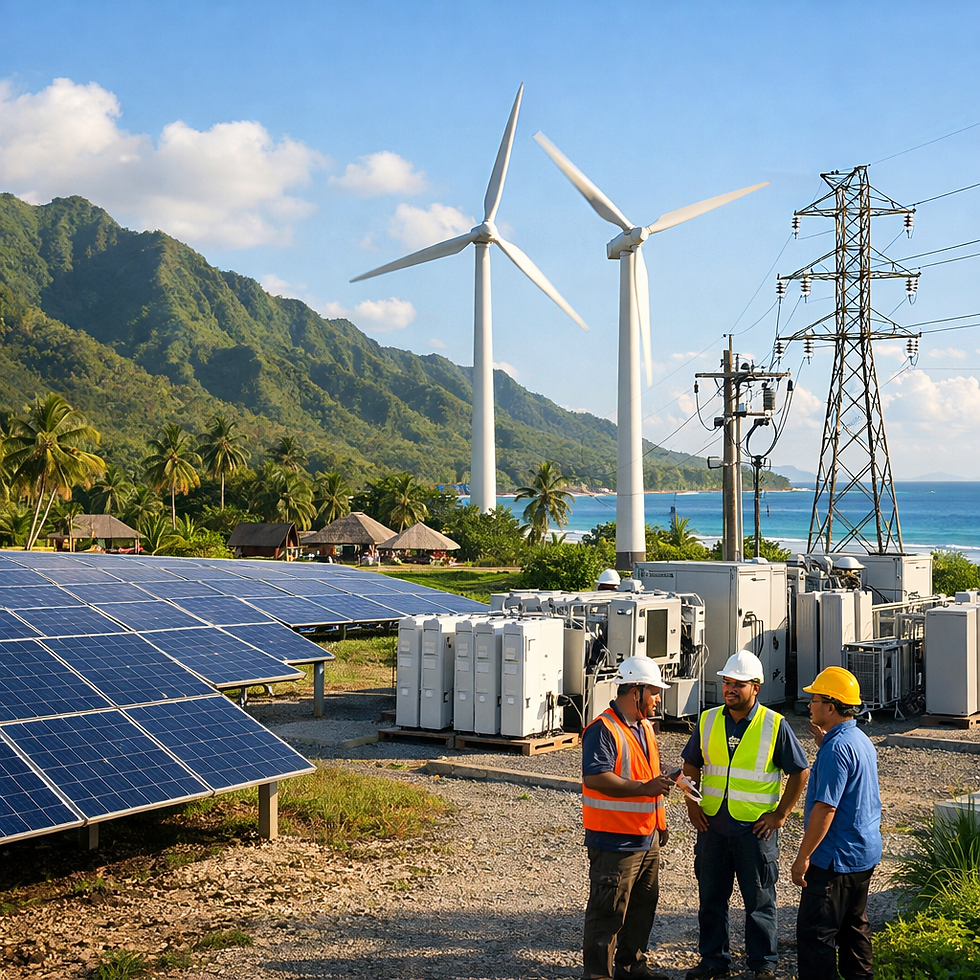
Energy security and the transition to cleaner energy sources are prominent features of Australasia’s engagement with ASEAN, moving beyond traditional LNG exports to a more integrated approach. Australia’s 2026 Southeast Asia development cooperation portfolio includes a dedicated $6.9 million for ASEAN-Australia Energy Cooperation, specifically targeting support for the ASEAN Centre for Energy and the ASEAN Power Grid. This funding is designed to bolster regional coordination in power sector planning and infrastructure development, aligning with ASEAN’s 2045 energy roadmap and the shared future statement issued in September 2026.
The ASEAN Power Grid initiative, a long-term vision for interconnected electricity grids across Southeast Asia, presents substantial opportunities for power engineering consultants, grid infrastructure developers, and renewable energy project developers. While direct construction tenders for large-scale interconnections may still be some years away, the current funding supports feasibility studies, technical standards harmonization, and capacity building for energy regulators and utilities. Companies specializing in smart grid technologies, energy storage solutions, and renewable energy integration will find a receptive audience within the ASEAN Centre for Energy and national energy ministries. Furthermore, Australia and Japan’s 2026 energy-security agreements include critical minerals support, reflecting a broader Indo-Pacific energy-security supply chain strategy that extends beyond isolated LNG projects. This strategic alignment opens doors for joint ventures and partnerships between Australasian, Japanese, and ASEAN firms in renewable energy component manufacturing and supply.
Australasia Critical Minerals and LNG Partnerships Driving Projects
The critical minerals sector stands out as the most project-heavy pipeline emerging from Australasia’s engagement, with significant financial backing from both Australia and key strategic partners like the United States and Japan. The Australian Critical Minerals Prospectus, released in March 2026 by Austrade, details 78 projects across 60 unique companies. These projects span the entire value chain, from exploration and mining to processing and refining of essential minerals such as lithium, rare earths, nickel, graphite, and gallium.
The financial commitments are substantial. Australia and the United States announced support for critical minerals and rare earth supply chains totaling $1.4 billion from Australia and $2.2 billion from the U.S. This funding targets specific projects including Alcoa Gallium Recovery, Arafura’s Nolans, Tronox Rare Earths Refinery, Ardea Kalgoorlie Nickel, Astron’s Donald, Graphinex’s Esmerelda Graphite Mine, RZ Resources Copi, La Trobe Magnesium, Northern Minerals Heavy Rare Earths, and Global Advanced Metals. Reuters reported that the two countries agreed to each provide at least $1 billion in investments towards an $8.5 billion pipeline of priority critical mineral projects over the following six months. This indicates a rapid acceleration of investment and project development. For international suppliers, these projects signal procurement needs across mining equipment, processing technology, environmental consulting, and specialized engineering services. Companies can track these developments and potential tender opportunities by utilizing platforms like TendersGo , which provides alerts for specific CPV codes related to critical mineral extraction and processing across Australasia and its partner nations.
Beyond the U.S. partnership, Australia’s Japan-linked package provides up to A$1.3 billion through the Critical Minerals Facility and Export Finance Australia. This funding supports projects capable of supplying Japan with gallium, nickel, graphite, rare earths, and fluorite. This dual-track financing strategy, involving both the U.S. and Japan, underscores the strategic importance of these minerals for global supply chains and energy transition. For companies in ASEAN, this presents opportunities for off-take agreements, joint ventures in downstream processing, and participation in the logistics networks required to transport these vital resources.
Trade Diversification and Digital Transformation Initiatives
Beyond the resource sector, Australasia’s trade diversification efforts are also generating significant activity in digital transformation and trade facilitation across ASEAN. The Aus4ASEAN Futures Initiative is funding projects like the Digital Economy Framework Agreement, which aims to harmonize digital trade rules and foster a more integrated regional digital economy. This involves technical assistance for regulatory bodies, development of secure data exchange protocols, and capacity building for digital literacy.
The RT4D program, with its AUD 46 million contribution tied to ASEAN economic cooperation, further supports these efforts. This program focuses on reducing trade barriers, enhancing customs efficiency, and promoting e-commerce. Procurement opportunities here are likely to include services for customs modernization, implementation of single window systems, development of trade portal functionalities, and training programs for trade officials. The establishment of the Trade Diversification Network in 2026, tasked with delivering the Accessing New Markets Initiative, directly signals practical support for exporters seeking ASEAN-linked opportunities. This will involve market research services, export readiness programs, and business matching platforms, all of which represent potential contracts for specialized consulting firms and service providers.
Procurement Implications and Project Pipeline for International Suppliers
The 78-project critical minerals pipeline profiled in the Australian Critical Minerals Prospectus suggests immediate procurement activity around feasibility studies, processing plant design, off-take agreements, and project financing. While greenfield construction may follow, the initial phases are heavy on specialized engineering, environmental impact assessments, and financial advisory services. Companies looking for these specific opportunities can set up detailed alerts on TendersGo , filtering by country (Australia, USA, Japan, relevant ASEAN nations) and sector to capture relevant tender notices from government agencies and private project developers.
The AANZFTA and RT4D work programs imply a sustained demand for technical assistance, customs facilitation software, tariff analysis tools, and digital trade enablement services. These are typically smaller, but more numerous, contracts ideal for specialized consulting firms and IT solution providers. The ASEAN Centre for Energy and the ASEAN Power Grid initiatives will also require technical studies, grid modeling software, and capacity-building workshops. International energy consultants and technology providers should monitor the procurement pages of these ASEAN bodies and their national counterparts.
Tracking the Funding and Implementation Agencies
The Australian Department of Foreign Affairs and Trade (DFAT) is the primary agency driving Australia’s ASEAN policy, managing development cooperation, and overseeing AANZFTA implementation. Austrade is publishing critical minerals prospectuses and trade diversification content, acting as a key information source for market opportunities. Export Finance Australia (EFA) is a major financial channel for critical minerals support, offering loans, guarantees, and insurance. Companies seeking financing or looking to partner on EFA-backed projects should engage directly with the agency.
The ASEAN Centre for Energy and the ASEAN Power Grid are direct beneficiaries of Australian energy cooperation funding, and their project pipelines will be critical for energy sector participants. For New Zealand, similar initiatives are channeled through the Ministry of Foreign Affairs and Trade. For international contractors and suppliers, understanding the roles of these agencies is crucial for identifying funding sources and potential procurement avenues. Regular monitoring of their official announcements and tender portals, often aggregated by services like TendersGo , will provide early intelligence on upcoming projects and collaboration opportunities.
The shift from policy to tangible projects in Australasia’s ASEAN engagement is undeniable in 2026. The substantial financial commitments, detailed program work plans, and identified project pipelines across critical minerals, energy security, and digital trade facilitation present a dynamic landscape for international business. Companies that can offer specialized services in these areas, from technical consulting and engineering to digital solutions and project financing, are well-positioned to capitalize on this deepening regional economic integration. The focus on resilience and diversification ensures that these initiatives are not merely short-term injections but foundational elements of a long-term strategic partnership, offering sustained opportunities for years to come.