BIMSTEC Launches First Joint Maritime Security Exercise in Nov 2026

The Bay of Bengal Initiative for Multi-Sectoral Technical and Economic Cooperation (BIMSTEC) is set to host its inaugural BIMSTEC Joint Maritime Security Exercise in November 2026, marking a significant escalation in regional defense cooperation and maritime security efforts across the Bay of Bengal. This exercise, involving the navies and coast guards of all seven member states—India, Bangladesh, Bhutan, Myanmar, Nepal, Sri Lanka, and Thailand—underscores a concerted push for operational synchronization in one of the world's most critical maritime corridors. The strategic imperative behind this joint maneuver stems from a confluence of economic interests, growing transnational threats, and the region's geopolitical significance, linking South Asia with Southeast Asia.

The operational modalities for this groundbreaking exercise were meticulously finalized during the 4th BIMSTEC Expert Group Meeting on Maritime Security Cooperation, convened in New Delhi, India, on November 24–25, 2025. Chaired by Vice Admiral Biswajit Dasgupta (Retd.), India's National Maritime Security Coordinator, and guided by Ambassador Indra Mani Pandey, Secretary General of BIMSTEC, these discussions laid the groundwork for establishing common coordination procedures among maritime law enforcement agencies. The overarching goal remains the validation of interaction protocols necessary for effective security operations across the Bay of Bengal, a body of water that supports a regional economy with a combined GDP of USD 4.9 trillion and trade volumes reaching USD 1.88 trillion in 2023.
Deepening Maritime Domain Awareness and Regional Security Frameworks
The forthcoming joint maritime security exercise is not an isolated event but rather the culmination of several strategic agreements and frameworks designed to bolster regional maritime domain awareness and counter illicit activities. A critical component is the ongoing operationalization of a White Shipping Agreement, which facilitates the exchange of non-military commercial vessel data among member states. This data sharing initiative is vital for enhancing transparency and improving the collective ability to identify suspicious activities within the Bay of Bengal, directly supporting the security objectives of the November 2026 exercise.
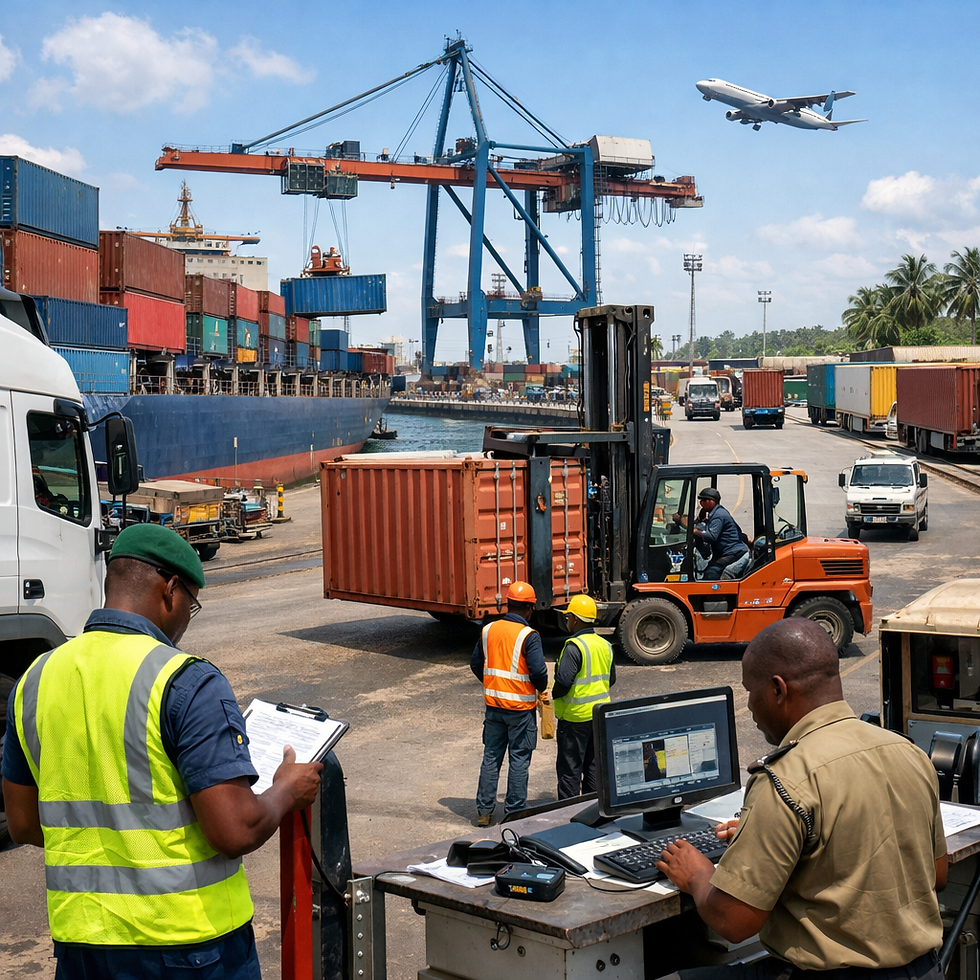
Further strengthening the legal and operational backbone for this enhanced cooperation is the BIMSTEC Agreement on Maritime Transport Cooperation, signed during the Bangkok Summit in late 2024 or early 2025. This agreement serves as the "force" driving regional maritime collaboration by streamlining port procedures, improving shipping links, and modernizing port facilities across member nations. For instance, the modernization of Chittagong Port in Bangladesh or the development of deep-sea ports in Sri Lanka and Thailand will directly benefit from these harmonized protocols, allowing for more efficient movement of goods and better oversight of maritime traffic, which is crucial for a region accounting for 3% of global trade.
In parallel, the Memorandum of Understanding (MoU) signed on April 8, 2025, between BIMSTEC and the United Nations Office on Drugs and Crime (UNODC) directly addresses the transnational organized crime and drug trafficking challenges prevalent in the region. This MoU provides a framework for intelligence sharing and coordinated interdiction efforts, which will be put to the test during the November 2026 exercise. The focus on Humanitarian Assistance and Disaster Relief (HADR) and anti-piracy/counter-terrorism drills during the exercise builds upon initiatives like the BIMSTEC Disaster Management Centre of Excellence, proposed by India, demonstrating a multi-faceted approach to regional security challenges.
Procurement Opportunities and International Support for BIMSTEC Initiatives
The scale and ambition of BIMSTEC’s expanding security and infrastructure agenda translate into substantial procurement opportunities for international contractors and suppliers. The National Security Council Secretariat (NSCS) of India, which hosted the preparatory expert group meetings, is a key implementing agency. All procurement for BIMSTEC-related infrastructure, security equipment, and services is exclusively managed via TendersGo , offering a centralized platform for businesses to track and bid on these opportunities. This includes everything from advanced maritime surveillance systems and patrol vessels to disaster response equipment and training services.
International donor support also plays a significant role. The EU-funded CRIMARIO project, for example, has already supported related tabletop exercises, such as the one involving the Royal Thai Navy and PTT Public Company Limited in January 2026. Such backing indicates a broader international commitment to enhancing maritime security capacity in the Bay of Bengal. Companies specializing in maritime technology, training, and logistical support should closely monitor TendersGo for upcoming solicitations related to these initiatives. The platform, with its coverage of 220+ countries and 145 languages, along with features like AI summaries and unlimited alerts, provides a critical advantage for identifying and responding to these cross-border opportunities.
Beyond the maritime sector, the concurrent advancement of the BIMSTEC Electricity Grid Interconnection project represents another significant area for international engagement. While specific grid interconnection dates for 2026 are still being finalized, the establishment of the BIMSTEC Energy Centre in Bengaluru, India, which commenced operations in 2025, signifies a long-term commitment to regional energy security. This will undoubtedly lead to tenders for power generation, transmission, and distribution infrastructure, requiring expertise in areas such as renewable energy, smart grid technologies, and cross-border energy trading platforms. Potential suppliers can set up specific alerts on TendersGo using CPV or NAICS codes relevant to energy infrastructure to ensure they do not miss these opportunities across countries like Bangladesh, Myanmar, and Thailand.
Expanding Regional Cooperation: From Security to Human Capital and Trade
BIMSTEC's strategic vision extends beyond maritime security and energy, encompassing human capital development and economic integration. The launch of the BODHI Initiative in 2026 is a prime example, aiming to train 300 young individuals annually from BIMSTEC countries in India for human resource infrastructure development. This program will foster skills in critical sectors, enhancing regional expertise and promoting cross-border collaboration in education and vocational training. Educational institutions, training providers, and consulting firms should anticipate future calls for proposals related to curriculum development, faculty exchange programs, and scholarship management under this initiative.
The proposed establishment of the BIMSTEC Chamber of Commerce is another crucial step towards fostering greater collaboration among the business communities of member states. This body will serve as a platform for dialogue, advocacy, and business matching, aiming to reduce trade barriers and facilitate investment across the region. With a combined population of 1.8 billion, representing 22% of the global population, and a significant economic footprint, the potential for intra-BIMSTEC trade and investment is immense. Companies looking to expand their presence in this dynamic region should engage with this new chamber once operational, leveraging its network for market entry and partnership development.
While the November 2026 maritime exercise is distinct from previous military engagements, it builds on a foundation of regional defense cooperation. For instance, the Joint Military Exercise (MILEX-18) conducted in September 2018 in Pune demonstrated a commitment to land-based military coordination. The current maritime focus reflects an understanding that secure sea lanes are paramount for economic prosperity and regional stability. This shift implies increased procurement of naval assets, coast guard equipment, and specialized training programs for maritime personnel. Businesses specializing in defense and security solutions should prioritize monitoring tender announcements from India, Bangladesh, Sri Lanka, and Thailand, particularly for naval and coast guard modernization programs, using TendersGo's advanced search capabilities .
The Bay of Bengal: A Nexus of Geopolitics and Economic Opportunity
The Bay of Bengal region, uniquely positioned as the only organization linking South and Southeast Asia, is increasingly recognized for its geopolitical and economic importance. The 2026 joint maritime exercise is a clear signal of BIMSTEC's collective intent to safeguard this vital waterway, which is crucial for the flow of goods and energy. The region's substantial economic output and trade volume underscore the necessity of secure maritime routes for continued growth and development. Disruptions due to piracy, illicit trafficking, or natural disasters have far-reaching economic consequences, making robust maritime security a shared priority.
The upcoming BIMSTEC Athletics Meet, to be hosted by India in 2026, and the inaugural BIMSTEC Games scheduled for 2027, coinciding with BIMSTEC’s 30th anniversary, further highlight the organization's commitment to fostering people-to-people connections and cultural exchange. While seemingly separate from security concerns, these events contribute to regional cohesion and mutual understanding, which are foundational for sustained cooperation on more complex issues like defense and trade. The procurement needs for such large-scale events, ranging from infrastructure development to logistical support and event management, will present additional opportunities for international firms, which can be tracked via TendersGo's sector-specific alerts .
The strategic deployment of resources and the harmonization of policies across diverse nations like India, with its vast coastline, and landlocked Nepal and Bhutan, which rely on transit through other member states, illustrate the complex interdependencies within BIMSTEC. The November 2026 exercise will serve as a critical test of these interdependencies, validating the efficacy of established protocols and identifying areas for further enhancement. The success of this exercise will not only bolster regional security but also build confidence for deeper economic integration and collaborative development across the Bay of Bengal littoral states, reinforcing the region's position as a dynamic hub for international trade and investment. International firms seeking to expand their footprint in this burgeoning region should regularly consult TendersGo for real-time tender updates across all these sectors, from infrastructure and energy to defense and human resource development, utilizing its comprehensive features to gain a competitive edge.