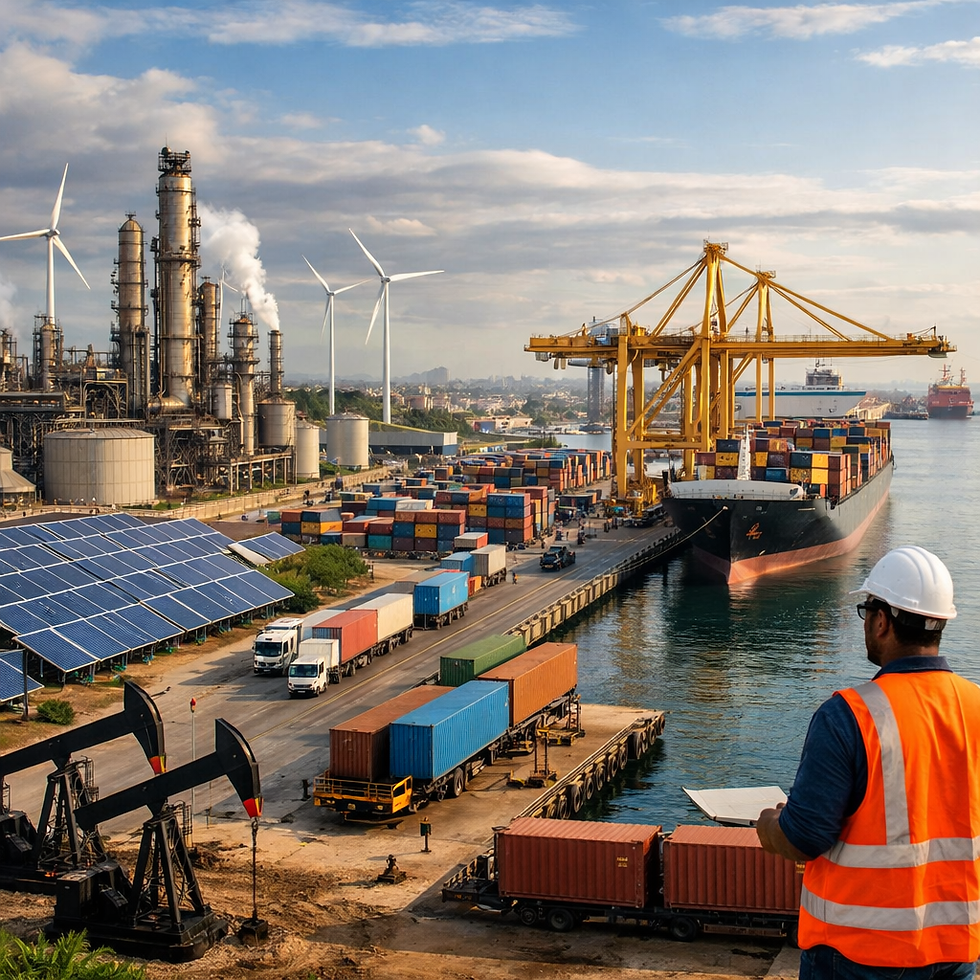
Caucasus Connectivity Push Turns Transport and Energy into Growth Engines

The South Caucasus region is experiencing an unprecedented surge in infrastructure investment, driven by a concerted push for enhanced transport and energy connectivity. The European Union's ambitious Global Gateway initiative, coupled with significant national commitments, is channeling billions into projects designed to re-establish the region as a critical transit hub between Europe, the Caspian, and Central Asia. This strategic reorientation, particularly visible in 2026, presents a wealth of opportunities for international contractors, suppliers, and consultants tracking Caucasus transport and energy connectivity, as well as South Caucasus regional infrastructure investment.
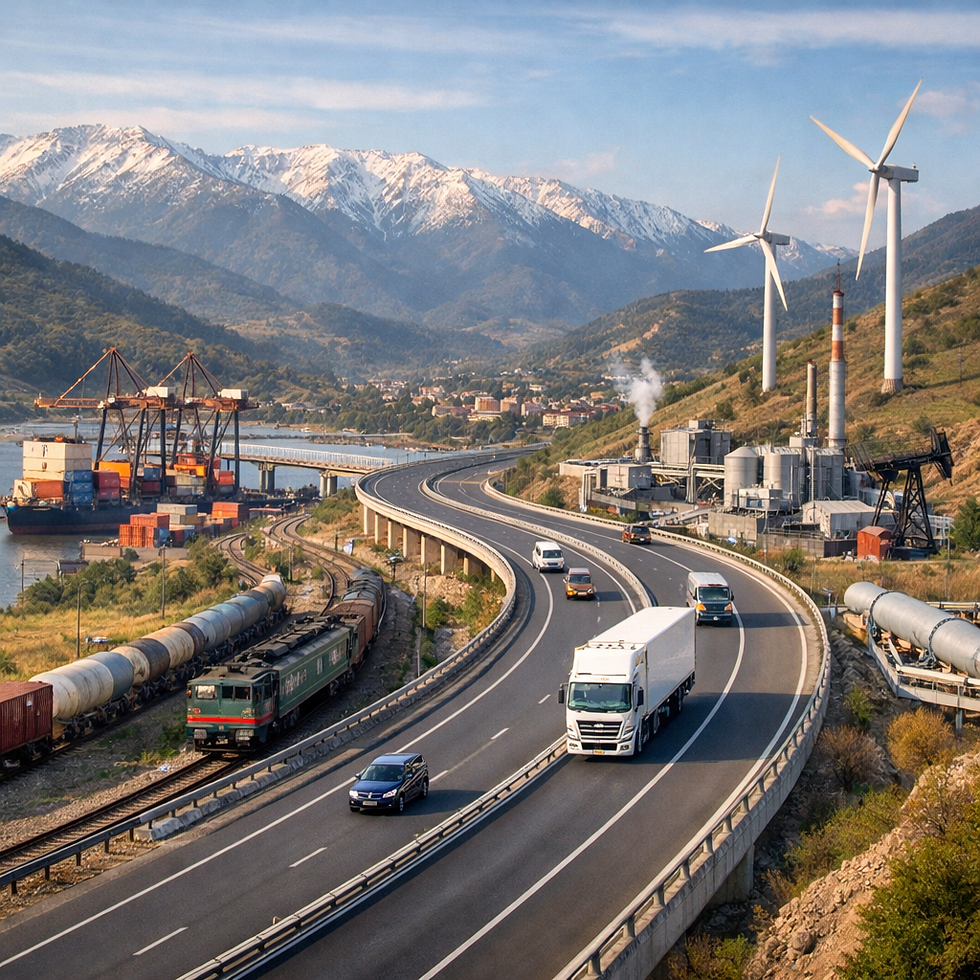
In July 2026, the European Union formally announced a substantial commitment: up to €200 million in Global Gateway grants specifically earmarked for connectivity projects across the South Caucasus. This initial grant funding is projected to mobilize a remarkable €2 billion in public and private investment, signaling a long-term strategic interest. The EU's package explicitly targets transport, energy, and digital infrastructure, underscoring a holistic approach to regional integration. This includes the establishment of a High-Level EU–Azerbaijan Connectivity Dialogue to ensure strategic coordination, with specific projects like the Nakhchivan railway and the expansion of the Port of Baku identified as potential early priorities. These explicit mentions offer clear signposts for firms monitoring upcoming procurement cycles across Azerbaijan, Armenia, and Georgia.
Transforming Regional Transport and Logistics Corridors
Georgia continues to solidify its role as the linchpin for East-West connectivity across the South Caucasus. The country's commitment to infrastructure development is profound, with Tbilisi mobilizing an estimated $7 billion for transport and logistics infrastructure by 2032. This substantial investment underpins the ongoing upgrades to the Middle Corridor and reinforces Georgia's critical transit function. Projects range from port expansions to road and rail network modernizations, all designed to enhance the flow of goods and services through the country. International engineering firms and construction consortia should pay close attention to the Georgian Ministry of Economy and Sustainable Development's project pipeline for detailed tender announcements.
A key component of the broader South Caucasus connectivity agenda involves the development of a rail link through Nakhchivan. The EU's July 2026 communication specifically highlighted the Nakhchivan railway project as a strategic investment aimed at improving mobility and fostering economic flows across Azerbaijan and the wider region. This initiative is not merely about local transport; it serves a larger policy objective of connecting Europe, the Caspian Sea, and Central Asia via the South Caucasus. For companies specializing in railway construction, signaling systems, and rolling stock, this project represents a significant tendering opportunity, likely phased over several years. Firms can set up customized alerts on app.tendersgo.com using CPV codes for railway infrastructure to capture these specific opportunities.
The Port of Baku, in Azerbaijan, is another critical node within this expanding network. As a primary gateway to the Caspian Sea, its development is crucial for increasing cargo throughput and facilitating multimodal transport along the Middle Corridor. Upgrades to port facilities, including container terminals, warehousing, and logistics parks, will be necessary to handle projected increases in trade volumes. These projects typically involve international competitive bidding for civil works, equipment supply, and operational management. The Azerbaijani government's State Maritime Agency and Baku International Sea Trade Port CJSC are key agencies to watch for procurement notices related to these expansions.
Forging New Energy Links: The Black Sea Cable and Caspian Green Corridor
The flagship energy project driving regional integration is the ambitious Black Sea subsea electricity cable. First conceived on December 17, 2022, by Azerbaijan, Georgia, Romania, and Hungary, this initiative envisions a 1,000-MW cable spanning 1,195 km under the Black Sea. This project is positioned as the backbone for a broader Caspian-to-Europe green energy corridor, designed to export renewable electricity from Azerbaijan and Georgia into the European grid via Romania and Hungary. A technical update in July 2026 confirmed that feasibility work was approved, propelling the initiative into its next implementation phase, with delivery targeted for the early 2030s. This advancement signifies a critical juncture for suppliers of subsea cables, converter stations, and grid integration technologies.
The European Union has elevated the Black Sea cable to "Project of Mutual Interest" (PMI) status in 2026, a designation that significantly streamlines access to EU planning, permitting, and financing mechanisms. This EU endorsement enhances the project's bankability and ensures a structured procurement pathway, which is beneficial for international bidders. Feasibility estimates from 2026 by CESI indicate the first phase is technically viable at a cost ranging from €3.1 billion to €3.7 billion. The implementing company, GECO, has already been established in Bucharest by the four participating nations (Azerbaijan, Georgia, Romania, and Hungary) to oversee the research and design phases. This organizational structure provides a clear point of contact for firms seeking to engage with the project.
The Black Sea cable is not merely an electricity conduit. A 2026 analysis of South Caucasus connectivity suggests that the broader architecture also envisions fiber-optic and natural-gas pipeline links, potentially extending across Armenia into Nakhchivan. This multi-utility approach indicates a comprehensive strategy for regional integration, offering additional opportunities for telecommunications infrastructure providers and pipeline construction specialists. The integration of Armenia into these broader utility networks, particularly given the €20 million EU peace-fostering initiative for communities in Armenia and Azerbaijan, highlights the dual objective of infrastructure development and regional stability.
Strategic Repositioning: The Caspian Green Energy Corridor
The South Caucasus is being strategically repositioned as an export platform for green power, with the Caspian Green Energy Corridor aiming to integrate 5 GW of renewable capacity by 2030 across the Caspian-Black Sea corridor. This ambitious target will necessitate substantial investment in solar, wind, and hydropower generation facilities across Azerbaijan and Georgia, creating a sustained demand for renewable energy equipment, project development services, and grid connection infrastructure. The corridor is directly linked to European energy security objectives, providing a diversified source of renewable electricity for the European grid.
Turkey's emerging interest in joining the Caspian Sea–Black Sea–Europe energy corridor further regionalizes this initiative. A 2026 report indicates Turkey's intention to participate, which could expand the scope of the project and introduce new transit or market opportunities. This broadening participation underscores the strategic importance of the corridor beyond the original four signatories. For energy sector firms, this signals potential for increased project scale and complexity, requiring robust international consortiums for bidding on major components. Organizations monitoring tenders in the energy sector can utilize TendersGo's energy sector intelligence to track developments and procurement announcements.
The Azerbaijani government, through its Ministry of Energy and state-owned power utility Azerenerji, will be central to the development of renewable energy generation capacity. Similarly, Georgia's Ministry of Economy and Sustainable Development and the Georgian State Electrosystem will play crucial roles in facilitating generation and transmission infrastructure. These national agencies will be key points of contact for companies looking to participate in the development of the Caspian Green Energy Corridor.
Procurement Implications and Tender Trajectories
Near-term procurement related to the Black Sea cable is concentrated in feasibility studies, detailed design, and preparatory contracts rather than full construction awards. With the project having advanced into technical development, the next wave of tenders will likely cover critical areas such as route surveys, marine environmental impact assessments, engineering design for converter stations, and detailed grid-connection studies in both the South Caucasus and Europe. Companies specializing in these niche areas should actively monitor announcements from GECO and the respective national energy ministries.
The EU's July 2026 package, explicitly linking funding to transport, energy, and digital connectivity, signals forthcoming project-preparation financing across the region. This means international contractors should anticipate early-stage tenders for feasibility studies, advisory services, and preconstruction work tied to the Nakhchivan railway, the Port of Baku upgrades, and various cross-border connectivity initiatives. These initial contracts are often crucial entry points for companies seeking to position themselves for larger construction phases. TendersGo provides comprehensive coverage of procurement notices across 220+ countries, making it an essential tool for identifying these early-stage opportunities, especially in markets like Azerbaijan , Georgia , and Armenia .
The Black Sea cable's Project of Mutual Interest (PMI) status is a significant indicator for potential bidders. Projects with EU priority status typically benefit from more structured, transparent, and bankable procurement processes. This trajectory increases the likelihood of multi-stage tendering, often requiring consortium-based bids for major components, allowing larger international players to partner with local expertise. Such projects also tend to attract financing from European development banks, which often impose strict procurement guidelines that favor fair and open competition.
Country-Specific Opportunities and Strategic Focus
Azerbaijan stands as a central player in this regional transformation. It is positioned as a primary exporter within the green energy corridor and a direct beneficiary of the EU connectivity package. The country is a likely origin point for renewable electricity generation, and its strategic location makes it a key rail and logistics node through Baku and Nakhchivan. Companies interested in renewable energy project development, port infrastructure, and railway construction should focus on Azerbaijani government agencies and state-owned enterprises. The Ministry of Digital Development and Transport will be a key agency for transport-related tenders.
Georgia serves as the indispensable transit bridge between the Caspian and the Black Sea. With its stated $7 billion infrastructure push by 2032, Georgia represents a major investment market for transport and logistics. This includes port developments, road and rail network upgrades, and the crucial cable landing infrastructure for the Black Sea project. International firms should monitor tenders from the Georgian Ministry of Regional Development and Infrastructure, the Georgian Railway, and the Black Sea ports authorities for a steady stream of procurement opportunities.
Armenia , while not an initial signatory to the Black Sea cable, is included in the EU's broader peace and connectivity package. This suggests potential for cross-border transport and utility linkages, particularly those tied to the Armenia–Azerbaijan normalization track. Projects involving road infrastructure, utility connections, and potentially new rail segments could emerge, offering opportunities for infrastructure developers and suppliers. The Armenian Ministry of Territorial Administration and Infrastructure would be the relevant government body for these developments.
Romania acts as the EU gateway on the Black Sea side of the cable, serving as a crucial anchor point for integrating the renewable electricity into the European market. This involves significant investment in grid upgrades, converter stations, and transmission lines. Companies specializing in high-voltage direct current (HVDC) technology, grid infrastructure, and energy market integration should target opportunities emanating from Transelectrica, Romania's transmission system operator. Similarly, Hungary is a strategic end-market and political partner in the cable initiative, reflecting its interest in diversified power imports. Hungarian energy companies and grid operators will be involved in the onward transmission and integration of this new power source.
Tracking Key Procurement Signals for TendersGo Users
For international businesses leveraging TendersGo , monitoring the Black Sea cable's next procurement steps is paramount. Key signals will include requests for proposals (RFPs) for route engineering, environmental approvals, converter-station packages, the manufacturing of subsea cables, and marine installation services. These are high-value, specialized contracts that require significant technical expertise and consortium-based approaches.
Furthermore, actively watching for RFPs related to the Nakhchivan rail project and the Baku port expansions will be critical. These are the most concrete transport-related items explicitly flagged in the 2026 EU messaging. TendersGo's advanced search capabilities allow users to set up alerts for specific keywords, CPV codes, and geographic regions, ensuring no relevant tender is missed. The substantial $7 billion by 2032 transport and logistics capital expenditure pipeline in Georgia warrants continuous monitoring, as it promises a steady flow of opportunities across corridor, port, road, rail, and terminal development projects. Finally, tracking the conversion of the EU's €200 million grant envelope into the projected €2 billion in investment is essential. This conversion will trigger additional tenders for project preparation, advisory mandates, and co-financing structures, creating a continuous stream of opportunities for a wide range of service providers.