Central Africa's Regional Integration Push Gains $1.23B Momentum

Central Africa's drive for deeper economic integration is gaining significant financial and strategic traction, propelled by a substantial injection of at least $1.23 billion in African Development Bank (AfDB) funding between 2019 and December 2025. This momentum extends across multimodal transport corridors, energy interconnections, and trade facilitation initiatives, underscoring a concerted regional effort to dismantle long-standing barriers to commerce and connectivity. By July 31, 2026, the AfDB's regional portfolio for Central Africa had expanded to 37 operations, totaling an impressive $1.69 billion, signaling a robust commitment to the region's development agenda. International contractors, export managers, and development consultants tracking opportunities in Central Africa should note the evolving procurement landscape, particularly as new five-year strategies and large-scale corridor programs begin to materialize.

Infrastructure Backbone: Douala–Bangui Corridor Receives $1.12 Billion Boost
The transformation of the critical Douala–Bangui Economic Corridor has received a monumental boost with the World Bank's approval of a $1.12 billion Multiphase Programmatic Approach on June 12, 2026. This initiative directly addresses persistent bottlenecks hindering trade between Cameroon and the Central African Republic, two nations pivotal to regional economic activity. The first phase alone, valued at $525 million, is meticulously allocated across key beneficiaries: Cameroon receives $425 million ($407 million IBRD + $18 million IDA), the Central African Republic secures $90 million IDA funding, and the Central African Economic and Monetary Community (CEMAC) benefits from an additional $10 million via the IDA GROW window. This structured financing mechanism creates a clear procurement pipeline for extensive road rehabilitation, designed to meet climate-resilient standards, alongside the establishment of crucial axle-load control stations. Furthermore, the program will fund the development of logistics hubs and feeder roads, aiming to strengthen value chains and implement essential trade-facilitation reforms, directly tackling issues like high transport costs, excessive checkpoints, and informal payments that have plagued the corridor for years.
This substantial investment aligns directly with the broader CEMAC/ECCAS 2035 vision for seamless movement of goods and people across Central Africa, making it a cornerstone of the region’s integration strategy. The rehabilitation work will require specialized civil engineering firms, while the logistics hubs will demand expertise in supply chain management and infrastructure development. Firms with experience in digital solutions for road safety and transport management will also find opportunities. Tenders related to these components will likely be issued through World Bank procurement channels, which international bidders can monitor via platforms like TendersGo , filtering by country and sector to identify relevant solicitations in Cameroon and the Central African Republic. The long-term nature of this multiphase program suggests a sustained demand for construction, consulting, and technology services over the coming decade.
Regional Integration Strategies and Cross-Border Trade Facilitation 2026-2031
Beyond the Douala–Bangui corridor, the strategic direction for Central Africa's integration is being formalized through a new five-year strategy spanning 2026–2031, currently under preparation by the AfDB and the Economic Community of Central African States (ECCAS). This upcoming strategy outlines two primary objectives: the development of stronger, more resilient regional infrastructure and a deeper focus on human-capital and institutional capacity building for regional economic communities. This signifies a broadening of the integration agenda beyond physical infrastructure to encompass the 'soft' infrastructure necessary for sustained economic growth and cooperation. The explicit mention of human capital and institutional capacity implies future tenders for training programs, technical assistance, and consultancy services aimed at strengthening governance and operational efficiency within regional bodies and member states. These initiatives often attract development bank consultants and specialized advisory firms.
Complementing these high-level strategic developments, the UN Economic Commission for Africa (ECA) launched a targeted regional project on June 12, 2026, aimed at removing barriers faced by women-owned informal cross-border businesses. This critical initiative, running through 2029, focuses on Cameroon, the Central African Republic, Gabon, and Equatorial Guinea, recognizing the vital role these informal traders play in regional economies. The project's deliverables include a comprehensive regional study on informal cross-border trade, the creation of a georeferenced database detailing markets, trade routes, and border posts, public-private dialogues to foster collaboration, and the development of national roadmaps for inclusive trade. ECCAS and CEMAC are named as implementation partners, with national focal points to be designated within trade and gender ministries, indicating potential procurement for research services, data collection, GIS mapping, and event management. This initiative provides a different entry point for international firms looking to engage with regional development, particularly those specializing in socio-economic research, digital mapping solutions, and capacity building for small and medium-sized enterprises (SMEs).
Energy Interconnections and Industrial Hubs: New Frontiers for Regional Competitiveness
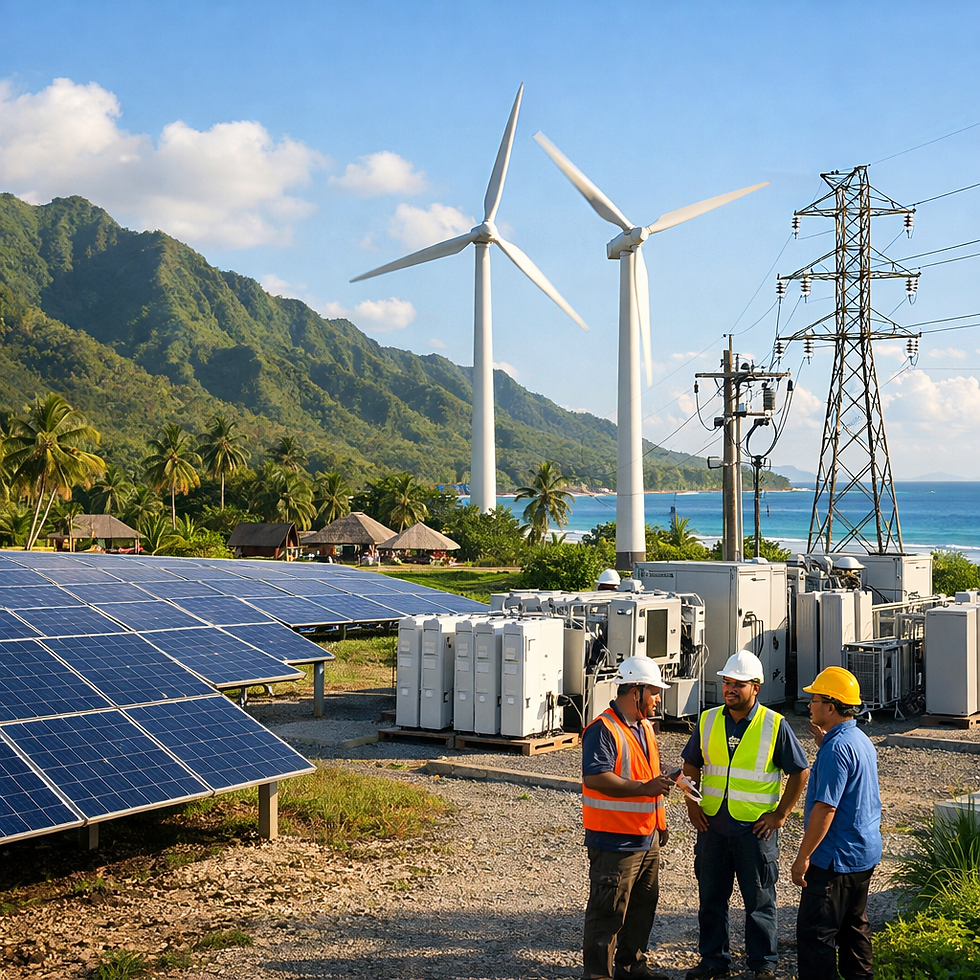
The AfDB's framing of Central Africa's integration push now explicitly includes energy links and industrial hubs as critical tools for regional competitiveness, marking a significant evolution from previous strategies primarily focused on transport. In July 2026, the AfDB and ECCAS solidified this shift by agreeing to establish a joint technical committee tasked with developing projects around multimodal corridors, energy interconnections, and regional industrial processing hubs. This agreement signals a substantial pipeline of future opportunities for companies specializing in energy infrastructure, including power generation, transmission, and distribution projects, as well as those involved in the planning and development of industrial zones. The focus on energy interconnections addresses a fundamental constraint to economic growth across the region, aiming to create a more reliable and affordable power supply through cross-border grids. This will involve large-scale engineering, procurement, and construction (EPC) contracts for power lines, substations, and potentially new generation facilities, attracting major international energy firms.
The emphasis on regional industrial processing hubs suggests a strategic move towards value addition within Central Africa, rather than solely exporting raw materials. These hubs will require significant investment in specialized infrastructure, including utilities, transport links, and potentially shared facilities for processing and logistics. This creates opportunities for urban planners, industrial park developers, and firms specializing in sector-specific infrastructure, such as agro-processing or mineral beneficiation. The joint technical committee will be instrumental in identifying priority projects and structuring financing, providing a key point of contact for firms seeking to understand the emerging project landscape. Tenders arising from these initiatives will likely involve feasibility studies, master planning, and subsequent construction phases, requiring a diverse range of expertise. Firms can utilize advanced search features on platforms like TendersGo to set up alerts for energy infrastructure and industrial development projects across Central African countries, ensuring they are notified as these opportunities emerge.
Institutional and Policy Coordination for AfCFTA Implementation
The institutional and policy coordination efforts within Central Africa are increasingly aligning with the broader African Continental Free Trade Area (AfCFTA) implementation, as demonstrated by the ECA’s 2026 cross-border trade initiative. This alignment underscores a strategic regional approach to leveraging the AfCFTA framework for deeper economic integration and enhanced intra-African trade. The ECA's planned meeting in Yaoundé from August 4-7, 2026, with National AfCFTA Implementing Committees from the subregion’s eight countries, along with regional institutions, highlights the concerted effort to harmonize policies and regulatory frameworks. Such gatherings are crucial for identifying common challenges and developing coordinated solutions, which often translate into technical assistance and consultancy contracts for international experts in trade policy, customs modernization, and regulatory reform.
The establishment of a joint technical committee between AfDB and ECCAS in July 2026 to develop projects around multimodal corridors, energy interconnections, and regional industrial processing hubs further solidifies this institutional coordination. This committee will play a pivotal role in project identification, preparation, and resource mobilization, acting as a central clearinghouse for regional initiatives. For international development consultants and firms specializing in project preparation and feasibility studies, this committee represents a key entry point for understanding upcoming procurement needs. The emphasis on regional industrial processing hubs, in particular, suggests a long-term vision for creating integrated value chains that transcend national borders, requiring sophisticated planning and implementation support. Government procurement officials within the region are also engaging more frequently with international standards and best practices, presenting opportunities for firms to offer training and capacity-building services in public procurement and contract management.
Procurement Implications and Opportunity Signals for International Suppliers
The multifaceted regional integration push in Central Africa presents distinct procurement implications and opportunity signals for international suppliers across several sectors. The most immediate and substantial opportunity arises from the World Bank's $1.12 billion Douala–Bangui Multiphase Programmatic Approach (MPA). Its initial $525 million phase, targeting Cameroon, the Central African Republic, and CEMAC, is already structured to generate tenders for significant civil engineering works, including road rehabilitation, bridge construction, and the installation of axle-load control stations. Firms specializing in climate-resilient infrastructure will find a strong demand for their expertise. Additionally, the development of logistics hubs and feeder roads will require contractors with experience in complex infrastructure projects, potentially involving earthworks, warehousing, and transportation infrastructure. Digital solutions for road safety, traffic management, and customs clearance will also be sought, creating openings for technology providers. Tenders for these projects will typically follow World Bank procurement guidelines, which are transparent and accessible, offering a level playing field for international bidders. Interested parties should monitor World Bank project portals and utilize platforms like TendersGo to track specific tenders originating from these countries and the CEMAC regional body.
A second, longer-term opportunity stream is emerging from the 2026–2031 ECCAS–AfDB integration strategy. This strategy, with its focus on resilient regional infrastructure, energy interconnections, and industrial hubs, promises a continuous pipeline of project preparation and implementation. This will translate into tenders for feasibility studies, environmental and social impact assessments, engineering design, and eventually, construction and equipment supply across the region. Energy projects, in particular, will require specialized firms in power generation, transmission line construction, and smart grid technologies. The emphasis on industrial hubs will also attract urban planners, industrial park developers, and firms offering specialized equipment for processing and manufacturing. The joint technical committee established by AfDB and ECCAS will be a key entity for identifying and structuring these projects, making it crucial for firms to engage with regional development agencies. Firms should establish alerts on TendersGo using CPV codes relevant to energy, industrial infrastructure, and regional development to capture these upcoming opportunities.
Finally, the 2026–2029 ECA cross-border trade project, while smaller in financial scale, offers real procurement for research, digital tools, training, and border trade support in Cameroon, Central African Republic, Gabon, and Equatorial Guinea. This includes opportunities for consultants to conduct regional studies, develop georeferenced databases of markets and trade routes, and facilitate public-private dialogues. Firms specializing in data analytics, GIS mapping, and capacity building for SMEs and informal traders will find relevant tenders. These projects often involve local partnerships and a nuanced understanding of regional socio-economic dynamics. The national roadmaps for inclusive trade, to be developed as part of this project, will also generate consultancy opportunities for policy formulation and implementation support. For all these opportunities, precise targeting using TendersGo's country and sector filters can provide early insights into upcoming solicitations, allowing firms to prepare competitive bids and forge strategic partnerships within the region.