
ENERTRAG's €1.1B Francophone Energy Push: 2030 Transition Plan

The corridors of the Château de Versailles buzzed with a distinct energy on June 1, 2026, during the 9th Choose France summit. Amidst pledges from global investors, German energy developer ENERTRAG unveiled a substantial €1.1 billion commitment aimed squarely at bolstering France’s renewable energy infrastructure and energy sovereignty by 2030. This investment, targeting 1 gigawatt (GW) of installed renewable and battery storage capacity, signals a significant uptick in Francophone renewable energy investment 2026 and opens a new chapter for international contractors and suppliers monitoring the region for opportunities in wind and battery storage projects.
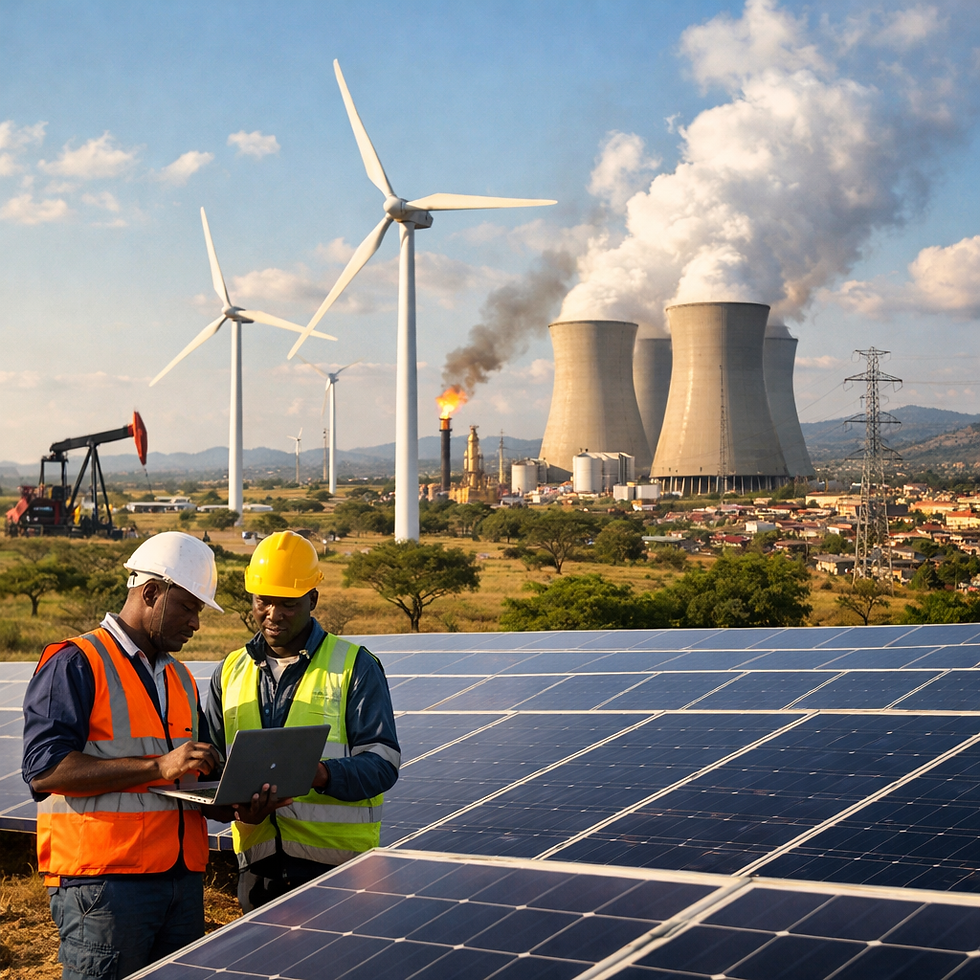
ENERTRAG, a company with over 25 years of operational history in the French market, plans to commission at least 100 megawatts (MW) of new capacity annually. This ambitious target is not merely about adding raw power generation; it emphasizes hybrid configurations that pair wind power with advanced battery storage facilities. Such an approach addresses critical grid stability and energy flow optimization challenges, a concern shared across the broader Francophone European and African energy markets. The strategic focus on these hybrid assets means a steady pipeline of tenders for specialized components and engineering services will emerge, directly supporting the French energy transition program.
Francophone Europe's Shifting Energy Landscape: Beyond the Hexagon
While ENERTRAG's €1.1 billion pledge centers on France, its implications ripple across the wider Francophone European energy sector. Belgium, a key neighbor, has also been aggressively pursuing offshore wind expansion, with projects like the Princess Elisabeth Island aiming to integrate up to 3.5 GW of offshore wind into its grid by 2030. This infrastructure demands similar advanced grid integration and storage solutions, creating a natural alignment with the technologies ENERTRAG is championing in France. The Belgian grid operator, Elia, has consistently issued tenders for high-voltage direct current (HVDC) converter stations and submarine cables, components that are often co-developed or supplied by the same international consortiums eyeing opportunities in France.
Switzerland, though landlocked, is not immune to these trends. Its energy strategy 2050 calls for a significant increase in domestic renewable generation, particularly hydropower and nascent wind projects, alongside a robust expansion of smart grid technologies and pumped-hydro storage. The Swiss Federal Office of Energy (SFOE) regularly publishes calls for research and development into energy storage solutions, indicating a long-term demand for the very battery technologies ENERTRAG is integrating. Procurement officials in Bern track developments in Paris closely, often seeking to replicate successful models for energy market integration and renewable energy financing. The cross-border electricity trading mechanisms within the European Union, in which France plays a central role, mean that advancements in French energy storage directly benefit the stability and efficiency of grids in neighboring Francophone nations.
Luxembourg, despite its smaller scale, is also investing in renewable energy and grid modernization. Its national energy and climate plan aims for a 25% share of renewables in gross final energy consumption by 2030. Projects there, often involving solar PV and smaller-scale wind, require sophisticated energy management systems and increasingly, localized battery storage to ensure grid resilience. The Grand Duchy's Ministry of Energy and Spatial Planning frequently seeks proposals for innovative energy solutions, often through public-private partnerships that attract international developers. This regional interconnectedness means that a successful bid for a battery storage component in France could lead to subsequent opportunities in Belgium or Luxembourg, as suppliers establish their credentials and supply chains within the regional market.
African Francophone Markets: A Parallel Push for Energy Independence
The energy sovereignty narrative driving ENERTRAG’s investment in France finds strong echoes across Francophone Africa, albeit with different scales and specific energy mixes. Countries like Senegal, Côte d'Ivoire, and Morocco are prioritizing renewable energy to reduce reliance on fossil fuel imports and expand energy access. Senegal's Taiba N'Diaye wind farm, developed by Lekela Power, already provides 158 MW of clean energy, demonstrating the viability of large-scale wind projects in the region. The Senegalese government, through agencies like Senelec, is actively seeking bids for further renewable capacity, including solar and additional wind projects, often incorporating battery storage for grid stability, a requirement becoming standard in their tenders.
Morocco, a regional leader in renewable energy, has set an ambitious target of 52% renewable energy capacity by 2030. Its Noor Ouarzazate solar complex is a global benchmark, but the kingdom is also developing significant wind resources, particularly in its southern regions. The Moroccan Agency for Sustainable Energy (MASEN) frequently issues international competitive bidding processes for utility-scale renewable projects, often bundled with requirements for local content development and technology transfer. The integration of battery storage, similar to ENERTRAG’s hybrid model, is increasingly specified in these Moroccan tenders to manage the intermittency of solar and wind resources, providing a direct parallel for international suppliers looking at the Francophone market as a whole.
Côte d'Ivoire, aiming for 42% renewable energy in its mix by 2030, is investing in hydro, solar, and biomass projects. While large-scale wind is less prevalent, the need for stable grid integration and energy storage is paramount, particularly given the growing industrial demand. The Ivorian Ministry of Mines, Petroleum and Energy, in collaboration with CIE (Compagnie Ivoirienne d'Electricité), frequently solicits proposals for power generation and grid infrastructure projects, often supported by development finance institutions like the African Development Bank (AfDB) and the World Bank. These projects often include components for smart grid deployment and energy storage, creating a consistent demand for specialized equipment and engineering expertise.
Procurement Pathways and Opportunities for International Suppliers
ENERTRAG’s €1.1 billion program in France, with its annual commissioning rate of 100 MW of renewable and battery storage capacity, translates into a sustained flow of procurement opportunities. The company’s focus on hybrid configurations – exemplified by the 120 MW project in Hauts-de-France and the 110 MW project in Nouvelle-Aquitaine, both combining wind farms with battery storage facilities – means a diverse range of tenders will emerge. These will span everything from wind turbine supply and installation, to battery energy storage systems (BESS), power conversion systems, grid connection infrastructure, and associated civil engineering works.
International contractors and suppliers should anticipate requests for proposals (RFPs) and competitive tenders for key components. For wind projects, this includes turbine manufacturers, foundation specialists, and balance-of-plant contractors. For battery storage, opportunities will exist for cell manufacturers, system integrators, energy management software providers, and power electronics suppliers. The operational target of March 2027 for the Hauts-de-France hub indicates that procurement for long-lead items for this project is likely already underway or will be initiated within the next 12-18 months. Subsequent projects, like the one in Nouvelle-Aquitaine and other undisclosed hubs, will follow a similar, staggered procurement timeline, offering continuous engagement for the supply chain.
Companies tracking these developments can utilize platforms like TendersGo to set up alerts for specific CPV (Common Procurement Vocabulary) codes related to wind power generation (e.g., 09310000-5 for electricity from wind power), battery storage (e.g., 31440000-2 for batteries), and electrical infrastructure (e.g., 45310000-3 for electrical installation work). Filtering by country, such as France, Belgium, or Morocco, and by specific agencies like RTE (Réseau de Transport d'Électricité) in France, Elia in Belgium, or MASEN in Morocco, will help pinpoint relevant opportunities. The detailed project specifications, particularly for hybrid systems, will often require suppliers to demonstrate experience in integrating disparate technologies, favoring those with a strong track record in both renewable generation and grid-scale storage solutions.
Financing Mechanisms and Regional Development Banks
The €1.1 billion investment by ENERTRAG is primarily private capital, but it operates within a broader ecosystem of public and development finance that significantly influences procurement in Francophone regions. In France, projects often benefit from government support mechanisms like feed-in tariffs (FITs) and competitive tenders for renewable energy capacity, which provide long-term revenue certainty. The French Public Investment Bank (Bpifrance) also offers financing and guarantees for projects that align with national energy transition goals, often involving local content requirements that international firms must consider when structuring their bids.
Across Francophone Africa, development finance institutions (DFIs) play a crucial role in de-risking projects and attracting private capital. The African Development Bank (AfDB) has committed billions to renewable energy projects across the continent, often co-financing with the World Bank, the European Investment Bank (EIB), and bilateral agencies like the French Development Agency (AFD). For example, the AfDB’s Desert to Power initiative aims to develop 10 GW of solar power across the Sahel region, a significant portion of which includes Francophone countries. Procurement under these DFI-backed projects typically follows strict international guidelines, requiring transparent bidding processes that are accessible to international contractors. These tenders are often announced on the respective DFI’s procurement portals and aggregated by platforms such as TendersGo , providing a consolidated view of opportunities.
The West African Economic and Monetary Union (UEMOA) and the Economic Community of West African States (ECOWAS) are also establishing regional energy markets and infrastructure funds. These initiatives aim to facilitate cross-border energy trade and support regional power projects, often involving concessional financing and technical assistance. International firms with experience in large-scale infrastructure projects, particularly those involving grid interconnections and hybrid power plants, are well-positioned to compete for these regional tenders. Understanding the specific procurement rules and local content requirements of each DFI and regional body is paramount for successful engagement.
Technological Advancements and Supply Chain Resilience
ENERTRAG’s emphasis on hybrid wind and battery storage configurations highlights a broader trend towards more sophisticated energy systems. These systems demand advanced control technologies, predictive analytics, and cybersecurity measures to ensure reliable operation. Suppliers offering integrated solutions that combine hardware with intelligent software for energy management, forecasting, and grid services will find a competitive advantage. The French energy sovereignty investment 2026 also implies a focus on supply chain resilience, potentially favoring suppliers who can demonstrate diversified sourcing strategies and, where possible, local manufacturing or assembly capabilities within the EU or specific Francophone African nations.
The development of long-duration energy storage (LDES) solutions beyond standard lithium-ion batteries is another area of increasing interest. While ENERTRAG’s initial projects likely leverage established battery technologies, the long-term vision for grid stability and decarbonization includes technologies like flow batteries, compressed air energy storage (CAES), and green hydrogen production coupled with storage. Research and development tenders from agencies like ADEME (Agence de l'environnement et de la maîtrise de l'énergie) in France, or similar bodies in other Francophone countries, often explore these emerging technologies, offering opportunities for specialized firms to contribute to pilots and demonstration projects.
The regional supply chain for renewable energy components is also maturing. France has been actively promoting domestic manufacturing of wind turbine components and battery cells, aiming to reduce reliance on external markets. This trend creates opportunities for joint ventures and technology transfer agreements for international firms looking to establish a footprint within the French or broader European supply chain. Similarly, in Francophone Africa, governments are increasingly pushing for local value addition, which might involve local assembly plants for solar panels or wind turbine components, and training programs for local workforces. International contractors must be prepared to engage with these local content requirements and explore partnerships with regional enterprises.
Regulatory Frameworks and Environmental Compliance
Navigating the regulatory landscape is crucial for success in Francophone renewable infrastructure tenders 2026. In France, the permitting process for wind and large-scale battery storage projects can be complex, involving multiple governmental agencies, local authorities, and public consultations. Companies like ENERTRAG, with over two decades of experience in the French market, possess deep institutional knowledge of these processes. New entrants or international firms partnering with local entities must ensure robust environmental impact assessments (EIAs) and adherence to all national and European environmental directives.
Across Francophone Africa, while regulatory frameworks are evolving, they often require careful attention to land acquisition, community engagement, and environmental protection. Countries like Senegal and Morocco have established independent regulatory bodies for electricity, which oversee licensing, tariffs, and grid access. International firms must ensure full compliance with national laws and international standards, particularly those related to social and environmental safeguards, often stipulated by development finance institutions. Transparent and ethical business practices are not just good policy but are increasingly becoming prerequisites for securing contracts and financing in these markets.
The trend towards regional harmonization of energy policies, particularly within blocs like UEMOA, aims to create a more predictable investment environment. However, variations in national laws persist, necessitating country-specific legal and regulatory due diligence. Firms engaging across multiple Francophone nations should invest in local legal counsel and regulatory experts to ensure their proposals and operations are fully compliant. This meticulous approach to regulatory adherence will be a differentiating factor for international entities vying for the numerous opportunities stemming from the region's aggressive push towards renewable energy and enhanced energy sovereignty. The ongoing expansion of renewable capacity across France and its Francophone partners signals a sustained period of high demand for specialized services and equipment, requiring diligent monitoring of procurement channels and a nuanced understanding of regional market dynamics.





