
Fertile Crescent Water Crisis Deepens as River Flows Shrink

The Fertile Crescent, a historical cradle of civilization, faces an unprecedented water crisis in 2026, driven by severely shrinking Tigris-Euphrates flows, prolonged drought conditions, and the escalating impact of upstream dam construction. This confluence of factors is exacerbating regional climate stress and cross-border water disputes across Turkey, Syria, Iraq, and Iran, fundamentally reshaping agricultural output and trade dynamics. International contractors and development agencies are observing a tightening market for water management infrastructure and agricultural support, as national governments and NGOs scramble to mitigate the humanitarian and economic fallout.
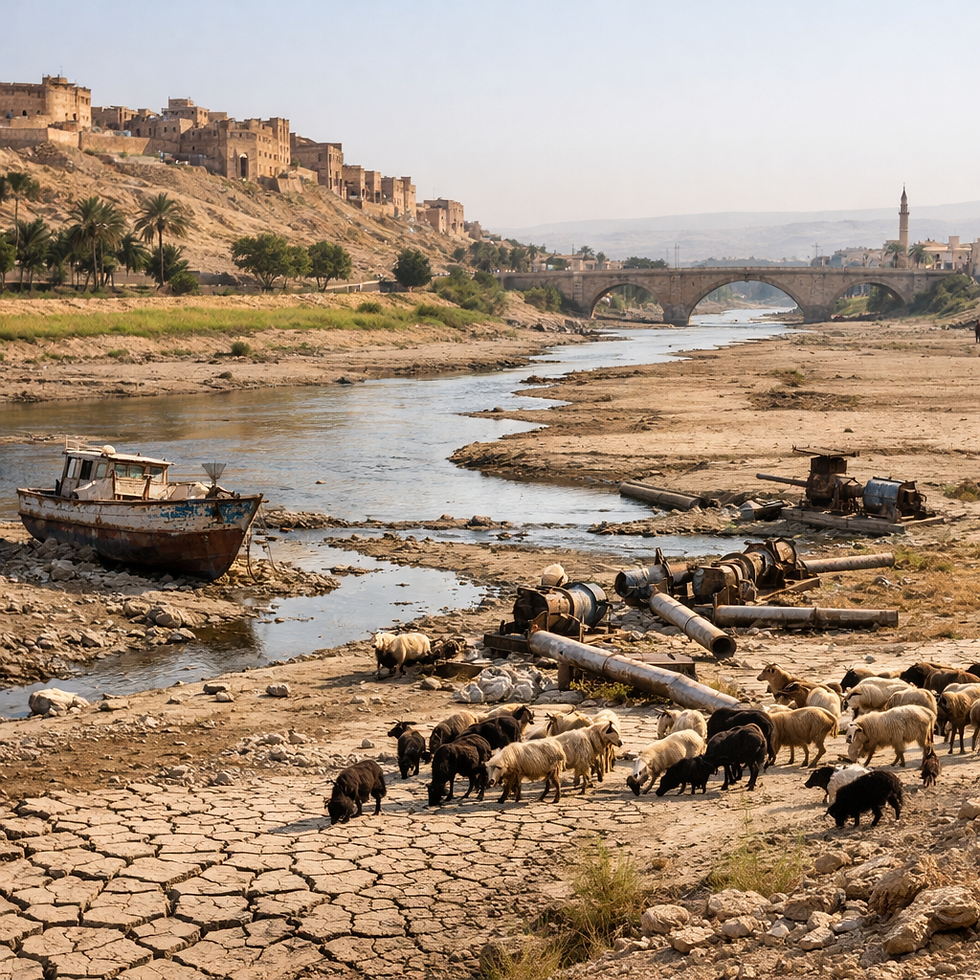
The hydrological reality of the Tigris-Euphrates basin reveals a "closed" system, where current water withdrawals already equal or surpass long-term flow balances and ecological requirements. This leaves virtually no spare capacity to absorb further reductions without severe consequences. Projections indicate that if all planned infrastructure within the basin is fully realized, Tigris flows could decrease by 25%, while Euphrates flows might see a 32% reduction. This structural deficit is compounded by the basin's reliance on spring and summer snowmelt from eastern Turkey, which historically provides 60–70% of annual river runoff. Warming trends and reduced snowfall thus directly translate into diminished water availability downstream, a critical factor for countries like Iraq and Syria.
Transboundary Flow Reductions and Agricultural Collapse
The impact of reduced river flows is most acutely felt in Syria and Iraq. Syria has experienced a 40% reduction in Euphrates inflow from Turkey, dropping from 500 cubic meters per second to 300 cubic meters per second. This drastic cut, largely attributed to upstream Turkish dams, directly impacts some of Syria’s most fertile agricultural regions, threatening food security and livelihoods. The Syrian Arab Red Crescent, in collaboration with the ICRC, has been actively repairing water pumps to maintain some level of access, while the World Food Programme (WFP) has undertaken repairs of irrigation canals supporting over 17,000 hectares of farmland, a testament to the scale of the crisis.
Iraq's agricultural sector, particularly its rain-fed crops, has been devastated. Nearly 90% of rain-fed wheat and barley crops failed in a recent season, according to FAO reports. This directly contributed to a precipitous decline in Iraq’s wheat collection, which fell from approximately 5.5 million tonnes before 2020 to a mere 2.1 million tonnes last year. Such figures underscore Iraq's increasing dependence on imported foodstuffs, making it more vulnerable to global price fluctuations and supply chain disruptions. The Iraqi Red Crescent Society and the ICRC have responded with critical humanitarian interventions, installing a 2,000 litres-per-hour desalination treatment plant powered by a 15 kW solar system in southern Iraq, aiming to improve access to safe water for vulnerable communities. The Iraqi Red Crescent Society currently supplies drinking water to about 500,000 people through 77 water treatment stations in vulnerable areas, highlighting the immense operational challenges.
The basin-wide water loss further complicates the picture. Data from the GRACE-based analysis by NASA JPL indicated water losses of approximately 0.3 meters per year from 2006–2009. While this data set is older, it establishes a clear trend of declining groundwater and surface water reserves, exacerbated by increased abstraction and reduced replenishment. This long-term trend suggests that the current crisis is not an anomaly but rather an acceleration of an ongoing hydrological degradation. Development banks and international organizations are actively seeking proposals for groundwater recharge projects and efficient irrigation technologies, visible through tenders published on platforms like TendersGo , which tracks regional procurement opportunities.
Upstream Development and Procurement Opportunities
The political dimension of water management within the Fertile Crescent is dominated by upstream infrastructure development. The basin currently hosts 34 dams in Turkey, 7 in Iraq, and 1 in Syria. Turkey's Southeastern Anatolia Project (GAP) is a particularly significant upstream development, encompassing multiple dams and irrigation schemes. While intended to boost agricultural output and energy production within Turkey, its full build-out is projected to further reduce downstream flows, intensifying friction with Syria and Iraq. This geopolitical reality shapes procurement needs, with demand for advanced water monitoring systems, flow control technologies, and dispute resolution mechanisms for transboundary water sharing agreements.
International firms specializing in dam rehabilitation, hydrological modeling, and water resource management are finding opportunities as governments seek to optimize existing infrastructure and better predict future water availability. For instance, tenders for dam safety assessments, upgrades to spillway systems, and real-time flow measurement stations are increasingly common. These projects often involve significant international collaboration and funding from multilateral development banks. Companies monitoring procurement notices on TendersGo , particularly those filtering by CPV codes related to hydraulic engineering or water treatment, are well-positioned to identify these opportunities in Turkey, Iraq, and potentially Syria as reconstruction efforts progress.
Climate Stress and Regional Stability in 2026
The climate crisis acts as a potent risk multiplier for the Fertile Crescent. A severe drought preceding Syria's 2011 uprising was deemed unlikely without long-term drying trends. Studies indicate that combined natural variability and CO2 forcing make the most severe 3-year droughts 2 to 3 times more likely than natural variability alone. This scientific consensus confirms that climate stress is not merely a background condition but a structural driver of water insecurity and political instability in the region. The consequences extend beyond agriculture, impacting public health, internal displacement, and potentially cross-border security.
The regional climate stress translates into specific procurement needs for climate resilience and adaptation. This includes tenders for drought-resistant crop varieties, precision agriculture technologies, and extensive water recycling and reuse projects. Governments and international aid organizations are seeking solutions for early warning systems for droughts, as well as emergency water provision and sanitation services. The Iraqi Red Crescent Society’s initiative to install solar-powered desalination plants exemplifies this trend, pointing towards a growing market for sustainable, off-grid water solutions. Companies with expertise in renewable energy integration for water infrastructure, such as solar pumping systems or wind-powered desalination, will find increasing demand.
The implications for trade and regional stability are profound. While specific 2026 trade volumes are not yet fully quantified, the drastic reduction in agricultural output, particularly wheat and barley in Iraq, signals increased import dependence for these staple commodities. This vulnerability to global price shocks and supply chain disruptions could strain national budgets and exacerbate food insecurity. The cross-border security concerns are also escalating; upstream control over water resources, combined with drought and falling groundwater levels, deepens tensions rather than remaining a purely environmental issue. International trade advisors and export managers should anticipate shifts in regional import patterns, with increased demand for agricultural products and water-related technologies.
Humanitarian Response and Future Procurement
The humanitarian response across the Fertile Crescent demonstrates the immediate procurement priorities. The Iraqi Red Crescent Society's operation of 77 water treatment stations and the installation of a 2,000 litres-per-hour desalination plant with a 15 kW solar system highlight the urgent need for water purification, distribution, and sustainable energy solutions. These projects often involve international tenders for equipment, technical expertise, and operational support. The ICRC and Syrian Arab Red Crescent's efforts in repairing water pumps and the WFP's irrigation canal repairs in Syria underscore the consistent demand for civil engineering, pump maintenance, and agricultural infrastructure rehabilitation.
Looking ahead, the procurement landscape will likely focus on long-term resilience and regional cooperation. This includes tenders for large-scale water conveyance projects, inter-basin transfers, and advanced wastewater treatment plants capable of producing water suitable for irrigation or even potable use. There will also be a sustained need for consulting services related to transboundary water agreements, environmental impact assessments, and climate change adaptation strategies. Organizations like the FAO, ICRC, and WFP, along with national ministries such as Turkey’s Ministry of Environment and Forests, will be key implementing agencies for these initiatives. Firms tracking procurement notices on platforms like TendersGo's sector-specific pages for water and environment will find a steady stream of opportunities, ranging from consultancy bids to major infrastructure contracts.
The deepening water crisis in the Fertile Crescent demands a multi-faceted approach involving technological innovation, regional diplomacy, and substantial investment. The immediate needs for humanitarian aid and agricultural support are clear, but the long-term imperative centers on sustainable water management strategies and infrastructure development that can withstand increasing climate stress. International contractors and suppliers who can offer integrated solutions—combining water efficiency, renewable energy, and climate resilience—will be crucial partners in navigating this challenging environment. The regional intelligence available through platforms like TendersGo's country pages for Iraq, Syria, and Turkey will be indispensable for identifying emerging opportunities and understanding the specific procurement requirements of this critical region.





