
Francophone Energy and Port Push Gains 2026 Momentum

The Francophone economic sphere across West and Central Africa is experiencing a significant surge in infrastructure investment, with particular emphasis on maritime logistics and energy production. This regional push, driven by both national governments and international consortia, signals a robust pipeline of procurement opportunities for international contractors and suppliers through 2026 and beyond. The cumulative regional port pipeline alone exceeds $27 billion, reflecting a concerted effort to enhance trade connectivity and support burgeoning resource extraction industries.
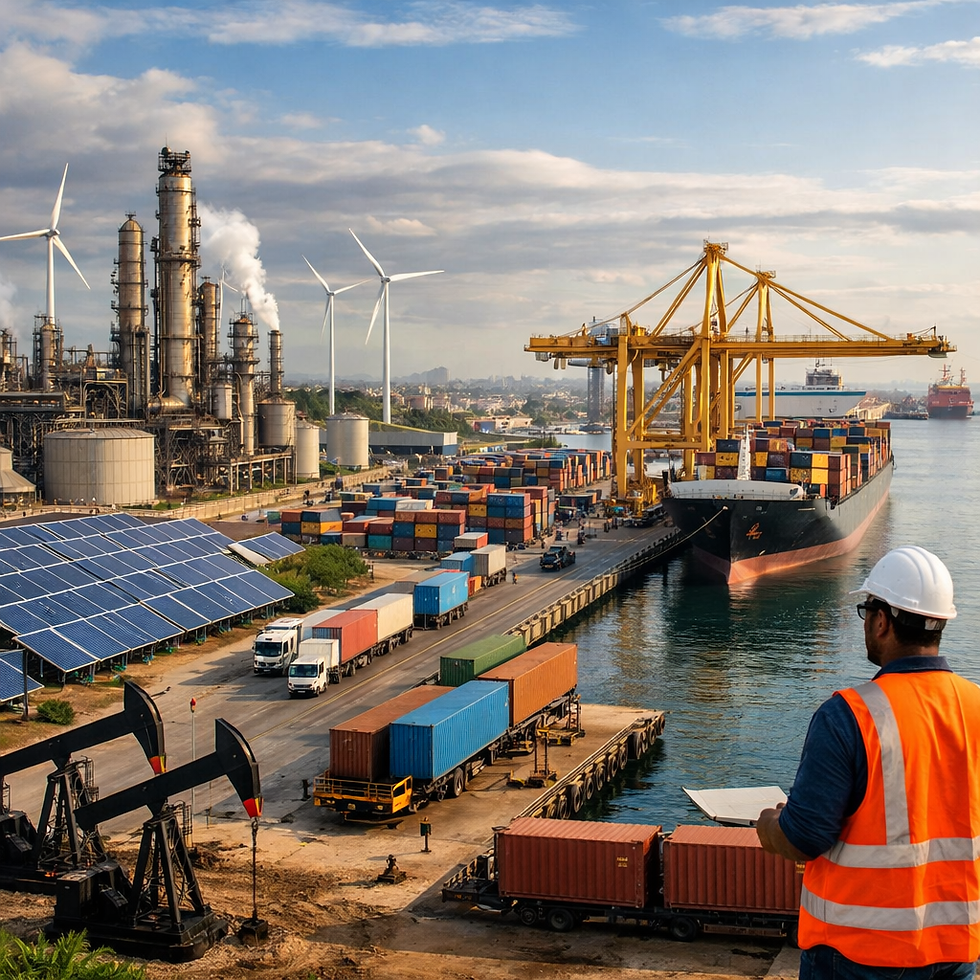
West Africa’s maritime infrastructure is undergoing a profound transformation. The flagship project, Guinea’s Simandou-Morebaya Deep Sea Port, stands as a $20 billion undertaking. This colossal investment positions Guinea as a critical regional logistics anchor, designed to facilitate the export of minerals and serve as a transshipment hub for the wider West African corridor. This project, alongside others, is expected to generate extensive tenders for civil works, dredging, and specialized port equipment. Côte d’Ivoire is also a priority market, with the Port San Pedro expansion contributing to a $2 billion regional port development push. Further south, the Republic of the Congo and Cameroon are seeing immediate construction activity, reinforcing the regional scope of this infrastructure boom.
West and Central Africa Port Infrastructure Projects Gain Momentum
The strategic importance of port development in Francophone West and Central Africa cannot be overstated. Beyond Guinea’s Simandou-Morebaya Deep Sea Port, other significant projects are reshaping the regional maritime landscape. Côte d’Ivoire’s Port San Pedro expansion, valued at $2 billion, will enhance its capacity to handle increased cargo volumes, supporting its role as a key regional trade facilitator. In Senegal, the $1.2 billion Ndayane Port project underscores continued investor confidence in Dakar as a transshipment and regional connectivity hub. These developments collectively aim to improve turnaround times and strengthen hinterland connectivity, essential for integrating regional economies.
Cameroon and the Republic of the Congo have recently secured substantial investments. On 12 February 2026, AD Ports Group and Africa Ports Development (APD) finalized a 30-year concession for the Port of Douala. This agreement covers the design, construction, and operation of a specialized dry bulk terminal, with construction slated for 2026–2028. This signals immediate procurement needs for civil engineering firms, material suppliers, and equipment manufacturers. Similarly, on 18 May 2026, AD Ports Group announced three contracts worth AED 735 million, approximately $200 million, for the Noatum Ports Pointe-Noire Terminal in the Republic of the Congo. These contracts will drive significant activity in terminal upgrades and operational enhancements, creating opportunities for specialized port service providers. International contractors should monitor TendersGo for specific tender announcements related to these projects, particularly for civil works and equipment supply.
While not Francophone, Nigeria’s port investments are highly relevant to the regional trade dynamics, influencing competition and routing for Francophone ports. Ongoing upgrades at Apapa and Tin Can Island, coupled with a proposed $600 million investment for APM Terminals Apapa, exert pressure on neighboring Francophone facilities to enhance efficiency. This competitive environment fuels further investment in Francophone ports, as they strive to maintain and expand their market share. The regional pattern is clear: ports, mineral export corridors, and interconnection-capable logistics assets are being prioritized over standalone trade-policy measures, explicitly linking these projects to regional trade integration and economic growth across West and Central Africa.
A notable development in Côte d’Ivoire is the container terminal project in the Songon area of Abidjan, led by AGL. This initiative includes a new 200-meter container terminal, a 13-hectare yard, road works, and channel dredging. Such projects require extensive expertise in marine construction, land reclamation, and logistics infrastructure. The scope of work implies significant procurement for heavy machinery, construction materials, and specialized port handling equipment. These large-scale developments create a consistent demand for international suppliers and contractors experienced in complex maritime projects.
Francophone Trade Connectivity and Power Interconnection Initiatives
Beyond port infrastructure, the Francophone region is also making strides in energy and trade connectivity, crucial for sustainable economic growth. The Democratic Republic of Congo (DRC) is poised to host one of Africa’s most ambitious energy projects: Inga 3. Presented in early 2026, this colossal hydropower initiative requires an estimated $14 billion in investment. Inga 3 represents the clearest energy megaproject in the Francophone region for late 2025/2026, offering massive opportunities for engineering, procurement, and construction (EPC) firms specializing in large-scale hydroelectric power generation. The sheer scale of Inga 3 underscores the DRC's commitment to harnessing its vast hydro potential to meet national and regional energy demands.
Smaller, yet equally significant, energy projects are advancing in other Francophone nations. In Burkina Faso, a private-sector power initiative reached a key milestone in late 2025/2026. This project involves a FCFA 26 billion, approximately €40 million, investment in two power plants located in Kaya and Koudougou. Structured under a five-year Power Purchase Agreement (PPA), commercial operation is anticipated in Q1 2026. These plants will contribute to stabilizing the national grid and reducing reliance on imported energy. Such projects offer opportunities for developers and suppliers of thermal or hybrid energy solutions, as well as for financial institutions involved in project finance. These smaller-scale, PPA-backed assets are often attractive for specialized energy firms looking for concrete, near-term deployment opportunities.
The push for regional power interconnection is a critical component of the broader trade connectivity strategy. While specific interconnection projects were not detailed in the brief, the emphasis on large-scale generation like Inga 3 and grid-support plants in countries like Burkina Faso suggests an underlying drive to create a more integrated and resilient regional energy network. Such integration would facilitate cross-border energy trade, enhancing energy security and reducing costs for participating nations. International consultants and technology providers specializing in grid infrastructure and energy management systems will find increasing demand in this evolving market.
The overall strategy for trade and connectivity prioritizes tangible assets: ports, mineral export corridors, and logistics infrastructure capable of supporting regional integration. This approach contrasts with a sole focus on trade policy measures, indicating a practical, infrastructure-first development philosophy. The explicit links drawn between port expansions and regional trade integration highlight a coordinated effort to build the physical backbone necessary for increased commerce and economic interaction across West and Central Africa. Businesses seeking to engage in these markets should focus their efforts on understanding the specific requirements for these infrastructure projects, from design and construction to long-term maintenance and operations. TendersGo sector-specific alerts can provide detailed insights into upcoming opportunities in these critical areas.
Multicountry Francophone Maritime Decarbonization Initiatives
The Francophone maritime sector is increasingly focusing on decarbonization, aligning with global environmental objectives and creating a new wave of procurement opportunities. An International Maritime Organization (IMO)-backed sub-regional workshop held in Abidjan, Côte d’Ivoire, from 6–8 October 2026, brought together 80 participants from 18 countries. The workshop aimed to strengthen understanding of MARPOL Annex VI and IMO emissions-reduction efforts for shipping. This gathering signals a collective regional commitment to sustainable maritime practices and a readiness to adopt international standards.
The Abidjan workshop identified three immediate investment priorities that are directly bankable for tenders and Public-Private Partnerships (PPPs). These priorities include sustainable shipping governance, shipping and port infrastructure development, and skills development and job creation. Crucially, explicit attention was given to alternative fuel supply chains, port electrification, and institutional capacity building. This translates into concrete demand for technologies and services related to shore power systems, alternative marine fuels (e.g., LNG, hydrogen, ammonia), and emissions control equipment. Companies specializing in green port technologies, environmental consulting, and maritime training programs will find a receptive market in this region. The emphasis on institutional capacity building also opens doors for technical assistance and advisory services.
France is actively signaling financial support for maritime decarbonization efforts relevant to Francophone African ports. A French government notice referenced an Appel à Projets (AAP) launched in March 2026, worth approximately €70 million, specifically for ship decarbonization. This funding targets areas such as ship retrofits, port electrification, alternative fuels, and greener industrial adaptation. This French initiative provides a significant financial incentive for Francophone countries to accelerate their decarbonization agendas, creating a direct link between policy and tangible projects. International suppliers of marine retrofitting services, electric charging infrastructure for ports, and alternative fuel bunkering solutions should closely monitor these funding streams and associated tenders. This collaborative approach between international bodies, national governments, and donor countries underscores the seriousness of the regional decarbonization drive.
The confluence of IMO guidelines, regional workshops, and French funding creates a dynamic environment for green maritime technologies and services. Port authorities in countries like Côte d’Ivoire, Senegal, and Cameroon will be seeking solutions to comply with international regulations and access available financing. This includes procurement for cold ironing facilities, hybrid or electric tugboats, waste management systems for ships, and infrastructure for handling new marine fuels. International firms with proven expertise in these areas can position themselves as key partners in the region’s transition to a more sustainable maritime future. Tracking these specific procurement categories through TendersGo’s advanced search filters will be crucial for identifying timely opportunities.
Regional Investment Opportunities in Francophone Africa: A Procurement Perspective
The current investment climate across Francophone West and Central Africa presents compelling opportunities for international contractors and suppliers. The sheer scale of projects, particularly in port infrastructure and energy, dictates a consistent demand for specialized services and high-value equipment. The $20 billion Simandou-Morebaya Deep Sea Port in Guinea alone will require extensive civil works, dredging, and the installation of complex cargo handling systems. This project is a multi-year undertaking, ensuring a steady stream of procurement packages. Similarly, the $2 billion Port San Pedro expansion in Côte d’Ivoire and the $1.2 billion Ndayane Port in Senegal will generate significant tenders for marine construction, terminal operations, and logistics technology.
Specific tender and procurement implications are strongest across three primary channels. First, substantial opportunities exist in port civil works and dredging. This includes projects in Douala, Pointe-Noire, Abidjan, San Pedro, Ndayane, and Guinea. These packages often involve large-scale earthmoving, breakwater construction, channel deepening, and quay wall development, requiring heavy machinery and specialized maritime engineering expertise. International dredging companies and civil engineering contractors should actively engage with port authorities and project developers in these regions. The long-term nature of these developments implies ongoing needs for maintenance and expansion, extending the procurement cycle.
Second, the burgeoning maritime decarbonization agenda opens new avenues for suppliers of specialized equipment. This includes shore power systems (cold ironing), alternative fuel handling infrastructure, and emissions control technologies for vessels and port operations. The IMO workshop in Abidjan and the French government’s €70 million AAP for ship decarbonization highlight a clear demand for innovative green solutions. Companies offering electric charging stations for port vehicles, hybrid or electric tugboats, and systems for processing alternative fuels like LNG or hydrogen will find a growing market. This also extends to consulting services for environmental compliance and sustainable port management, offering opportunities for advisory firms to support the region's green transition.
Third, energy project development in Francophone Africa, particularly around large-scale generation and private PPAs, offers significant prospects. The $14 billion Inga 3 hydro project in the Democratic Republic of Congo is a prime example of a megaproject demanding expertise in large-scale power generation, transmission infrastructure, and project finance. In Burkina Faso, the €40 million investment in two power plants under a five-year PPA demonstrates opportunities for smaller, yet impactful, energy solutions. These projects require EPC contractors, equipment suppliers (turbines, generators, solar panels), and financial institutions. The focus on grid-support plants in Francophone states further indicates a need for grid modernization and smart energy management systems. Businesses should monitor TendersGo’s country-specific pages for the DRC, Burkina Faso, and other Francophone nations to track energy sector developments.
Francophone Regional Energy Investment 2026: Key Projects and Players
The Francophone regional energy investment landscape in 2026 is characterized by a mix of colossal hydropower projects and distributed generation initiatives, all aimed at bolstering energy security and supporting economic expansion. The Democratic Republic of Congo’s Inga 3 project stands as the most prominent energy play, with an estimated investment of $14 billion. This project is not merely about electricity generation; it is envisioned as a regional power hub, potentially supplying electricity to several neighboring countries, thereby fostering greater energy interconnection across Central and Southern Africa. The involvement of international consortia and development banks in such a large-scale undertaking will translate into numerous tender packages for civil works, electromechanical equipment, and transmission line construction. The long-term nature of Inga 3 development ensures a sustained period of procurement activity.
In West Africa, Burkina Faso provides a concrete example of private-sector-led energy investment. The FCFA 26 billion, approximately €40 million, project for two power plants in Kaya and Koudougou, structured under a five-year PPA, illustrates a growing trend towards smaller, commercially viable energy solutions. With commercial operation expected in Q1 2026, this project highlights opportunities for independent power producers (IPPs), equipment suppliers for thermal or solar hybrid plants, and financial institutions involved in project financing. These PPA-backed assets offer a relatively lower risk profile compared to larger, more complex public infrastructure projects, attracting a different segment of international investors and developers. Such projects are often easier to bring to fruition, offering quicker returns and tangible contributions to national grids.
The broader strategy for energy investment in the Francophone region is intrinsically linked to industrial development and urban growth. Reliable and affordable electricity is a prerequisite for attracting foreign direct investment in manufacturing, mining, and services. Therefore, these energy projects are not standalone initiatives but integral components of national and regional economic development plans. Governments are increasingly looking for partners who can offer comprehensive solutions, from financing and construction to operation and maintenance, often under long-term concession agreements or PPAs. This demand creates a fertile ground for international energy companies with expertise across the entire value chain.
The focus on power interconnection, while not always explicitly detailed in individual project announcements, remains a strategic priority. The ability to share surplus power and draw from diverse generation sources enhances grid stability and resilience. This implies future procurement for high-voltage transmission lines, substations, and smart grid technologies. The Francophone energy push is therefore multifaceted, addressing both immediate power deficits and long-term regional integration goals. International firms specializing in grid infrastructure, energy storage, and renewable energy integration will find a growing market as these countries seek to diversify their energy mix and improve grid reliability. TendersGo’s energy sector intelligence provides a comprehensive overview of these evolving opportunities.
Procurement Implications for International Contractors and Suppliers 2026
The confluence of major port developments, ambitious energy projects, and a concerted push for maritime decarbonization in Francophone West and Central Africa presents a robust procurement landscape for international entities in 2026. The sheer volume of investment, particularly the $27 billion regional port pipeline and the $14 billion Inga 3 energy project, guarantees a sustained demand for a wide array of goods and services. International contractors must strategically position themselves to capitalize on these opportunities, which span from heavy civil engineering to specialized environmental technologies.
For civil works and dredging, the opportunities are immediate and substantial across multiple countries. The Port of Douala’s specialized dry bulk terminal, the Noatum Ports Pointe-Noire Terminal upgrades, the Port San Pedro expansion, the Ndayane Port project, and the Simandou-Morebaya Deep Sea Port in Guinea all require extensive marine construction, land reclamation, and dredging services. This means tenders for specialized dredging vessels, heavy construction equipment, piling works, and breakwater construction. Companies with a strong track record in large-scale maritime infrastructure projects will be highly sought after. These projects often involve complex logistics and require adherence to international environmental and safety standards.
The maritime decarbonization agenda, driven by IMO regulations and French funding, is creating a new niche for green technology suppliers. Port electrification, including shore power installations, hybrid/electric port vehicles, and charging infrastructure, is a key area. The development of alternative fuel supply chains for shipping, such as LNG or hydrogen bunkering facilities, will also lead to significant procurement. Firms offering environmental consulting, emissions monitoring systems, and vessel retrofit services to comply with MARPOL Annex VI will find a receptive market. This shift towards greener operations requires innovative solutions and specialized expertise, opening doors for companies at the forefront of sustainable maritime technology. The €70 million French AAP specifically targets these areas, providing a clear funding mechanism for related projects.
In the energy sector, the Democratic Republic of Congo’s Inga 3 project will generate massive tenders for hydro turbine generators, power transformers, transmission line components, and large-scale civil engineering works for dam construction. For smaller-scale, PPA-backed projects like those in Burkina Faso, opportunities exist for suppliers of solar panels, thermal power plant components, and grid integration solutions. International EPC contractors with experience in complex energy infrastructure, as well as equipment manufacturers, should actively monitor these developments. The emphasis on regional power interconnection also suggests future tenders for high-voltage direct current (HVDC) transmission systems and smart grid technologies, essential for a resilient and integrated energy network. TendersGo provides comprehensive coverage of these diverse procurement categories across Francophone Africa, enabling proactive engagement with upcoming bids.
Francophone Economic Growth and Cross-Border Dynamics
The sustained investment in port and energy infrastructure across Francophone West and Central Africa is a clear indicator of the region’s commitment to fostering economic growth and strengthening cross-border dynamics. These projects are not isolated national efforts but are designed to create a more integrated and efficient regional economic space. The development of deep-sea ports in Guinea, Côte d’Ivoire, and Senegal, for instance, aims to reduce logistics costs, improve trade efficiency, and facilitate the movement of goods not only within individual countries but also across landlocked neighbors. This regional approach enhances the competitiveness of local economies and attracts further foreign direct investment.
The cross-border implications of these infrastructure developments extend beyond physical trade routes. Improved port connectivity and energy supplies are foundational for the growth of regional value chains. For example, enhanced port capacity in Côte d’Ivoire and Senegal can support agricultural exports from the Sahelian countries, while Guinea's Simandou-Morebaya Deep Sea Port will serve as a critical outlet for its vast mineral resources, with potential transshipment benefits for other mineral-rich nations in the region. The development of regional power grids, such as the potential for Inga 3 to supply multiple countries, will reduce energy deficits and promote industrialization across a wider geographic area. This interconnectedness fosters economic interdependence and can lead to greater political stability in the long run.
The competitive dynamics with non-Francophone neighbors, such as Nigeria and Ghana, also play a significant role. The ongoing upgrades at Nigerian ports like Apapa and Tin Can Island, and the Tema Port developments in Ghana, exert pressure on Francophone ports to continuously improve their services and infrastructure. This competition is healthy, driving innovation and efficiency across the entire West African maritime sector. Francophone countries are responding with substantial investments in their own port facilities, ensuring they remain attractive options for international shipping lines and cargo owners. This regional rivalry ultimately benefits businesses by providing more choices and potentially lower logistics costs.
Furthermore, the focus on maritime decarbonization represents a forward-looking strategy that positions Francophone African ports as leaders in sustainable development. By adopting green technologies and practices, these ports can attract environmentally conscious shipping lines and investors, enhancing their global standing. The collaborative efforts seen in the Abidjan IMO workshop, bringing together participants from 18 countries, underscore a shared regional vision for a greener maritime future. This collective approach to sustainable development strengthens regional cooperation and opens up new avenues for cross-border knowledge transfer and technology adoption. The long-term impact of these investments will be a more resilient, integrated, and environmentally responsible Francophone economic zone, offering sustained opportunities for international engagement.





