IMF Slashes CEMAC 2026 Growth to 3% on Global Headwinds
- Mila Kuznetsova

- Apr 26
- 7 min read
The economic outlook for the Central African Economic and Monetary Community (CEMAC) has seen a significant recalibration, with the International Monetary Fund (IMF) revising its 2026 growth forecast downwards to 3%. This represents a 0.3 percentage point reduction from the 3.3% projection made just six months prior in October 2025. The downgrade, detailed in the IMF's April 2026 Regional Economic Outlook, signals a challenging period for the six-nation bloc, comprising Cameroon, Central African Republic, Chad, Congo, Equatorial Guinea, and Gabon. Veteran international contractors and export managers eyeing opportunities in Francophone Africa must now contend with a more constrained economic environment, driven largely by escalating global tensions and their ripple effects across commodity markets and trade routes. The revision underscores the region's susceptibility to external shocks, a critical consideration for any international firm assessing procurement and investment prospects across Cameroon , Gabon , or other member states. TendersGo data indicates a consistent volume of infrastructure and public works tenders in the region, but the underlying economic conditions impacting project financing and execution bear close scrutiny.

The IMF’s downward adjustment reflects a broader deceleration across Sub-Saharan Africa, where regional growth for 2026 is now anticipated at 4.3%, also a 0.3 percentage point drop from earlier estimates. This regional trend, while still positive, marks a departure from the robust 4.5% growth recorded in 2025. For CEMAC, the primary drivers of this revision are the persistent and intensifying Middle East tensions. These geopolitical flashpoints have not only disrupted traditional trade relationships with Gulf partners but have also triggered a sharp increase in the cost of essential global commodities. Firms involved in energy, agriculture, and logistics sectors will find their operational costs directly impacted by these shifts. Development banks and investment funds, crucial for financing large-scale projects in the CEMAC zone, are likely to exercise greater caution, potentially lengthening procurement cycles and increasing financing costs for new initiatives. This environment necessitates a detailed understanding of regional economic dynamics, which platforms like TendersGo can help provide by tracking real-time tender activity and project announcements across the continent.
CEMAC Commodity Price Pressures and Trade Disruptions in 2026
The direct impact of global instability on CEMAC economies is most acutely felt through commodity price volatility. The Middle East tensions have driven up the prices of critical inputs, creating a cascading effect across the region. Oil and gas prices have remained elevated, directly increasing the import bills for fuel-dependent nations within CEMAC. For example, countries like the Central African Republic, which relies heavily on imported refined petroleum products, face significant fiscal pressures. This translates into higher operational costs for government agencies and private sector entities, affecting budgets allocated for public procurement. Fertilizer costs, a vital input for the agricultural sector, have also seen sharp increases. This directly threatens food security and pushes up food inflation, which the IMF projects to reach 2.7% for CEMAC in 2026. International suppliers of agricultural machinery, inputs, and food processing equipment will find a market where price sensitivity is heightened, and government tenders may increasingly focus on cost-effective, sustainable solutions to mitigate these pressures.
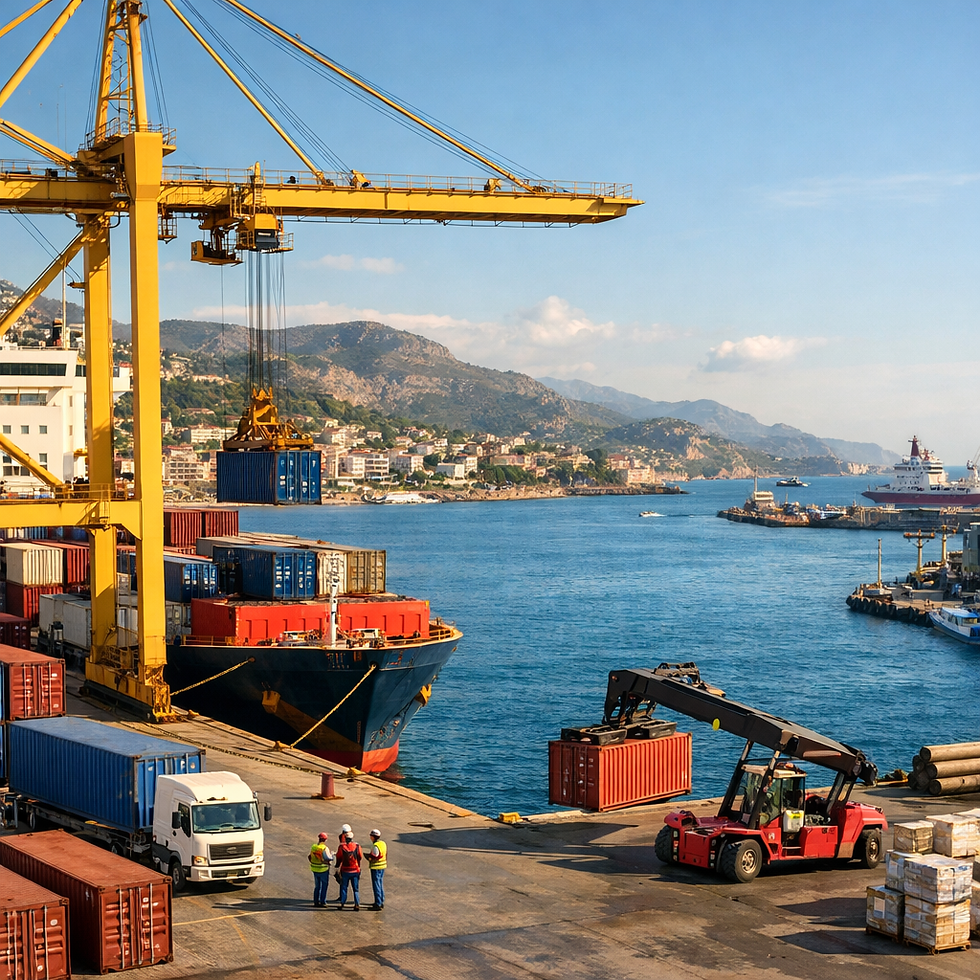
Beyond energy and agricultural inputs, maritime shipping costs have risen substantially. For a region heavily reliant on sea freight for both imports and exports, this represents a significant increase in the cost of doing business. Infrastructure projects requiring imported heavy machinery or construction materials will see their budgets strained. Procurement officials in CEMAC nations are likely exploring options for localized sourcing where possible, or seeking more competitive bids for international logistics services. The disruptions extend to trade relationships, with traditional partners in the Gulf region now facing their own challenges, potentially leading to reduced trade volumes and investment flows into CEMAC. Furthermore, tourist arrivals to the region are expected to decline, impacting service sectors in countries like Cameroon and Gabon that have been developing their tourism infrastructure. Remittance flows, a crucial source of foreign exchange for many CEMAC households, are also projected to see negative effects, further constraining consumer spending and private sector activity. These factors collectively paint a picture of increased operational risk and cost for any international firm considering engagement in the CEMAC market, necessitating thorough due diligence and flexible contractual arrangements.
Divergent Economic Fortunes Across CEMAC Nations
While the overall regional growth forecast for CEMAC sits at a tempered 3% for 2026, a closer examination reveals significant disparities in economic performance among member states. Chad stands out as a regional outlier, with its growth forecast revised upward to a robust 5.2% from an earlier 3.6%. This positions Chad as the strongest performer in the bloc, potentially driven by specific sector-specific developments or policy interventions that have buffered it from the broader regional headwinds. For international firms, Chad's comparatively strong growth trajectory could signal increased opportunities in sectors like energy, infrastructure development, and agriculture, where government spending or private investment might be more resilient. TendersGo data indicates a growing number of public sector tenders in Chad related to oil infrastructure and rural development, reflecting these underlying dynamics.
In stark contrast, Equatorial Guinea faces a severe economic contraction, with its economy projected to shrink by 2.7% in 2026. This negative growth forecast highlights significant economic headwinds, likely tied to its heavy reliance on oil and gas revenues and potentially a lack of diversification. For companies operating or planning to operate in Equatorial Guinea, this contraction suggests a challenging environment characterized by reduced government spending, delayed projects, and increased commercial risk. Procurement opportunities may be limited, and competition fierce for the few available contracts. Other CEMAC members, including Cameroon, Congo, Gabon, and the Central African Republic, are expected to experience mixed outcomes, generally hovering around the 3% regional average. This means that while some sectors or projects may offer viable opportunities, overall economic momentum will be subdued, demanding a highly selective and strategic approach from international businesses. Understanding these country-specific nuances is paramount for effective market entry and business development across the CEMAC zone.
Policy Imperatives and Procurement Implications for 2026
The IMF's revised outlook emphasizes critical policy priorities for CEMAC nations in 2026, focusing on near-term shock mitigation and medium-term resilience building. Governments are under pressure to address renewed threats to poverty reduction, food security, and social indicators, all of which were already weakened by the lingering effects of the pandemic. This translates into specific procurement needs and opportunities for international suppliers. For instance, efforts to bolster food security will likely drive tenders for agricultural inputs, irrigation systems, food processing equipment, and cold chain logistics. Companies specializing in these areas should monitor government procurement portals and utilize platforms like TendersGo to identify relevant opportunities in countries like Cameroon and Chad, which have significant agricultural bases.
Furthermore, the need for resilience building implies continued investment in critical infrastructure, albeit potentially with more stringent budget constraints. Energy infrastructure, particularly renewable energy projects, may see increased attention as countries seek to reduce their reliance on volatile fossil fuel imports. Water and sanitation projects, crucial for public health and social stability, will also remain a priority. International engineering, procurement, and construction (EPC) firms, as well as suppliers of specialized equipment, should anticipate tenders in these sectors, often funded by multilateral development banks such as the African Development Bank or the World Bank. The emphasis on social indicators may also lead to procurement in healthcare infrastructure, educational facilities, and social housing programs. Government procurement officials across CEMAC are likely to prioritize bids that offer strong local content components, technology transfer, and sustainable solutions to maximize the impact of limited fiscal resources.
Foreign Reserves and Inflationary Pressures in CEMAC
The external shocks impacting CEMAC are also exerting pressure on the region's foreign reserves and contributing to inflationary trends. The elevated costs of imported oil, gas, and fertilizers mean that CEMAC nations are spending more foreign currency to maintain essential supplies. This outflow, combined with potential disruptions to export revenues and remittance inflows, can lead to a decline in foreign reserve buffers. A reduction in foreign reserves limits a central bank's ability to defend its currency, manage liquidity, and finance imports, potentially leading to further economic instability. For international contractors, this can translate into increased currency risk, longer payment cycles for contracts denominated in local currencies, and a preference by governments for tenders that can be financed through external loans or grants.
The IMF's projection of 2.7% inflation for CEMAC in 2026, while seemingly modest, belies the significant pressures on household budgets, particularly from rising food and fuel prices. This inflation erodes purchasing power and can lead to social unrest, prompting governments to implement price controls or subsidies, which can distort markets. International suppliers must factor in these inflationary pressures when submitting bids, ensuring that their pricing models account for potential increases in input costs and currency depreciation. Procurement agencies, in turn, may seek fixed-price contracts or contracts with clear indexation clauses to mitigate their own exposure to price volatility. The overall environment suggests a need for careful financial planning and risk assessment for any international business engaging with the CEMAC market, with a strong focus on understanding the mechanisms of foreign exchange management and inflation control in each specific country.
Strategic Opportunities Amidst Regional Challenges for 2026
Despite the IMF's tempered growth outlook, strategic opportunities persist for discerning international businesses in the CEMAC region. The underlying need for infrastructure development, economic diversification, and improved social services remains strong. The downward revision often compels governments to prioritize projects with high developmental impact and clear economic returns, potentially leading to more transparent and competitive procurement processes. For example, projects aimed at enhancing regional trade connectivity, such as road and rail links between Cameroon and Chad, or port expansions in Gabon and Congo, will likely continue to attract funding from regional bodies and international financial institutions. Companies specializing in transport infrastructure, logistics, and supply chain management should actively monitor these cross-border initiatives.
Furthermore, the focus on resilience building creates specific niches. Climate change adaptation projects, including sustainable agriculture, water management, and renewable energy, are increasingly important. International firms offering expertise in solar power, hydro-electric generation, water treatment, and climate-resilient farming techniques will find a receptive audience. Digital transformation initiatives, aimed at improving governance, public service delivery, and financial inclusion, also present opportunities for IT and telecom firms. Governments across CEMAC are keen to modernize their administrative processes, leading to tenders for e-governance solutions, digital payment systems, and cybersecurity infrastructure. Staying abreast of these sector-specific trends and leveraging tools like TendersGo's sector-specific alerts can provide a competitive edge in identifying and securing contracts in this dynamic, albeit challenging, regional market.