
Maghreb Green Hydrogen Corridors Vie for Europe’s Next Energy Market

The Maghreb region is positioning itself as a critical supplier for Europe's evolving energy demands, with a pronounced focus on green hydrogen exports. This strategic pivot is not merely about individual projects but centers on the development of trans-Maghreb green hydrogen corridors, designed to link North African production hubs directly to European consumption centers. As of 2026, the ambition is clear: to establish a robust energy bridge that leverages the Maghreb's abundant renewable resources to fuel Europe's decarbonization efforts.
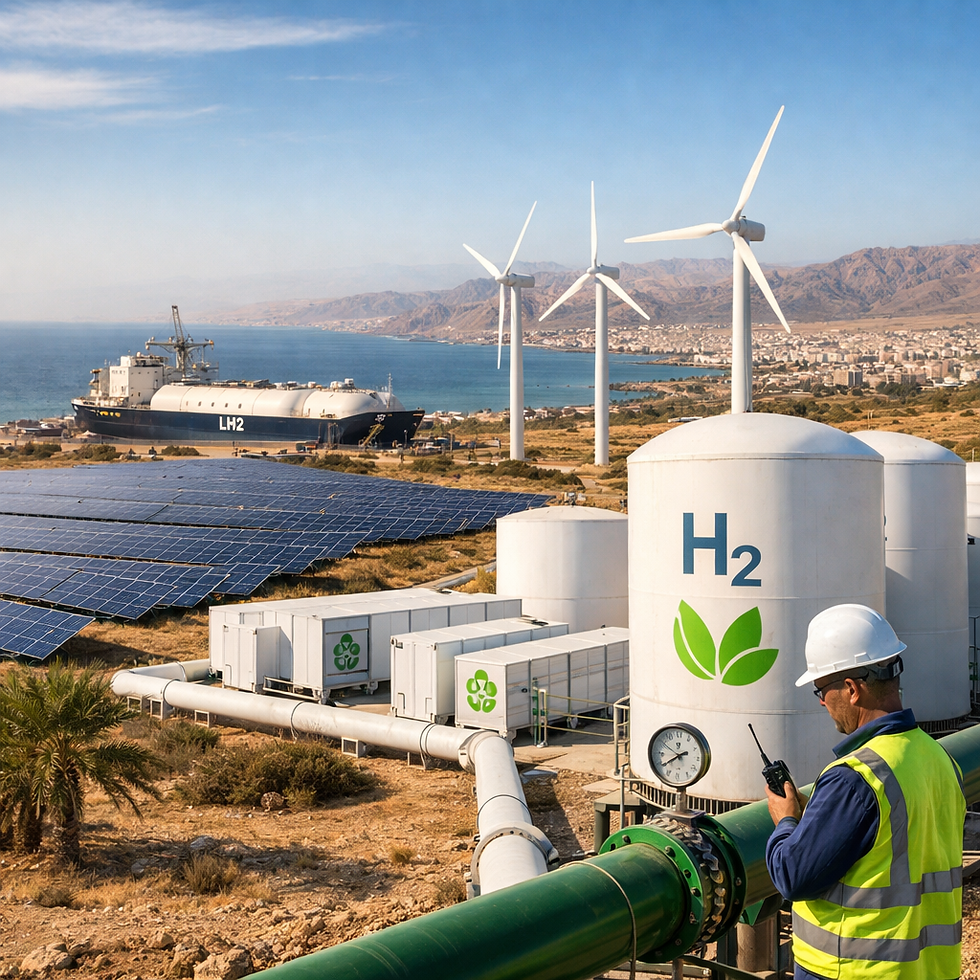
The concept of a unified Maghreb green hydrogen export strategy is gaining traction, driven by European energy security imperatives and the region's competitive advantage in solar and wind power. While commercial deliveries remain a prospect for the early 2030s, the groundwork for significant infrastructure investment is being laid across Morocco, Algeria, and Tunisia. International contractors, export managers, and investors are closely tracking developments, particularly the intricate web of feasibility studies, regulatory harmonization efforts, and multi-billion-dollar project pipelines that define this nascent market.
Trans-Maghreb Corridors: The SoutH2 Ambition and Beyond
At the forefront of the regional hydrogen export narrative is the SoutH2 Corridor , a proposed artery spanning approximately 3,000 to 3,300 kilometers. This ambitious initiative aims to connect green hydrogen production sites in Algeria and/or Tunisia directly to Italy, Austria, and Germany. With an estimated value of €13 billion, or about $14.1 billion, the corridor targets an annual capacity of up to 4 million tonnes of hydrogen by the early 2030s. Its political endorsement by Algeria, Tunisia, Italy, Austria, and Germany underscores the multilateral commitment to this significant undertaking.
The SoutH2 Corridor's inclusion in the 2026 Ten-Year Network Development Plan (TYNDP 2026) signals its strategic importance within Europe's long-term energy planning. A critical component of this corridor is a subsea link from Tunisia to Sicily, which would serve as a vital conduit for North African green hydrogen into the European grid. This subsea segment alone represents a substantial engineering and construction challenge, opening up opportunities for specialized marine contractors and subsea technology providers. The broader vision extends to the North Africa Hydrogen Backbone, also known as the SeaCorridor concept, which explicitly studies dedicated hydrogen transport from production centers in North Africa, specifically highlighting Tunisia and Algeria, to the Italian Hydrogen Backbone at Mazara del Vallo in Sicily. These concepts underline a regional integration strategy where multiple Maghreb nations contribute to a common export pipeline, rather than pursuing isolated projects.
Morocco's Proactive Stance in Green Hydrogen Development
Morocco has emerged as a frontrunner in the Maghreb's green hydrogen race, attracting considerable industrial interest and substantial investment commitments by 2026. Reports indicate a robust pipeline of six planned hydrogen investments in Morocco, totaling approximately 319 billion dirhams, equivalent to about $33.68 billion. This financial commitment reflects a national strategy to capitalize on the country's exceptional wind and solar resources for green hydrogen and ammonia production.
One notable Moroccan project line, as reported in 2026, aims to produce 100,000 tonnes per year of green ammonia by 2026. This output is intended for export, with plans to ship the ammonia through Dakhla port towards the key Amsterdam–Rotterdam–Antwerp market cluster in Europe. Such projects demonstrate a clear export orientation and a focus on derivatives like ammonia, which are easier to transport than pure hydrogen over long distances. Several major players are involved in Morocco's burgeoning hydrogen sector. TotalEnergies is leading the Chbika 1 project, while the White Dunes project is underway in Dakhla. The ORNX consortium, comprising Ortus Climate Mitigation, Acciona, and Nordex Green Hydrogen, is developing a green hydrogen and ammonia export facility in Laayoune, targeting European markets. Other significant entities like Taqa-Cepsa, Nareva, and ACWA Power are actively studying or developing hydrogen-linked projects across the country. Furthermore, the MELHY project near Mohammedia focuses on underground hydrogen storage, indicating a comprehensive approach to the hydrogen value chain beyond just production.
Algeria, Tunisia, and Regional Integration Dynamics
Algeria and Tunisia are integral to the Maghreb's green hydrogen export strategy, particularly concerning the SoutH2 Corridor. Algeria has politically endorsed the corridor and is identified as a key production country. Reports suggest production sites in Arzew could serve as a starting point for the corridor, leveraging Algeria's extensive natural gas infrastructure for potential conversion to hydrogen transport. This integration of existing energy assets into the new hydrogen economy is a recurring theme across the region, offering cost efficiencies and faster deployment timelines.
Tunisia's role is equally central. Having signed onto the corridor in 2026 political reporting, Tunisia is positioned as both a production and transit partner, with its subsea export link to Sicily being a critical enabler for the entire SoutH2 Corridor. This strategic geographic position makes Tunisia an indispensable node in the Maghreb-Europe energy bridge. The collaboration between Algeria, Tunisia, and European partners on such a large-scale infrastructure project highlights the complex cross-border regulatory harmonization required. International firms specializing in legal, environmental, and engineering consultancy will find a significant market for their services as these projects move from conceptualization to execution. TendersGo users can set up alerts for prequalification notices and RFPs related to these specific countries and project types by using relevant CPV codes or NAICS classifications on app.tendersgo.com .
Procurement Implications and Market Opportunities
The Maghreb's green hydrogen ambition translates into a diverse array of procurement opportunities for international contractors and suppliers. While the SoutH2 Corridor and many Moroccan projects are still in their feasibility and political endorsement phases, the immediate market is ripe for prequalification notices and requests for proposals (RFPs) related to studies, permitting, and front-end engineering design (FEED). This includes advisory and feasibility RFPs tied to corridor routing, regulatory compliance, environmental impact assessments, and detailed technical studies.
As these projects mature, the scope will broaden significantly. EPC (Engineering, Procurement, and Construction) tenders are anticipated for large-scale hydrogen production plants, including electrolyzer integration, and associated renewable power generation facilities. Given the water-intensive nature of green hydrogen production, significant opportunities will arise in desalination-linked water systems. For the export infrastructure, tenders will cover subsea pipeline works, compressor stations, and ammonia export handling terminals. The potential conversion of existing gas pipelines to hydrogen service, particularly on the European side and possibly within North Africa, will generate demand for specialized pipeline engineering and conversion services. Furthermore, the formation of joint ventures and consortia involving energy majors, transmission operators, and equipment suppliers is a recurring theme, requiring strategic partnership development and legal advisory services. TendersGo provides advanced filters on search.tendersgo.com to help identify these specific types of tenders across the Maghreb region and Europe, allowing users to track opportunities by project stage and procurement type.
Navigating Timelines and Regulatory Hurdles
The timelines for these ambitious projects extend into the next decade, with the early 2030s marked as the expected window for potential SoutH2 Corridor operation, contingent on financing, regulatory approvals, and infrastructure conversion. One 2026 report projects the corridor could supply roughly 10% of Europe’s projected hydrogen demand by 2040 if completed at scale. Morocco's more immediate targets, such as the 100,000 tonnes/year of ammonia by 2026 from one project line, indicate a staggered approach to market entry.
A significant challenge lies in cross-border regulatory harmonization across North Africa, Italy, Austria, and Germany. Establishing common standards for hydrogen purity, safety, and transport protocols is essential for seamless operation. Financing remains another critical factor; while the project values are substantial, securing firm commitments and navigating cost pressures, water scarcity concerns, and limited confirmed buyers are major risks. International financial institutions and development banks are expected to play a crucial role in de-risking these investments, potentially through guarantees, concessional loans, and technical assistance. Contractors and investors must monitor policy developments closely, as government incentives, carbon pricing mechanisms, and hydrogen certification schemes will heavily influence project viability and tender specifications. Detailed market intelligence on these policy shifts is available through TendersGo's regional intelligence section, continents.tendersgo.com .
Key Financials and Strategic Outlook for 2026
The financial scale of Maghreb green hydrogen initiatives is substantial. Morocco alone reports a hydrogen investment pipeline of $33.68 billion across six projects by 2026. The SoutH2 Corridor carries an estimated value of €13 billion, or approximately $14.1 billion. These figures represent significant capital expenditure requirements, translating into extensive procurement opportunities across the entire value chain—from renewable energy generation and electrolysis to pipeline construction, port infrastructure, and specialized logistics. The regional focus on hydrogen is not merely an environmental endeavor but a strategic economic shift, aiming to transform North Africa into a global energy exporter for the next generation.
For international businesses, understanding the nuances of these multi-country projects is paramount. This involves tracking specific government agencies in Morocco, Algeria, and Tunisia responsible for energy and infrastructure, as well as European transmission system operators and energy companies involved in the corridor. The market for studies, engineering services, and early-stage project development is active now, while larger EPC contracts are expected to materialize as financing and regulatory frameworks solidify over the coming years. Businesses looking to enter this market should prioritize building local partnerships, understanding regional procurement practices, and staying abreast of policy changes that will shape this evolving energy landscape. TendersGo provides unlimited alerts and AI summaries for tenders across 220+ countries, making it an indispensable tool for tracking these dynamic opportunities on app.tendersgo.com .


