
Mercosur-EU Trade Pact Goes Live: $22T Market Opens May 1

The Southern Cone’s economic landscape shifted dramatically on May 1, 2026, as the EU-Mercosur Interim Trade Agreement (ITA) officially entered provisional application. This move, activating the commercial core of the pact ahead of full ratification, immediately reshapes trade dynamics across a combined market of over 700 million consumers. Argentina, Brazil, Uruguay, and Paraguay—all four Mercosur members—have completed their ratification procedures, allowing the EU to proceed with this critical step. This provisional implementation triggers immediate tariff elimination and preferential market access, fundamentally altering the calculus for international contractors, export managers, and procurement officials targeting this $22 trillion market.
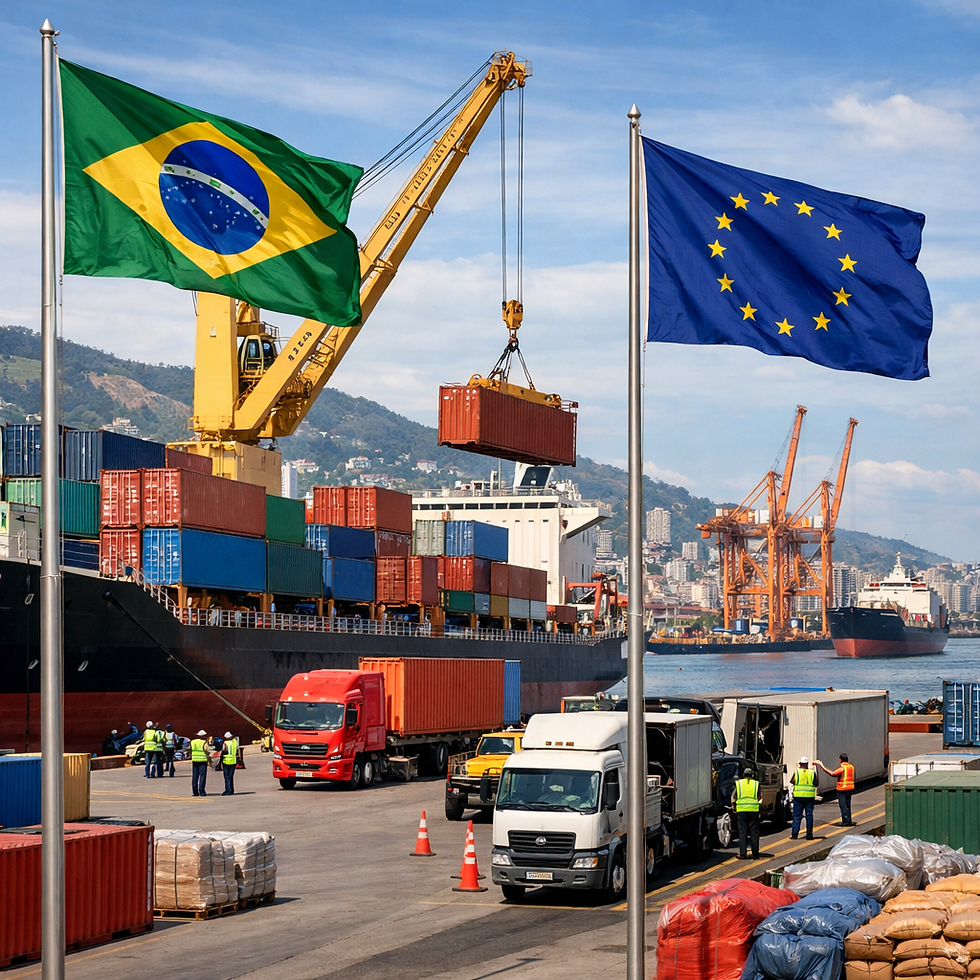
For two decades, I’ve observed the intricate dance of trade agreements and infrastructure development across continents. The provisional application of the EU-Mercosur ITA is not merely a bureaucratic formality; it is a tangible opening for businesses prepared to navigate the new rules of engagement. European Commission President Ursula von der Leyen's February 27, 2026 announcement set the stage, followed by the Commission’s formal notification to Mercosur countries on March 23, 2026. This agreement, spanning goods, services, government procurement, investment, and even climate collaboration, promises to significantly reconfigure supply chains and create substantial tendering opportunities from Buenos Aires to Berlin.
Immediate Tariff Elimination and Cross-Border Trade Flow
From May 1, 2026, tariffs on "selected products" are either removed or significantly reduced, marking a pivotal moment for EU and Mercosur exporters. This immediate change creates a clear competitive advantage for goods complying with Chapter 3 (Rules of Origin and Origin Procedures) of the ITA. For instance, an exporter in Germany shipping specialized machinery to Brazil will now face lower or no tariffs, making their product more competitive against non-EU imports. Similarly, an Argentine beef exporter can now access the EU market under preferential rates, reducing the cost burden that historically hampered market penetration.
The European Commission, through DG Trade and DG TAXUD, has been meticulous in preparing for this activation. A Council Decision on January 9, 2026, empowered the Commission, culminating in a note verbale to Paraguay on April 24, 2026, solidifying the legal mechanism. Businesses must now scrutinize their Harmonized System (HS) classifications and ensure their supply chains meet the stringent Rules of Origin (RoO). The EU provides tools like ROSA (Rules of Origin Self-Assessment) and "My Trade Assistant" via its Access2Markets portal to aid this compliance. Firms with goods in transit or temporary storage on May 1, 2026, also qualify for preferential treatment, provided they file a statement of origin with customs authorities by November 1, 2026. This specific deadline underscores the urgency for importers to update their customs, ERP, and trade compliance systems to capture these duty savings.
Consider the impact on the automotive sector. European car manufacturers exporting to Mercosur countries previously faced significant tariffs, often making their products less affordable than those from other trade blocs. With immediate tariff reductions, these manufacturers can either lower prices to gain market share or maintain prices to improve profit margins. Conversely, Mercosur-produced auto parts, if compliant with RoO, could see increased demand from European assemblers seeking more cost-effective inputs. This dynamic applies across numerous sectors, from chemicals and pharmaceuticals to textiles and electronics, creating a cascade of tender opportunities for logistics, warehousing, and supply chain optimization services across both regions. International procurement teams should actively monitor TendersGo for real-time alerts on new logistics and supply chain tenders emerging from this shift.
Government Procurement Contracts: Opening the Mercosur Public Sector
One of the most significant, yet often overlooked, aspects of the ITA's provisional application is the opening of government procurement markets. For the first time, EU companies can bid on federal and state-level government contracts in Argentina, Brazil, Uruguay, and Paraguay on an equal footing with local firms. This means the elimination of many domestic preference schemes that historically barred international competition. The ITA mandates simplified and more transparent tendering procedures, a direct benefit for international contractors long frustrated by opaque local processes.
The market opportunity here is immense. Brazil, for example, with its vast infrastructure needs, represents a substantial target. EU construction firms, technology providers, and service companies can now compete for projects ranging from road and port expansions to digital transformation initiatives within government agencies. Argentina’s energy sector, Uruguay’s public works, and Paraguay’s agricultural infrastructure development all become accessible targets. This non-discriminatory access levels the playing field, making expertise and competitive pricing the primary determinants for contract awards, rather than national origin.
For international business development teams, this necessitates a strategic shift. Instead of relying solely on private sector engagements, the public sector in Mercosur now offers a robust avenue for growth. Companies should proactively engage with local partners, understand specific government tendering portals—which will increasingly align with EU transparency standards—and prepare prequalification documents tailored to the new regulatory environment. Firms specializing in areas like renewable energy, water treatment, transportation, and healthcare infrastructure will find a fertile ground for bidding. Procurement officials in Mercosur countries will also benefit from a broader pool of qualified international suppliers, potentially leading to more competitive bids and higher quality outcomes for public projects. TendersGo's advanced search capabilities, including CPV/NAICS codes and country-specific filters, will be indispensable for identifying these emerging public sector opportunities across Mercosur. You can find specific country tender data for Brazil at country.tendersgo.com/tenders-in-brazil , and similar for other Mercosur nations.
Agri-Food Exports and Regional Economic Shifts
The provisional application also heralds a significant boost for agri-food trade, with projections indicating a 50% rise in EU agri-food exports to the Mercosur region. The EU, already the world's largest exporter of food and drink products, stands to gain substantially. High-quality EU agri-food products, from specialty cheeses and wines to processed foods and spirits, will now be more competitively priced in Mercosur markets due to immediate tariff cuts. The first tranche of Tariff Rate Quotas (TRQs) became available to EU exporters from May 1, 2026, offering preferential access for specific volumes of goods.
Conversely, Mercosur’s robust agricultural sector, particularly in Argentina and Brazil, will see improved access to the vast EU consumer market. While the agreement includes robust safeguards to protect sensitive EU agricultural sectors, the overall effect is a managed increase in trade flows. For instance, Brazilian coffee, Argentine beef (within TRQ limits), and Paraguayan soy products will find a more receptive European market. This creates a ripple effect throughout the supply chain: increased demand for agricultural machinery, packaging solutions, logistics services, and food processing technologies in Mercosur countries. European suppliers of these goods and services should anticipate a surge in demand, translating into new tender opportunities.
The implications extend beyond direct trade. Increased agricultural exports from Mercosur could spur investment in rural infrastructure and processing facilities. This creates opportunities for international engineering firms, equipment suppliers, and financial institutions. For example, a surge in demand for Argentine wine in Europe could lead to tenders for new vineyard irrigation systems or bottling plants. Similarly, enhanced EU food exports to Uruguay might necessitate upgraded cold chain logistics or distribution centers. This dynamic underscores the interconnectedness of trade policy and infrastructure development, with both regions poised for growth in their respective agri-food value chains. Businesses can use tendersgo.com/sectors/agriculture-food-tenders to track these sector-specific opportunities.
Critical Raw Materials and Supply Chain Resilience
The ITA's provisional application also addresses a critical strategic objective for the EU: securing predictable flows of Critical Raw Materials (CRM). Mercosur countries, particularly Argentina and Brazil, are rich in resources vital for the EU's green and digital transitions, including lithium, copper, and rare earth elements. Preferential tariff treatment under the ITA facilitates increased imports of these CRMs into the EU, bolstering supply chain resilience and reducing reliance on single-source suppliers.
This aspect of the agreement is not just about trade; it's about geopolitical strategy. The EU aims to diversify its CRM sources to de-risk its industrial base, particularly in sectors like electric vehicles, renewable energy technologies, and advanced electronics. Mercosur provides a geographically diverse and politically stable alternative for many of these materials. The requirement for origin documentation ensures traceability and compliance, offering EU industries greater transparency in their supply chains.
For companies involved in mining, processing, and logistics of CRMs, this presents substantial opportunities. European firms might invest in Mercosur mining operations, leading to tenders for new equipment, exploration services, and infrastructure development around extraction sites. Conversely, Mercosur-based companies involved in CRM extraction will find it easier and more profitable to export to the EU. This will likely generate tenders for specialized transportation, refining facilities, and environmental impact assessments. The focus on supply chain resilience also opens doors for technology providers offering solutions for traceability, digital customs clearance, and risk management across the entire CRM value chain. The demand for robust, transparent supply chains will drive tendering for everything from blockchain solutions to advanced logistics software, creating a vibrant market for innovative service providers.
Labor Rights and Environmental Standards: A New Compliance Imperative
Beyond economic benefits, the EU-Mercosur ITA provisional application emphasizes stronger collaboration on labor standards and environmental sustainability. The agreement includes joint commitments to climate action, worker protections, and adherence to international labor and environmental conventions. This reflects the EU's increasing focus on embedding sustainability into its trade policy, ensuring that economic gains do not come at the expense of social and environmental well-being.
For businesses operating or seeking to operate in the Mercosur region, this translates into a heightened compliance imperative. Companies will need to demonstrate adherence to these standards, not just as a matter of corporate social responsibility, but as a condition for accessing preferential trade terms and government contracts. This will likely lead to increased demand for environmental consulting services, labor compliance audits, and sustainable supply chain management solutions.
Mercosur countries, in turn, will receive support and expertise from the EU in implementing these standards. This could lead to tenders for capacity building programs, technology transfer initiatives for sustainable production, and projects aimed at strengthening labor inspectorates. For example, a Brazilian agricultural exporter aiming to leverage lower tariffs for the EU market might invest in sustainable farming practices to meet EU environmental criteria, generating tenders for eco-certification services or water management solutions. This aspect of the agreement fosters a more responsible and equitable trade relationship, creating opportunities for businesses specializing in sustainability, ESG (Environmental, Social, and Governance) reporting, and ethical sourcing.
Implementation Readiness: A Checklist for Traders and Investors
The provisional application of the EU-Mercosur ITA demands immediate action from businesses on both sides of the Atlantic. The six-month window for filing statements of origin for goods in transit, expiring on November 1, 2026, is a critical deadline. Companies must confirm product HS classifications, assess eligibility under Chapter 3 rules of origin, and update internal systems to support preferential claims. This includes ERP systems, customs software, and supplier documentation flows. Failure to adapt will mean foregoing significant duty savings and competitive advantages.
For international contractors and consultants, the opening of government procurement markets in Argentina, Brazil, Uruguay, and Paraguay requires a proactive approach. Understanding local bidding procedures, identifying key agencies, and preparing competitive proposals that highlight compliance with new transparency and non-discrimination rules are paramount. The sheer volume of potential tenders in infrastructure, technology, and services across these nations represents a substantial growth vector. Firms should leverage platforms like TendersGo to set up unlimited alerts for specific CPV codes, countries, and keywords related to their expertise, ensuring they capture every relevant opportunity as it arises.
The strategic context is clear: the EU-Mercosur ITA provisional application is a bold move against global protectionist trends. While a legal challenge from the European Parliament at the EU Court of Justice is ongoing, the commercial benefits are immediate and tangible. This agreement reinforces the EU's role as a major trading partner and offers Mercosur countries a powerful engine for economic development and diversification. Businesses that are agile, compliant, and well-informed will be best positioned to capitalize on this expansive new trading zone, securing contracts and expanding market share across a revitalized continental trade corridor.





