NATO’s $31B Fuel Pipeline Overhaul Reshapes Alliance Logistics

NATO’s strategic pivot towards bolstering its eastern flank has culminated in a monumental €27 billion Fuel Supply Chain Capability Programme, greenlit by the North Atlantic Council on July 22, 2026. This initiative, approximately $31 billion, represents a comprehensive overhaul of the Alliance’s Cold War-era fuel logistics infrastructure, spanning an estimated 10,000 km network. The program's primary objective is to enhance warfighting readiness and logistical resilience across member states, particularly those on the eastern and southeastern borders. International contractors, export managers, and development bank consultants tracking regional energy security projects and NATO logistics infrastructure investment should note the multi-decade procurement horizon, estimated at 25 to 30 years for full execution.
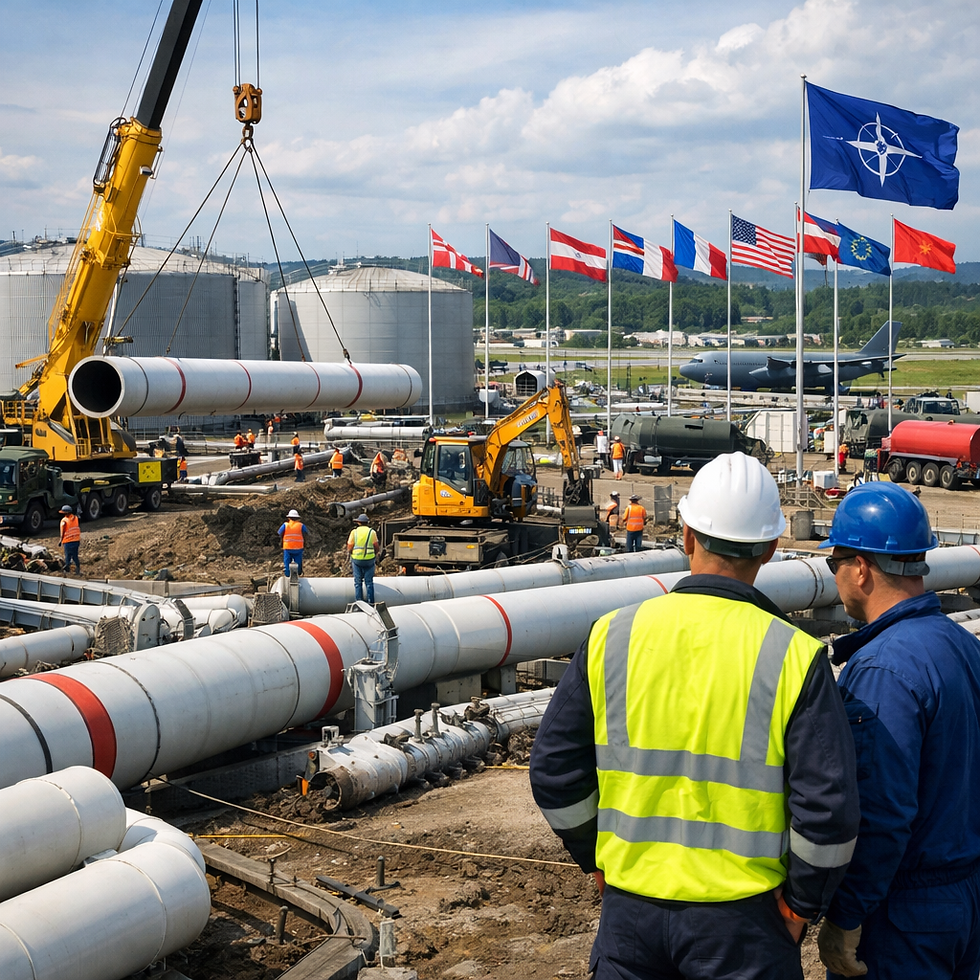
The scale of this undertaking demands a close examination of the substantial procurement opportunities emerging across multiple NATO member states. For 2026, the Allies have already committed a common funding budget of €5.3 billion, with projections indicating an increase to up to €6.5 billion in 2027. This consistent, multi-year funding stream underscores the long-term commitment to modernizing fuel depots, storage sites, distribution infrastructure, and pipelines. Companies specializing in large civil works, fuel storage terminal construction, pumping station technology, and interoperability upgrades will find a robust tender pipeline developing across the region. TendersGo, with its extensive coverage of 220+ countries and all sectors, offers a critical platform for monitoring these opportunities, especially with its specialized filters for CPV/NAICS codes relevant to energy infrastructure and defense logistics.
Eastern Flank Infrastructure Bolstering
The geographical impact of the Fuel Supply Chain Capability Programme heavily concentrates on the eastern flank and southeastern Europe, a strategic response to evolving geopolitical dynamics. Poland and Romania are poised to be significant beneficiaries of this infrastructure buildout. Poland, for instance, is reportedly slated to receive a major share of the new infrastructure, including approximately 300 km of new pipelines extending from the German border to the PERN base near Bydgoszcz. This expansion is critical for ensuring robust fuel supply lines for Allied forces deployed or transiting through the country, integrating national infrastructure with NATO’s broader network. The preliminary agreement signed in October 2025 between ZIOTP and PERN S.A. for this integration highlights the early stages of cross-border cooperation and planning.
Romania’s President Nicușor Dan publicly stated that NATO approved an eastward fuel-pipeline expansion, anticipating about €2.15 billion to flow back into Romania for these projects. This allocation signals substantial opportunities for local and international firms in pipeline construction, storage facility upgrades, and associated engineering services within Romania. The Turkey–Bulgaria–Romania fuel-pipeline concept, announced in May 2026 with an estimated cost of $1.2 billion, further illustrates the regional ambition to create a more resilient and integrated fuel distribution system. Such cross-border projects necessitate intricate coordination among national implementing bodies and adherence to international standards, creating a demand for experienced contractors familiar with multi-jurisdictional procurement processes. Turkey itself has been actively pushing for fast-tracked funding for 21 domestic projects on its territory, underscoring the widespread demand for infrastructure enhancements across the Alliance’s southeastern members.
The program’s emphasis on modernizing existing assets and constructing new facilities directly translates into a sustained demand for engineering, procurement, and construction (EPC) services. Contractors should anticipate prequalification-heavy tenders, reflecting the critical nature of these projects for national and Alliance security. These tenders will cover a spectrum of activities, from detailed design and environmental impact assessments to civil engineering, mechanical installations, and advanced control systems for pipeline operations. The sheer volume and complexity of these projects mean that consortia and joint ventures, combining international expertise with local knowledge, will likely be favored. TendersGo provides a comprehensive overview of such complex procurement notices, enabling businesses to identify suitable partners and opportunities across the NATO member states involved.
Procurement Pathways and Project Timelines
The NATO Fuel Supply Chain Capability Programme, formally approved following discussions at the Ankara Summit on July 7–8, 2026, sets a clear timeline for strategic investment. The decision by the North Atlantic Council on July 22, 2026, to approve the funding package and the Programme Plan initiates a multi-decade procurement cycle. This extended horizon provides a consistent flow of tender opportunities, moving beyond immediate short-term projects to encompass long-range strategic infrastructure development. For instance, the reported 25 to 30-year implementation period for the full overhaul means that contractors can plan long-term engagement in the region.
The procurement landscape will be characterized by a mix of national and Alliance-level tenders. While NATO provides overarching funding and strategic direction, the execution often involves national implementing bodies like PERN S.A. in Poland. This duality requires contractors to understand both NATO’s procurement guidelines and the specific regulations of individual member states. The types of tenders expected will range from engineering studies and feasibility assessments in the initial phases to large-scale construction contracts for pipelines, storage tanks, and pumping stations. Subsequent phases will involve tenders for specialized equipment, maintenance services, and technological upgrades, including SCADA systems and cybersecurity solutions for critical infrastructure.
The estimated $1.2 billion Turkey–Bulgaria–Romania pipeline concept, publicly described in May 2026, exemplifies the cross-border procurement challenges and opportunities. Such projects require careful navigation of regulatory frameworks, environmental considerations, and local content requirements across multiple jurisdictions. International contractors with a proven track record in complex transnational infrastructure projects will be at a distinct advantage. Furthermore, the emphasis on reducing vulnerability to attacks on critical infrastructure means that security considerations will be paramount in all tender evaluations, requiring bidders to demonstrate robust security protocols and experience in secure infrastructure development. Platforms like app.tendersgo.com allow businesses to set up unlimited alerts for specific CPV codes or keywords, ensuring they capture every relevant tender notice as it is released across these diverse procurement channels.
Regional Energy Security and Industrial Spending
The NATO fuel pipeline overhaul is not merely a logistical upgrade; it is a significant investment in regional energy security and a driver of defense industrial spending across the Alliance. The program aims to sustain large-scale military operations, ensuring that Allied forces have uninterrupted access to fuel, a critical component of modern warfare. This focus on resilience directly impacts the industrial base of NATO members, stimulating demand for specialized manufacturing, construction materials, and high-tech solutions. The €5.3 billion common funding budget for 2026, rising to €6.5 billion in 2027, represents a direct injection into the economies of participating nations and provides a clear signal of sustained investment.
Countries like Poland, with its reported 300 km of new pipelines, will see substantial economic activity. This includes demand for steel pipes, welding services, heavy machinery, and skilled labor. The integration of the national fuel infrastructure with NATO’s system, as evidenced by the ZIOTP and PERN S.A. agreement, signifies a strategic alignment that will likely attract further investment in related sectors. Romania’s anticipated €2.15 billion allocation will similarly generate significant economic output, creating jobs and fostering technological advancements in its energy and defense sectors. These investments are designed to not only enhance military readiness but also to strengthen the overall industrial capacity of the Alliance, creating a more self-sufficient and resilient defense ecosystem.
The program also addresses the broader challenge of energy independence and diversification for NATO members. By modernizing and expanding fuel storage and distribution, the Alliance reduces its reliance on potentially vulnerable supply routes and increases its strategic autonomy. This aspect of the program resonates with broader European energy security initiatives, creating potential synergies with civilian infrastructure projects. For international suppliers, this implies opportunities beyond direct military contracts, extending to projects that contribute to overall national energy infrastructure resilience. Monitoring tenders on platforms like www.tendersgo.com allows businesses to identify cross-sector opportunities that might emerge from this large-scale defense investment.
Opportunities for International Contractors
The Fuel Supply Chain Capability Programme presents a multi-faceted opportunity for international contractors across various disciplines. The sheer scale and multi-decade nature of the program mean that firms specializing in civil engineering, pipeline construction, storage tank fabrication, and environmental remediation will find sustained demand. Prequalification-heavy tenders will be the norm, emphasizing experience, financial stability, and adherence to stringent safety and quality standards. Companies with a track record in complex infrastructure projects, particularly those involving critical national assets, will be well-positioned.
Beyond the physical infrastructure, there will be significant demand for specialized services. This includes project management, risk assessment, cybersecurity for critical infrastructure, and advanced sensor technologies for pipeline monitoring. The interoperability upgrades, a key component of the program, will require expertise in integrating diverse systems and ensuring seamless operation across national borders. Consulting firms specializing in defense logistics, supply chain optimization, and strategic infrastructure planning will also find opportunities in supporting national governments and NATO agencies.
The emphasis on the eastern and southeastern Alliance areas means that contractors with existing operations or partnerships in countries like Poland, Romania, Turkey, and Bulgaria will have a competitive advantage. Local content requirements and the need for in-depth understanding of regional regulatory environments often necessitate strong local partnerships. Therefore, international firms should actively seek collaborations with local companies to enhance their bid competitiveness. TendersGo’s B2B marketplace facilitates such partnerships, allowing companies to connect with potential collaborators and expand their reach into new markets within the NATO region. The comprehensive tender information, including AI summaries and PDF viewer for detailed documents, available on app.tendersgo.com, enables businesses to thoroughly assess each opportunity and forge strategic alliances.
Technological Integration and Future-Proofing
The modernization aspect of the NATO fuel pipeline overhaul extends beyond simply replacing old pipes; it encompasses the integration of advanced technologies to future-proof the network. This includes sophisticated control systems, real-time monitoring capabilities, and enhanced cybersecurity measures to protect against physical and digital threats. The adoption of smart pipeline technologies, such as leak detection systems and predictive maintenance analytics, will be crucial for ensuring operational efficiency and environmental compliance. Contractors offering innovative solutions in these areas will find a receptive market within the program.
Furthermore, the program’s long-term vision suggests an emphasis on sustainability and resilience against future climate challenges. This could translate into tenders for infrastructure designed to withstand extreme weather events or incorporate renewable energy sources for pumping stations where feasible. Companies specializing in green infrastructure solutions and climate-resilient engineering will find emerging opportunities as the program progresses through its multi-decade implementation. The evolving nature of energy needs and military operations means that the infrastructure built today must be adaptable to future requirements, demanding forward-thinking design and construction approaches.
The NATO Fuel Supply Chain Capability Programme represents a foundational investment in the Alliance’s collective defense and regional stability. The €27 billion commitment over 25 to 30 years ensures a continuous stream of procurement opportunities for a wide array of contractors and suppliers. As the program unfolds across Poland, Romania, Turkey, and other eastern and southeastern members, businesses must remain vigilant to the specific tender releases, often managed at the national level but guided by NATO’s strategic objectives. Utilizing platforms like app.tendersgo.com , with its comprehensive search capabilities and regional intelligence, will be essential for identifying and securing these high-value, long-term contracts in the coming decades.