
NATO’s 5% Defence Push Unlocks Tens of Billions in Contracts

The commitment by NATO Allies to dedicate 5% of their GDP annually to defence by 2035, with a significant portion earmarked for core defence requirements, is translating into a formidable wave of procurement and industrial expansion across the transatlantic region. European Allies and Canada alone have boosted their core defence investments by more than USD 139 billion since the June 2025 pledge, a stark indicator of the financial commitment now flowing into the defence industrial base. The recent 2026 Ankara summit further solidified this trend, where Allies announced over EUR 50 billion in procurement deals, explicitly linking policy to concrete contract awards and expanded industrial output. International contractors, export managers, and business development teams targeting NATO 2026 defence procurement and industrial production opportunities are observing a market invigorated by these unprecedented spending levels, creating a fertile ground for transatlantic defence industrial cooperation in NATO.
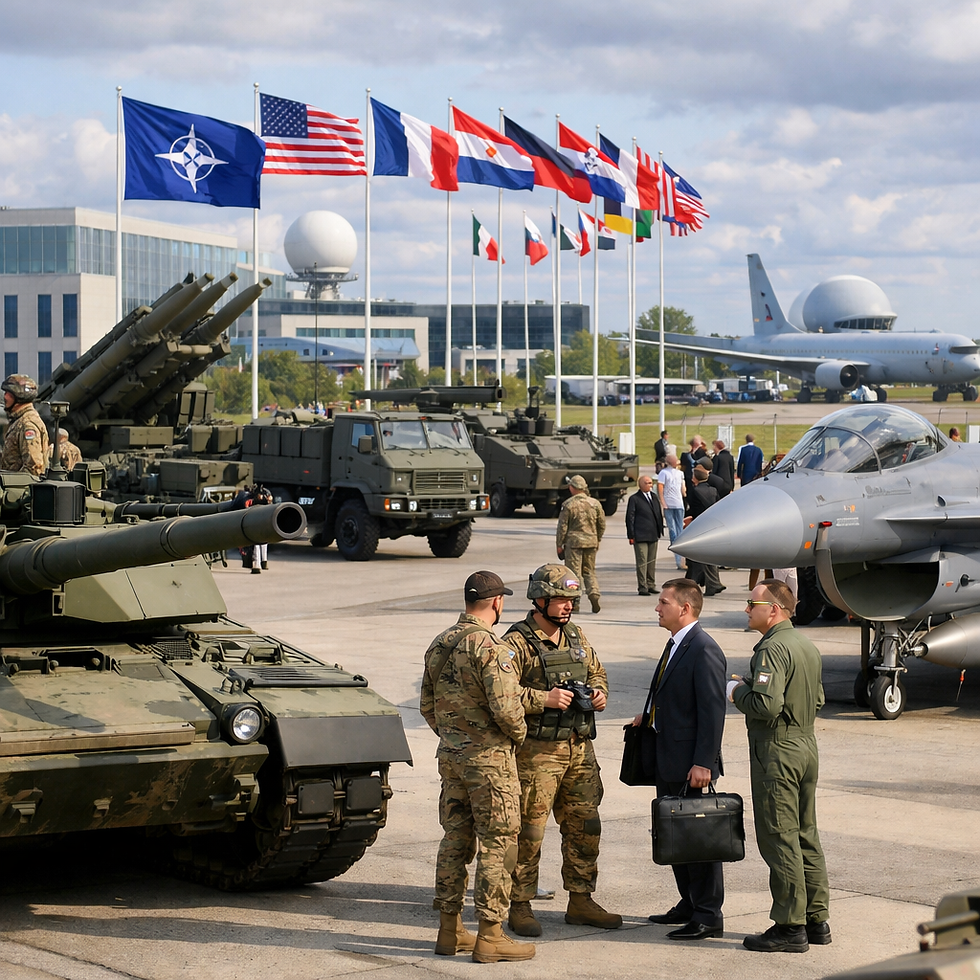
NATO’s Industrial Engine: Fueling Regional Growth and Joint Procurement
The strategic shift within NATO from mere spending pledges to tangible industrial production is being driven by several key mechanisms. The updated Defence Production Action Plan, agreed upon by Defence Ministers in February 2025, serves as the overarching framework for this industrial capacity expansion. Complementing this, the "NATO Engine," managed by the NATO Support and Procurement Agency (NSPA), is designed to meet the escalating demand for critical industrial capacities, particularly in air defence and strike capabilities. This initiative, which commenced its pilot phase in July 2026, aims to streamline the process for companies to identify manufacturing partners and scale production efficiently across the Alliance. The NSPA’s central role as an implementing body for common procurement means that a significant portion of these new contracts will pass through its competitive procurement procedures, offering direct avenues for international suppliers to engage. Firms seeking opportunities in NATO regional military spending and infrastructure contracts should monitor the NSPA portal carefully, as it lists multiple opportunities, with a notable increase observed in November 2026.
At the 7 July 2026 Ankara summit and Defence Industry Forum, this commitment manifested in the formation of several multinational procurement coalitions. These coalitions, comprising various Allies, are pooling resources to jointly acquire critical capabilities, primarily focusing on integrated air and missile defence and deep precision strike systems. This collaborative approach not only ensures interoperability but also creates larger, more attractive procurement packages for industry. For instance, the United States, through major defence companies such as Anduril, Boeing, General Dynamics Land Systems, Lockheed Martin, and Raytheon, has forged new co-production initiatives with European firms like Diehl, PGZ, and Rheinmetall. These partnerships underscore a strategic move towards cross-Atlantic co-production, aiming to enhance the resilience and responsiveness of the Alliance's industrial base. Such arrangements open significant avenues for companies capable of providing cross-border production or surge manufacturing, as they are strategically positioned to benefit from the NATO Engine and these new procurement coalitions.
Billions in Contracts: Unpacking the 2026 Ankara Summit Announcements
The 2026 Ankara summit served as a pivotal moment, signaling a clear transition from policy discussions to concrete contract awards. NATO's summit summary detailed that Allies announced more than EUR 50 billion in procurement deals. These contracts span a diverse range of capabilities, including deep precision strike munitions, advanced integrated air and missile defence systems, uncrewed systems, and cutting-edge intelligence platforms. The sheer volume of these announcements underscores the accelerated spending trend; NATO’s defence-industrial page highlights that European Allies and Canada increased their defence spending by nearly 20% in a single year following the 2025 pledge. This rapid acceleration is directly translating into a robust pipeline of tenders, offering substantial opportunities for firms specializing in these high-demand areas.
The White House fact sheet released after the Ankara summit further articulated the economic implications, noting that this surge in investment expands market access for U.S. firms and supports American manufacturing jobs. This indicates a conscious effort to ensure that the increased defence spending not only bolsters security but also stimulates economic growth within Allied nations. For international contractors, this signals a dynamic environment where national industrial benefits are increasingly intertwined with Alliance-wide procurement goals. Companies leveraging platforms like TendersGo can track these regional tenders, utilizing filters for specific countries and CPV/NAICS codes to pinpoint opportunities in areas like aerospace, electronics, and specialized manufacturing, ensuring they remain abreast of these rapidly evolving market dynamics.
Key Agencies and Timelines Shaping NATO 2026 Joint Procurement Aircraft Surveillance and Munitions
Several key agencies and institutions are instrumental in driving this unprecedented procurement surge. The NATO Support and Procurement Agency (NSPA) stands as the central implementing body, not only for common procurement but also for the operationalization of the NATO Engine. Its role is critical in facilitating multinational projects and ensuring efficient delivery of capabilities. The North Atlantic Council, comprising Allied leaders, established the foundational 5% spending framework at the 2025 The Hague summit and reaffirmed this commitment at the 2026 Ankara summit, providing the strategic direction for these investments.
The Committee of National Armaments Directors (CNAD) plays a crucial role in operationalizing these strategic directives, driving procurement acceleration and industrial preparedness. The CNAD is tasked with developing an implementation plan for NATO’s Strategy for Industry-NATO Cooperation by October 2026, a plan formulated in consultation with industry stakeholders through the NATO Industrial Advisory Group (NIAG) and the Defence Innovation Accelerator for the North Atlantic (DIPB). This collaborative approach ensures that industry perspectives are integrated into the strategic planning, creating a more responsive and effective defence industrial base. The meeting of NATO armaments directors in late October 2026 to further accelerate production and procurement underscores the urgency and sustained focus on these initiatives.
The timing of these developments is critical for businesses aiming to engage. The Ankara summit on 7 July 2026 initiated new coalitions and co-production initiatives. Immediately following this, the NATO Engine's pilot phase commenced in July 2026, offering a direct platform for companies to forge manufacturing partnerships. The October 2026 deadline for the CNAD's implementation plan will further refine the roadmap for industrial cooperation, providing clearer guidelines for engagement. Companies monitoring these timelines through platforms like TendersGo can set up unlimited alerts for specific countries within the NATO region, ensuring they receive timely notifications for relevant tenders and policy updates. The platform's extensive coverage of 220+ countries and 145 languages, coupled with AI summaries and a PDF viewer, offers a comprehensive tool for navigating this complex procurement landscape.
Transatlantic Defence Industrial Cooperation in NATO: Regional Impact and Opportunity
The regional scope of this defence investment extends across the entire Alliance, with European Allies and Canada emerging as primary beneficiaries and key drivers of the current spending growth. Nations such as Germany, Poland, and the Baltic states are significantly increasing their defence budgets, leading to substantial domestic and cross-border procurement activities. For example, Poland's commitment to modernizing its armed forces has led to major contracts for artillery systems, tanks, and air defence components, often involving co-production with U.S. and other European partners. Similarly, Germany's Zeitenwende initiative is channeling billions into critical capabilities, including new fighter aircraft and naval vessels, creating a ripple effect across its industrial base and for its European suppliers.
The United States remains a pivotal supplier and industrial partner, with the summit-linked co-production deals highlighting its role in bolstering European defence capabilities. These agreements, such as those between U.S. giants and European firms like Diehl and Rheinmetall, are fostering a deeper integration of transatlantic supply chains. This Alliance-wide effect signifies a shift from individual national procurement to a more coordinated approach centered on joint procurement, co-production, and faster delivery of essential capabilities. This collaborative model benefits international contractors by standardizing equipment, streamlining logistics, and opening up opportunities for multi-country contracts. Companies seeking to capitalize on these trends can utilize TendersGo's country-specific pages to gain insights into national procurement priorities and regulatory frameworks, facilitating targeted business development efforts.
Procurement Implications: Tracking Opportunities in a Dynamic Market
For international contractors and export managers, understanding the specific procurement implications of NATO’s defence push is paramount. The likely opportunity areas are concentrated in high-priority capabilities identified by the Alliance. These include air defence systems, ranging from short-range to integrated missile defence, and various strike munitions, particularly 155mm ammunition, loitering munitions, and other precision-guided armaments. The demand for uncrewed systems, surveillance platforms, and advanced intelligence capabilities is also surging, driven by lessons learned from contemporary conflicts. Companies specializing in these domains will find a receptive market within NATO member states.
The tender structure for NATO’s common-funded procurement is governed by specific NATO procurement policies and competitive procedures managed through the NSPA portal. This ensures transparency and fair competition for eligible firms. Beyond NSPA-led tenders, national defence ministries within Allied countries are also issuing a multitude of tenders, often with requirements for local content or industrial cooperation, particularly in larger contracts. Firms that can demonstrate cross-border production capabilities, surge manufacturing capacity, or a willingness to engage in co-production arrangements are increasingly favored. The NATO Engine, with its focus on connecting manufacturers, explicitly seeks to facilitate such partnerships, making it a critical platform for firms looking to expand their footprint in the Alliance.
Navigating the Future: Sustained Growth in Defence Spending
The current trajectory suggests that NATO’s defence investment pledge is not a short-term surge but a sustained commitment. The 5% of GDP target by 2035, with a substantial portion dedicated to core defence, ensures a long-term pipeline of procurement opportunities. This sustained growth will continue to drive demand for a wide array of defence technologies and services. The emphasis on innovation, cyber resilience, and strengthening the industrial base means that opportunities will extend beyond traditional military hardware to include advanced technologies, cybersecurity solutions, and critical infrastructure projects. For example, the focus on enhancing resilience includes investments in secure communication networks, energy infrastructure, and logistical hubs, presenting diverse contract types for civil engineering firms and technology providers.
The ongoing coordination efforts by the CNAD and the continuous engagement with industry through the NIAG and DIPB indicate a proactive approach to adapting the industrial base to meet future security challenges. This collaborative ecosystem fosters an environment where innovation is encouraged, and new technologies can be rapidly integrated into Allied capabilities. Businesses that proactively engage with these bodies and demonstrate a clear understanding of NATO's strategic priorities will be well-positioned to secure significant contracts. Utilizing advanced tender search engines like TendersGo , with its AI summaries and B2B marketplace, allows companies to not only discover tenders but also identify potential partners for co-production and joint ventures, crucial for navigating the increasingly complex and collaborative NATO defence market.


