
Nordic Countries Unite on Supply Security as Cross-Border Risks Rise

Reporting from Helsinki – A concerted push for regional resilience is reshaping procurement and infrastructure priorities across the Nordic countries. The formalization of the Nordic security-of-supply cooperation on September 2, 2026, alongside the earlier Joint Nordic Strategy for Transport System Preparedness published on March 11, 2026, signals a significant shift towards integrated supply chain management and enhanced cross-border logistics resilience. This move, spearheaded by political leadership and driven by an evolving security landscape, creates substantial opportunities for international contractors, suppliers, and technology providers specializing in critical infrastructure, emergency preparedness, and digital solutions.
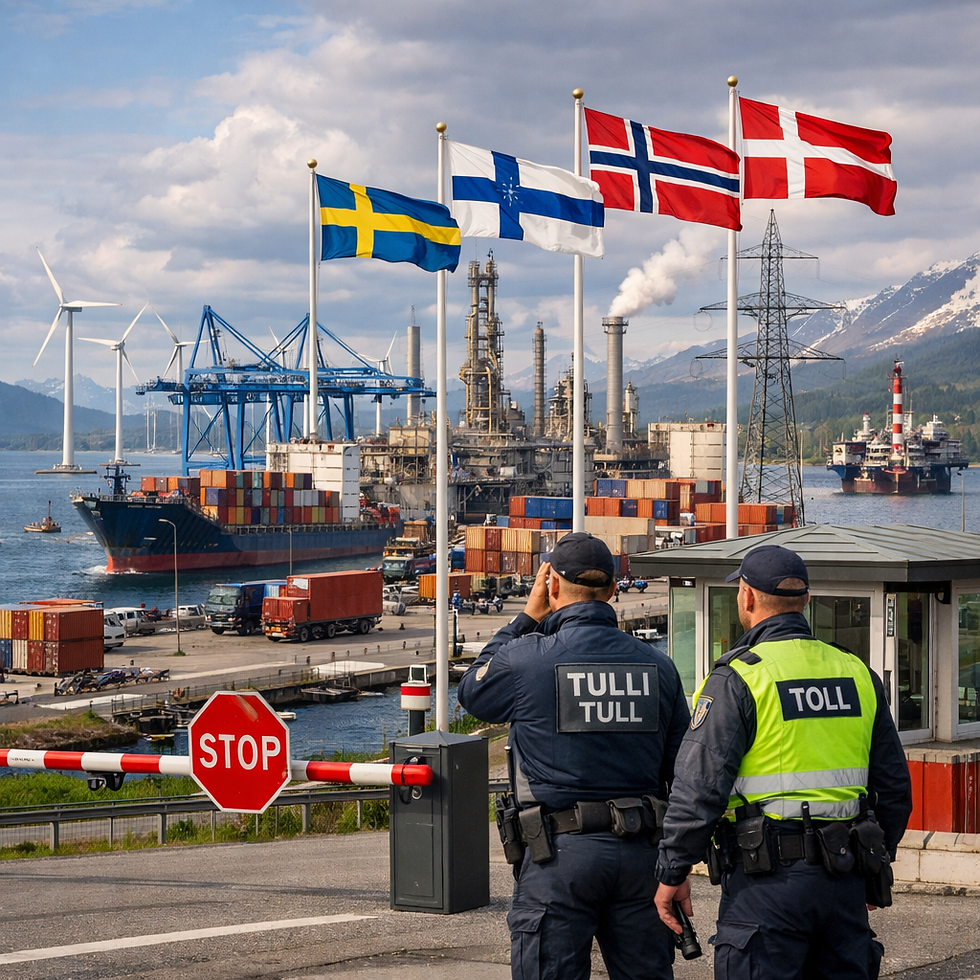
The joint declaration, encompassing Denmark, Finland, Iceland, Norway, Sweden, Åland, the Faroe Islands, and Greenland, emphasizes the urgent need for coordinated action to maintain essential goods and services during major crises, security emergencies, and even war. While not legally binding, its policy scope is expansive, covering emergency stockpiles, material preparedness, and securing access to critical raw materials and strategic resources. Finnish Prime Minister Petteri Orpo's initial proposal in 2023 has now materialized into the Nordic Security of Supply Network (NSSN), which will serve as the central coordinating body. This network is tasked with overseeing a joint feasibility study in 2027 to assess deeper cooperation mechanisms, indicating a sustained, long-term commitment to these initiatives. Businesses tracking regional trends on continents.tendersgo.com should prioritize monitoring NSSN announcements for future project scoping and policy developments.
Nordic Transport Preparedness Strategy 2026: Corridors and Connectivity
The Joint Nordic Strategy for Transport System Preparedness, developed by the Nordic transport ministries through the Nordic Transport Preparedness Cooperation (NTPC), lays out concrete steps to strengthen cross-border connectivity and military mobility. Unveiled at a ministerial meeting in Rovaniemi on March 11, 2026, this strategy specifically includes Finland, Sweden, Norway, and Iceland, with Denmark also referenced in the broader supply-security declaration. Four priority corridors have been identified for dual-use resilience upgrades: the Gulf of Bothnia axis, the Northern Norway–Sweden route, the Mid-Nordic line, and the Arctic Ocean route. These corridors are slated for significant investment in infrastructure and operational improvements, presenting a clear pipeline of potential tenders.
Operational measures outlined in the transport strategy include coordinated border-inspection protocols, the deployment of redundant power and telecom systems at key crossings, shared crisis-management drills, and harmonized digital transit documentation. The implementation of "green lanes" for essential freight, described as a pilot program from Q4 2026, is particularly noteworthy. This initiative aims to cut customs-processing times by up to 50%, a substantial improvement for logistics operators and a key indicator of digital transformation projects at border agencies. International firms specializing in border technology, customs software, and smart logistics solutions should actively track these developments and potential calls for proposals from national customs authorities and border agencies across the region.
Procurement opportunities stemming from these transport initiatives are diverse. They range from physical infrastructure upgrades along the identified corridors—think road and rail enhancements, bridge reinforcements, and port modernizations—to advanced digital systems for traffic management, border control, and secure data exchange. For instance, the requirement for redundant power and telecom systems at border crossings suggests tenders for backup generators, satellite communication arrays, and secure network infrastructure. Companies offering resilient power solutions and telecommunications equipment will find a receptive market. Furthermore, the push for harmonized digital transit documentation implies demand for enterprise software development, data integration services, and cybersecurity solutions to protect sensitive supply chain information. TendersGo users can set up alerts for CPV codes related to transport infrastructure, IT services, and telecommunications equipment across Finland, Sweden, Norway, and Iceland to capture these opportunities early.
Regional Coordination and Public-Private Collaboration
The overarching theme of both the supply security declaration and the transport strategy is enhanced regional coordination. The NSSN and NTPC are designed to facilitate this, ensuring that national efforts are harmonized and contribute to a stronger collective defense against disruptions. This includes joint planning for production, logistics, distribution, and trade continuity across all participating nations. The emphasis on public-private collaboration is a critical aspect, signaling that governments will look to the private sector for expertise, innovation, and capacity in areas like emergency stockpiling, logistics management, and the development of resilient supply chains. This collaboration model often leads to framework agreements, public-private partnerships (PPPs), and long-term service contracts that require specialized knowledge and a proven track record.
For international contractors and consultants, understanding the nuances of public-private engagement in each Nordic country will be crucial. While the declaration is not legally binding, it sets a clear policy direction that national procurement agencies will follow. For example, national defense ministries and emergency preparedness agencies in Sweden, Finland, and Norway are likely to issue tenders for warehousing solutions, cold chain logistics, and inventory management systems to support emergency stockpiles. The focus on strategic resources and critical raw materials also suggests opportunities for firms involved in mineral exploration, processing, and the establishment of secure supply lines for industrial inputs. Development bank consultants may find scope in advising governments on structuring these complex public-private ventures, particularly given the absence of identified large-scale project financing at this initial stage.
The administrative goal to reduce barriers at border crossings by harmonizing procedures and improving cross-border operational coordination directly translates into demand for process consultants, IT system integrators, and training providers. These entities will be essential in helping national agencies align their operational protocols and implement new digital tools. The explicit mention of shared crisis-management drills also points to potential contracts for training exercises, simulation software, and expert facilitators who can help prepare government officials and private sector partners for coordinated responses to regional emergencies. Business development teams should be actively engaging with agencies such as the Nordic transport ministries, national customs authorities, and border agencies to understand specific needs and upcoming procurement cycles.
Procurement Implications for International Suppliers
The strategic shift towards supply security and transport resilience in the Nordic region creates a robust environment for international suppliers. While specific tender reference numbers or project budgets are not yet public, the policy documents clearly delineate areas of future investment. For instance, the upgrades along the Gulf of Bothnia axis, connecting Finland and Sweden, could involve significant rail and road infrastructure contracts, including bridge construction, tunnel rehabilitation, and digital signaling systems. The Northern Norway–Sweden route and the Arctic Ocean route, often traversing challenging terrain, will require specialized engineering and construction firms capable of operating in harsh environments. These projects will likely involve extensive environmental impact assessments and require adherence to stringent Nordic sustainability standards.
Beyond traditional infrastructure, the emphasis on dual-use resilience means that projects will often have both civilian and military applications. This can influence technical specifications, requiring adherence to defense standards or certifications. Firms with experience in military logistics, secure communications, and robust infrastructure design will have a competitive advantage. For example, the requirement for redundant power and telecom systems at key crossings implies a need for suppliers of uninterruptible power supplies (UPS), secure fiber optic networks, and resilient wireless communication systems. These are specialized areas that often attract international expertise, particularly from countries with advanced technological capabilities in critical infrastructure protection.
The move towards harmonized digital transit documentation presents a significant market for software developers and IT service providers. Governments will be looking for solutions that can integrate disparate national systems, comply with international data security standards, and facilitate seamless information exchange across borders. This could include contracts for blockchain-based solutions for supply chain transparency, AI-powered analytics for risk assessment, and secure cloud platforms for collaborative data sharing. TendersGo, with its extensive database covering 220+ countries and 145 languages, is an indispensable tool for tracking these emerging opportunities. Users can set up unlimited alerts using keywords such as "border control software," "supply chain resilience," "critical infrastructure IT," and "emergency logistics" to receive notifications as tenders are published by relevant agencies across the Nordic region.
Monitoring Agencies and Future Outlook for Nordic Countries Supply Security Cooperation 2026
For businesses keen on participating in these initiatives, closely monitoring the activities of key agencies is paramount. The Nordic Security of Supply Network (NSSN) and the Nordic Transport Preparedness Cooperation (NTPC) are the primary coordinating bodies whose announcements and reports will guide future procurement. National transport ministries in Finland, Sweden, Norway, Iceland, and Denmark will be central to implementing the transport strategy. Additionally, national customs authorities, border agencies, and defense-linked logistics bodies will be direct buyers of technologies and services related to border control, military mobility, and emergency stockpiling. Firms should also pay attention to national emergency preparedness agencies and civil defense organizations, as they will play a crucial role in operationalizing the broader supply security declaration.
The joint feasibility study slated for 2027 by the NSSN will be a pivotal document, likely outlining specific projects, potential funding mechanisms, and a more detailed roadmap for deeper cooperation. This study will provide invaluable insights into the scale and scope of future investments, allowing companies to strategically position themselves. While no specific project budgets or loan figures have been identified yet, the commitment from multiple Nordic governments suggests that significant national resources will be allocated. Furthermore, given the strategic importance of these initiatives, there is potential for future engagement with international financial institutions, though this remains speculative at this stage. Export managers and trade advisors should engage with their respective national export credit agencies and trade promotion organizations for support in navigating these evolving markets.
The emphasis on production, logistics, distribution, and trade continuity means that a wide array of sectors will be impacted. From manufacturing and food processing to pharmaceuticals and energy, businesses involved in essential goods and services will need to adapt their supply chains to align with regional resilience goals. This could involve investments in local production capacity, diversification of suppliers, and participation in regional stockpiling efforts. The call for public-private collaboration indicates that governments are open to innovative solutions from the private sector, ranging from advanced inventory management systems to new models for emergency distribution. TendersGo provides a powerful platform for identifying these opportunities, allowing users to filter by specific sectors, countries, and CPV codes, ensuring no relevant tender is missed. The platform's AI summaries and PDF viewer facilitate rapid assessment of tender documents, crucial for timely responses in a competitive environment. The B2B marketplace also offers an avenue for forging partnerships with local entities, which can be advantageous in regional procurement processes.





