
North Asia’s New Rail and Road Corridors Redraw Trade Flows

The intricate web of North Asian trade logistics is undergoing a significant re-engineering in 2026, driven by substantial infrastructure investments and evolving geopolitical currents. New rail and road corridors are not merely enhancing connectivity; they are fundamentally redrawing the maps for freight and passenger movement across vast swathes of Eurasia. From the Bosporus to the Tumen River, development banks and national governments are channeling billions into projects designed to accelerate cross-border trade, improve efficiency, and, in some cases, establish alternative supply routes. International contractors, export managers, and business development teams must track these developments closely, as they signal a rich pipeline of procurement opportunities and a recalibration of regional economic flows.
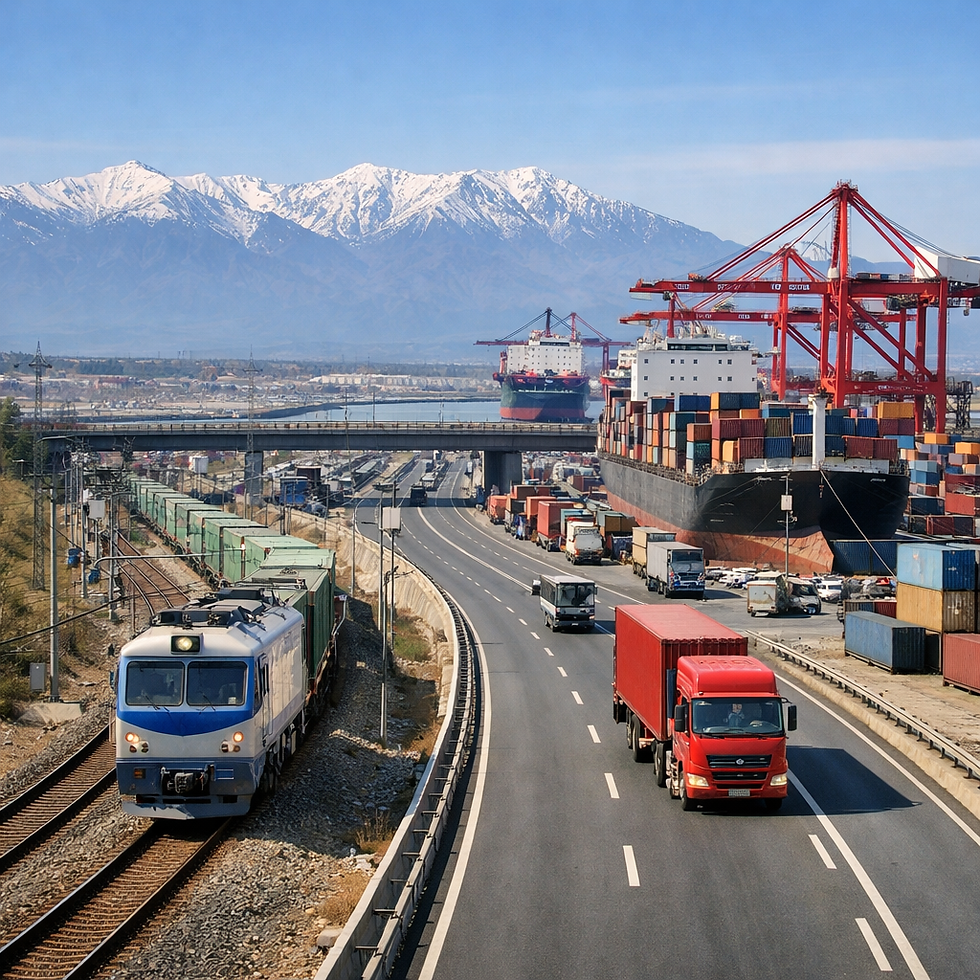
North Asia Cross-Border Transport Corridors in 2026: A Continental Shift
The most prominent development shaping North Asia's trade landscape this year is the Istanbul North Rail Crossing (INRAIL) in Türkiye. This ambitious project, a 127-km passenger and freight bypass through northern Istanbul, leverages the existing Yavuz Sultan Selim Bridge to create a high-capacity rail link between Asia and Europe. The financial backing for INRAIL underscores its strategic importance, with the Asian Infrastructure Investment Bank (AIIB) committing up to USD 1.5 billion in its first phase, and the World Bank approving a substantial USD 2 billion package on March 31, 2026. This combined USD 3.5 billion investment is set to significantly raise freight and passenger rail capacity, reducing logistics costs and integrating Türkiye's two major airports into the national rail network. The World Bank explicitly states INRAIL will improve reliability on the critical Trans-Caspian, Türkiye–EU, and Iraq Development Road corridors, solidifying Türkiye's role as a pivotal bridge state in Eurasian trade. The AIIB's disclosure indicates an execution window commencing July 1, 2026, and extending through December 31 of the project's end year, confirming an active procurement and implementation phase throughout 2026. This timeline suggests a continuous stream of tenders for civil works, rail systems, signaling, and related services, making Türkiye a focal point for international suppliers and contractors seeking opportunities in rail infrastructure.
Further east, a new Russia–North Korea bridge at the Tumen River is nearing completion, with reports in May 2026 indicating its readiness for operation. Russia’s Ministry of Transport specifies the bridge's capacity for up to 300 vehicles per day and 2,850 people daily. Regional coverage in 2026 suggests this crossing will materially expand overland logistics between Russia and North Korea, establishing a new node for freight and passenger movement, potentially altering existing sanctioned-border trade patterns. By September 2026, traffic through this new bridge is projected to reach 300 vehicles daily towards Russia’s far east, highlighting its potential significance for the Korean Peninsula–Russian Far East axis. This development points to a strategic expansion of eastern border logistics for Russia, with direct implications for cargo patterns and trade routes in the region. For international businesses, understanding the nuances of these evolving corridors, particularly those with geopolitical sensitivities, is paramount for identifying both direct and indirect procurement opportunities, as well as potential shifts in supply chain dynamics.
North Asia Trade Logistics Infrastructure 2026: Central Asian Integration and Beyond
Central Asia continues to serve as a critical nexus for Eurasian trade, with the Central Asia Regional Economic Cooperation (CAREC) program framing regional logistics around six transport corridors. These corridors link north, south, east, and west, and CAREC's 2026 transport portfolio remains firmly focused on trade facilitation through these established routes. A 2026 logistics analysis emphasized a renewed policy push for "Seamless Borders" and enhanced corridor coordination within Central Asia, exemplified by the Almaty–Bishkek Economic Corridor spanning Kazakhstan and Kyrgyzstan. This focus on streamlining border processes and improving intra-corridor efficiency presents opportunities for technology providers specializing in customs automation, logistics software, and border management solutions. Kazakhstan, a central player in Eurasian corridor trade, further cemented its position by launching a driverless freight transport pilot with Russia in 2026. Test routes between Astana and Moscow signal a significant step towards automating cross-border freight movement along these vital Eurasian arteries. This initiative highlights a growing demand for advanced logistics technologies, including autonomous vehicle systems, smart infrastructure, and digital freight management platforms, areas where international firms with specialized expertise can find substantial procurement opportunities.
Kazakhstan's strategic importance extends to its active participation in both North–South and East–West transport corridors, forming part of broader Eurasian connectivity efforts. The International North–South Transport Corridor (INSTC) remained a major issue in 2026, particularly concerning the missing 162-km Rasht–Astara rail link. This gap currently forces much of the freight at the Iran–Azerbaijan border onto roads, creating a bottleneck. However, a significant breakthrough occurred in mid-February 2026, when Russia and Iran formally agreed to construct this missing link, with a projected 48-month construction timeline. This agreement unlocks substantial future procurement for rail construction, track laying, and associated infrastructure in a geopolitically sensitive but economically vital corridor. The eastern INSTC branch, which traverses Kazakhstan, Turkmenistan, and Iran, remains the only end-to-end rail-connected route within the corridor, utilizing the KTI railway inaugurated in December 2014. Furthermore, the 2026 reporting identifies the Ashgabat Agreement as an operational multimodal framework connecting Central Asia to Iran and the Persian Gulf, with Kazakhstan having joined in 2015. These interconnected corridors underscore a regional commitment to multimodal transport solutions, creating diverse tender opportunities for railway infrastructure, port development, and logistics services across multiple countries.
North Asia Rail Bridge Development 2026: Key Players and Procurement Signals
The INRAIL project in Türkiye stands out as the clearest tender-relevant pipeline item within the 2026 data. The confirmed multilateral financing from AIIB (USD 1.5 billion) and the World Bank (USD 2 billion), coupled with a disclosed implementation window starting July 1, 2026, signals immediate and substantial procurement needs. The sheer scale of this USD 3.5 billion package implies forthcoming large-scale tenders for rail civil works, intricate rail systems, signaling technology, station construction, and comprehensive integration works. International engineering firms, construction companies, and technology providers with experience in high-capacity rail infrastructure should closely monitor official procurement portals and the TendersGo platform ( app.tendersgo.com ) for prequalification notices and detailed bid documents. The project's active cycle means that procurement for various components will likely be staged throughout the implementation window, offering sustained opportunities for specialized suppliers across the rail value chain.
Russia's expansion of eastern border logistics through the new Tumen River bridge with North Korea also presents specific procurement signals, albeit within a different geopolitical context. While direct international tenders might be less transparent for this specific project, the increased freight and passenger throughput will necessitate ancillary infrastructure development on both sides of the border. This could include upgrades to connecting road networks, logistics hubs, warehousing facilities, and border control infrastructure. Companies specializing in these areas, particularly those with experience in the Russian Far East or with partners in the region, should seek intelligence on local procurement initiatives. The bridge, designed for daily vehicle and passenger throughput, rather than merely symbolic connectivity, implies a need for robust operational and maintenance services, potentially creating long-term service contracts.
Regional Connectivity Investment: Shifting Trade Flows and Strategic Imperatives
The collective impact of these infrastructure projects points to a significant recalibration of North Asian trade flows in 2026. Türkiye is firmly establishing itself as the crucial bridge state, using projects like INRAIL to remove historical rail bottlenecks and integrate its transport network more deeply with both European and Asian systems. This strategic positioning will likely attract increased freight volumes through the country, creating downstream opportunities in logistics services, warehousing, and intermodal transport. For international freight forwarders and logistics companies, understanding these new capacities is essential for optimizing routes and offering competitive services across Eurasia. The World Bank's emphasis on INRAIL's role in improving reliability on the Trans-Caspian, Türkiye–EU, and Iraq Development Road corridors underscores the project's broader regional significance, linking multiple geopolitical and economic axes.
The new Russia–North Korea bridge at the Tumen River, while smaller in scale than INRAIL, represents a strategic shift in sanctioned-border logistics. This new overland node could alter existing trade patterns in the Russian Far East and the Korean Peninsula, potentially facilitating increased bilateral trade and creating new supply chain dynamics that international businesses need to monitor. The bridge's capacity for 300 vehicles and 2,850 people daily suggests a functional, rather than symbolic, expansion of connectivity, which will necessitate supporting infrastructure and services on both sides. Meanwhile, Kazakhstan continues to solidify its role as a central hub for Eurasian corridor trade. Its participation in CAREC corridors, the INSTC routing, and the 2026 automated freight pilot with Russia positions it at the forefront of regional logistics innovation. These initiatives, particularly the driverless freight pilot between Astana and Moscow, signal a demand for advanced logistics technologies and smart infrastructure solutions, presenting opportunities for specialized tech firms. TendersGo users can set up customized alerts for sectors like "rail infrastructure," "logistics technology," or "border management systems" across these countries to capture relevant opportunities ( app.tendersgo.com ).
Procurement and Project Pipeline Signals for International Suppliers
The INRAIL project's substantial funding from the AIIB and World Bank means that procurement processes will likely adhere to international standards, offering transparency and accessibility for global bidders. The project's scope, encompassing a 127-km bypass, signals requirements for a wide array of goods and services. This includes not only major civil engineering contracts for track laying, tunneling, and bridge construction, but also specialized procurement for rolling stock, signaling and telecommunications systems, electrification, station facilities, and maintenance equipment. Firms with expertise in high-speed rail, freight rail, and complex infrastructure integration will find this a particularly fertile ground for engagement. The disclosed execution window from July 1, 2026, through December 31 of the project's end year, implies a phased approach to procurement, with different packages coming to market at various stages. Prospective bidders should prepare for prequalification rounds, which are often the gateway to subsequent tender invitations.
Beyond INRAIL, the formal agreement between Russia and Iran in mid-February 2026 for the 162-km Rasht–Astara rail link on the INSTC, with a 48-month construction timeline, represents another significant future pipeline item. While the immediate tender releases for this project might not be as transparent as those backed by multilateral development banks, the scale of the undertaking suggests substantial opportunities for rail construction companies, material suppliers, and engineering consultants in the coming years. Similarly, the ongoing emphasis on "Seamless Borders" and corridor coordination within Central Asia, particularly for the Almaty–Bishkek Economic Corridor, implies a demand for consulting services, digital solutions for border management, and potentially upgrades to existing transport infrastructure. The driverless freight transport pilot between Astana and Moscow further indicates a growing market for automation technologies in logistics, including sensor systems, AI-powered fleet management, and secure communication networks. International suppliers seeking to penetrate these markets should use TendersGo's advanced search filters, including CPV/NAICS codes and country-specific alerts, to identify emerging opportunities as these projects move from planning to execution ( search.tendersgo.com ).
These developments collectively underscore a shift towards faster overland freight, enhanced corridor redundancy, and increasingly segmented trade routes across North Asia and its adjacent systems. The strategic investments in rail and road infrastructure are not merely about improving efficiency; they are about fundamentally reshaping geopolitical and economic alignments. For international businesses, understanding these shifts and proactively engaging with the procurement cycles of these mega-projects is essential for securing new contracts and expanding market presence in a rapidly evolving continental trade environment.





