
Polynesia’s 2026 energy shift: projects cut diesel imports, boost grids

Polynesia’s energy sector is undergoing a profound transformation in 2026, driven by a concerted push to replace imported diesel with localized renewable generation and advanced storage solutions. Across the vast expanse of the Pacific, from the bustling hubs of French Polynesia to the remote Austral Islands, governments and development agencies are channeling significant investment into solar, battery storage, and hybrid grid systems. This regional shift is not merely an environmental initiative; it is a critical economic strategy aimed at reducing reliance on volatile fossil fuel imports and bolstering energy security for island nations. International contractors and suppliers tracking these developments will find a robust pipeline of opportunities in photovoltaic installations, battery energy storage systems (BESS), and sophisticated grid integration projects.
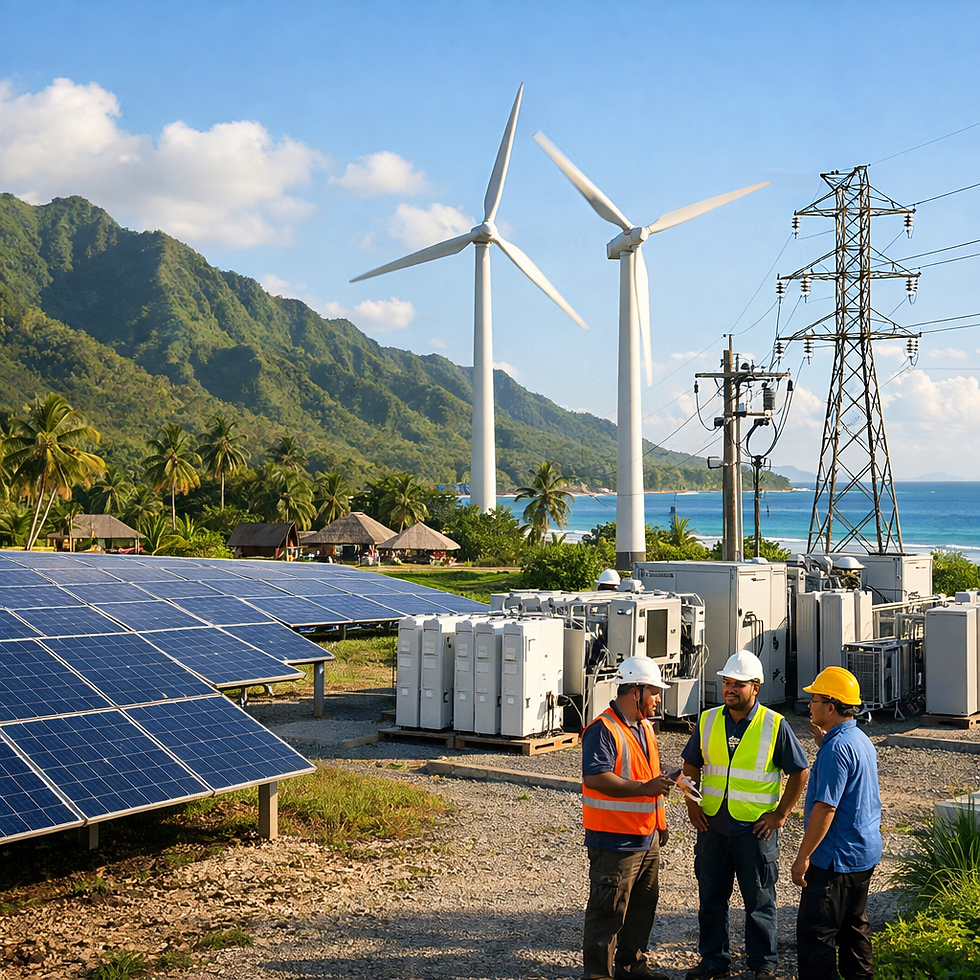
The French Polynesian territory stands out as a commercial focal point within this broader regional energy transition. Despite ambitious renewable targets, the 2026 briefing confirms that French Polynesia still sources approximately 93% of its electricity from imported diesel. This stark reliance underscores the urgency behind the policy goal of achieving 75% renewable energy penetration by 2030. Funding mechanisms such as the French state’s Energy Transition Fund and the territory’s recovery plan are actively supporting these initiatives, creating a fertile ground for public and private sector engagement in renewable facilities, grid upgrades, and hybrid power systems. These projects, often co-financed, represent tangible procurement avenues for firms specializing in sustainable energy infrastructure.
Polynesia Renewable Energy Projects 2026: Significant Capital Inflows
Investment figures for 2026 highlight a substantial commitment to renewable energy across Polynesia. The Polynesian energy committee, for instance, approved four new projects in October 2026 with a total state aid package of Fcfp 2.39 billion. The overall investment for these four initiatives alone reaches Fcfp 5.93 billion. These specific projects encompass two critical hybridizations of existing thermal power stations in the Austral Islands, integrating photovoltaic panels and battery storage, alongside a dedicated storage installation in Tahiti. Such projects signal immediate demand for engineering, procurement, and construction (EPC) services, as well as specialized equipment suppliers for PV arrays and advanced battery technologies.
A prime example of this island-level transformation is Tikehau, where the first solar-plus-storage plant received Fcfp 360 million in financing from the French state, covering 60% of its total project cost. This plant is engineered to supply up to 90% of the island’s electricity from renewable sources, dramatically reducing its diesel consumption. The Tikehau model offers a clear template for future procurements across other Polynesian islands facing similar energy challenges. These smaller, distributed projects, while individually less massive than mainland utility-scale ventures, collectively represent a significant market for specialized microgrid solutions and island-specific logistics expertise. Firms can track these opportunities and set up alerts for specific CPV codes on TendersGo to capture bids relevant to solar PV, battery storage, and energy management systems.
Polynesia Diesel Import Reduction Energy Transition: Grid Modernization and Storage
The shift away from diesel is intrinsically linked to the buildout of advanced grid infrastructure and robust energy storage. Tahiti, a bellwether for the wider region, crossed the 50% renewable electricity threshold for the first time in 2026, a milestone largely attributed to a surge in rooftop solar installations and the commissioning of first-tranche solar farms towards the end of 2024. This achievement demonstrates the tangible impact of planned renewable capacity additions and sets a precedent for other Polynesian islands aiming to diversify their energy mix.
Looking ahead, the second tranche of solar farm tenders, launched on February 12, 2025, is scheduled for commissioning by mid-2028. This tranche holds a theoretical total capacity of 25 MWc of solar and 25 MWh of storage, projected to contribute an additional 6% to Tahiti’s renewable mix. When combined with the first tranche’s 30.4 MWc and 36 MWh of storage, which delivered a 7% boost, the cumulative impact on the territory’s energy profile is significant. From 2023 to 2025, the territory successfully completed 21 projects, leading to a 5.5% increase in the Polynesian electricity mix from renewables. Furthermore, new solar-on-grid development, primarily through rooftop deployments, is expected to add approximately 5 MW annually. This consistent pipeline of projects offers sustained opportunities for solar panel manufacturers, battery suppliers, inverter manufacturers, and grid integration specialists, particularly those with experience in distributed generation and microgrid applications. International firms can utilize TendersGo's French Polynesia page to monitor upcoming tenders and partnership opportunities.
Polynesia Regional Power Storage and Solar Investment: Island-Specific Solutions
The core of Polynesia’s energy strategy revolves around reducing diesel consumption at the island level, a crucial step given the logistical challenges and high costs associated with fuel transport across vast distances. The Tikehau solar-plus-storage plant is a prime example of this strategy, targeting a 90% renewable electricity supply for the island. This model is being replicated and adapted across other isolated grids within French Polynesia. The broader islanded-grid strategy involves pairing solar and battery storage with existing diesel generators to achieve substantial fuel savings, with some systems projected to cut consumption by nearly 50%.
Specific microgrid concepts are being developed for islands such as Huahine, Tahuata, Rurutu, Raiatea, and Taha’a. This operational focus on self-sufficient, isolated grids, rather than large-scale, mainland-style bulk power expansion, dictates a different set of procurement requirements. Demand centers on compact, resilient, and easily deployable solar PV systems, advanced battery energy storage solutions, and intelligent energy management systems (EMS) capable of optimizing generation and consumption in real-time. A recent Pacific analysis confirms this trend, noting the ongoing digitization of island grids through the integration of PV and BESS combinations. This emphasis on localized, smart grid solutions presents opportunities for companies specializing in microgrid design, installation, and operation, as well as those providing advanced power electronics and control systems. The ability to manage complex logistics for remote island deployments will be a key competitive advantage.
Polynesia Infrastructure Financing Climate Resilience: Institutional Backing
The robust financial backing from key institutions underpins the scale and ambition of Polynesia’s energy transition. The French state, through its Fonds de transition énergétique (Energy Transition Fund), and Électricité de Polynésie, alongside the Polynesian energy committee, are central to both funding and implementation. The Agence Française de Développement (AFD) plays a significant role, financing or supporting multiple Polynesian energy-transition schemes, including the hybridization of thermal plants on Huahine, Tahuata, and Maiao. These projects often involve complex financing structures that blend grants, concessional loans, and direct investment.
The territory’s transition benefits from substantial financial commitments, including NZ$130 million from the 2021–2023 recovery plan and a further NZ$120 million from the Energy Transition Fund established by the French state. These funds are explicitly earmarked for renewable facilities, grid upgrades, energy storage, and hybrid power systems. For international firms, understanding these funding channels is paramount. Development bank consultants and business development teams should focus on engaging with these agencies to align their proposals with the strategic objectives and funding priorities. Accessing detailed tender documents and understanding local content requirements, where applicable, will be crucial. TendersGo provides advanced filters to track tenders funded by specific development banks or government agencies, simplifying the search for relevant opportunities.
Polynesia Cross-Border Climate Adaptation Projects: Procurement Outlook
The October 2026 approval of four new projects, with their significant budgets, signals an active near-term procurement cycle for photovoltaic equipment, battery-storage systems, and hybrid-thermal components. The second tranche of solar farm projects, launched in February 2025 and slated for commissioning by mid-2028, represents a live pipeline of opportunities for contractors and suppliers. This ongoing demand is concentrated in specific areas: PV modules, advanced battery systems (lithium-ion, flow batteries), energy management systems (EMS) for grid controls, hybrid power integration solutions, and specialized island logistics services. The Tikehau project offers a practical benchmark, with state co-financing covering 60% of the capital cost, providing valuable insight for structuring competitive bids on similar island projects.
The broader context of Polynesia’s energy transition is its direct impact on trade and imports. The overwhelming dependence on imported fossil fuels for power generation and transport means that every new renewable energy installation directly contributes to import substitution. While specific quantified diesel-import tonnage or customs tariff figures for Polynesia are not provided in the 2026 sources, the consistent framing of the energy transition as a fuel-import reduction strategy is clear. More PV, more batteries, and more hybrid grids directly translate to reduced exposure to international diesel price volatility and the complex logistics risks inherent in supplying remote island communities. This strategic imperative ensures continued government support and funding for renewable projects, making Polynesia a consistent market for international energy sector participants. Export managers and trade advisors should recognize the long-term commitment to this transition, which extends beyond individual project cycles. Monitoring the regional policy landscape and procurement trends through platforms like TendersGo's energy sector page can provide a competitive edge.
Navigating the Polynesian Tender Landscape
For international contractors, export managers, and business development teams, navigating the Polynesian tender landscape requires a nuanced understanding of both the technical requirements and the logistical challenges inherent in island development. The emphasis on hybrid systems, combining solar PV, battery storage, and existing thermal generation, demands expertise in integrating disparate technologies for optimal performance and fuel savings. The focus on microgrids for remote islands also necessitates robust solutions capable of operating autonomously and reliably in challenging environmental conditions.
Furthermore, the significant involvement of the French state and development agencies like AFD means that procurement processes often adhere to international standards, providing transparency but also requiring meticulous adherence to bidding protocols. Companies should prepare for tenders that prioritize not only technical capability and cost-effectiveness but also local capacity building, environmental impact assessments, and long-term maintenance strategies. The sustained investment across multiple islands and the clear policy direction towards reducing diesel dependence suggest a stable and growing market for renewable energy solutions in Polynesia for the foreseeable future.


