
Visegrad Group 2026: V4 Pact Targets Rail, Grid and Defense

The Visegrad Group, comprising Czechia, Hungary, Poland, and Slovakia, enters 2026 with a sharpened focus on practical cooperation across critical sectors. This year marks a significant period for regional integration, driven by an imperative for economic security and supply-chain resilience. The International Visegrad Fund, celebrating its 25th anniversary, underpins much of this collaborative effort, with Hungary’s presidency from July 2025 to June 2026 setting the strategic priorities. The overarching theme, "Smart & Sustainable Cities in the V4 Region," extends beyond urban planning to encompass energy efficiency, transportation, water resources, emission reduction, and environmental protection, all critical components of modern infrastructure and defense readiness. This regional pact is not merely a political alignment; it is a platform generating concrete procurement opportunities for international contractors and suppliers in rail, electricity grids, and defense.
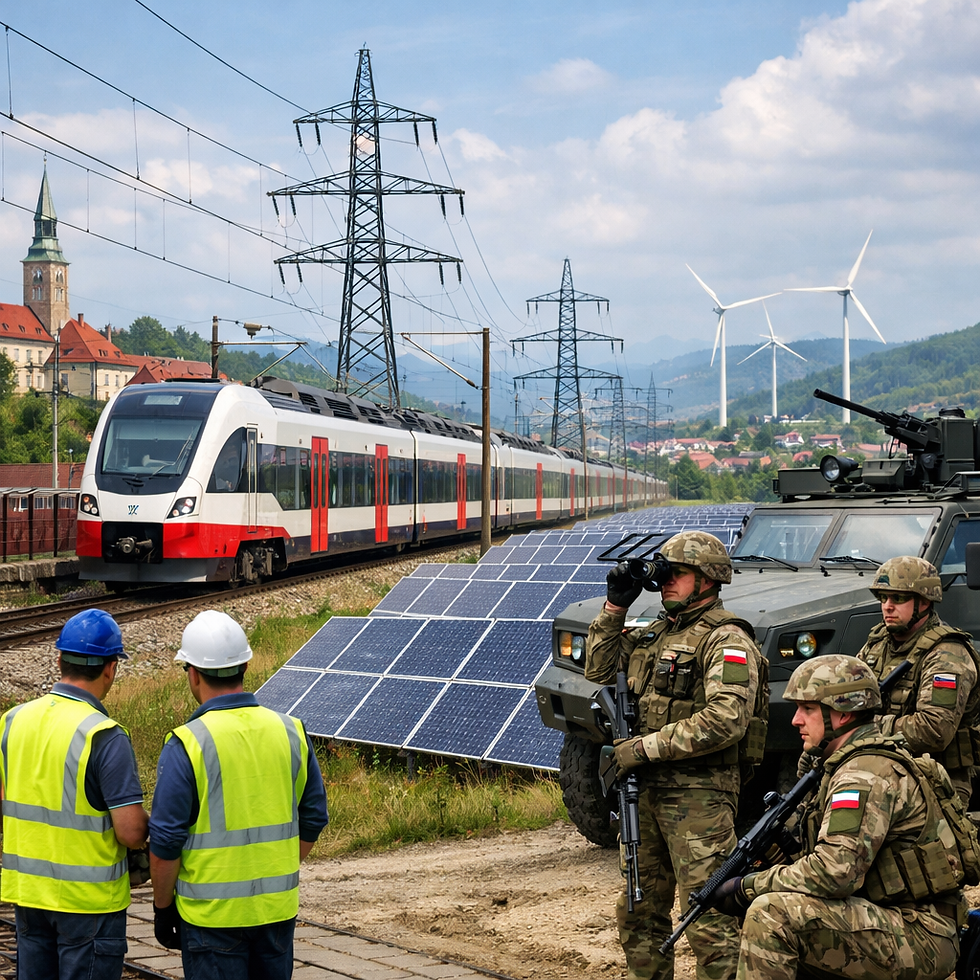
Visegrad Group 2026 Regional Cooperation and Economic Security
The V4 framework, established in 1991, has evolved into a robust mechanism for practical cooperation, particularly in areas directly impacting economic security and supply-chain resilience. For 2026, the strategic priorities articulated by the International Visegrad Fund under Hungary's presidency emphasize infrastructure development and technological integration across the four nations. This includes projects aimed at enhancing energy efficiency and modernizing transportation networks, which directly translate into cross-border tenders. The emphasis on "Smart & Sustainable Cities" implies a significant push towards digital solutions and advanced urban infrastructure, fostering a demand for intelligent transport systems, smart grid technologies, and sustainable water management solutions across Czechia, Hungary, Poland, and Slovakia. These initiatives are designed to strengthen the internal market of the V4, reducing dependencies and bolstering collective economic resilience.
The V4 states are actively using this platform to coordinate on major infrastructure projects that transcend national borders. This cross-border approach is evident in the planned upgrades to rail networks and the reinforcement of electricity grids, both of which are central to the region's long-term economic stability. For instance, improvements in intermodal freight capabilities across Poland and Slovakia will not only facilitate trade but also enhance defense mobility, a critical aspect of regional security. Similarly, the drive for enhanced energy efficiency and emission reduction across all V4 nations will necessitate significant investment in renewable energy integration and grid modernization, creating a steady stream of tenders for specialized engineering, procurement, and construction (EPC) firms. International firms tracking opportunities on TendersGo should utilize CPV codes related to smart city infrastructure, energy management, and sustainable transport to identify these emerging projects.
V4 Cross-Border Rail and Power Grid Plans
Transport connectivity, particularly rail, remains a cornerstone of V4 integration, essential for both economic development and defense mobility. The 2026 V4 agenda signals a continued commitment to cross-border rail upgrades and intermodal freight improvements. This involves modernizing existing lines, enhancing signaling and train control systems, and upgrading border stations to streamline operations across Czechia, Hungary, Poland, and Slovakia. These improvements are vital for industrial supply chains, labor mobility, and maintaining the export competitiveness of the region. International suppliers of rolling stock, track materials, and advanced electrical traction systems will find ample opportunities. The focus extends to passenger connectivity within Central Europe, aiming to better integrate the V4 countries with the wider EU transport network, driving demand for high-speed rail components and associated infrastructure.
Beyond rail, electricity grid cooperation is a critical component of the V4's energy security strategy for 2026. The regional energy landscape is characterized by industrial power-demand growth, defense-industrial electrification, and the increasing integration of renewable energy sources. This necessitates significant investment in cross-border grid reinforcement, interconnector upgrades, and the deployment of advanced balancing and flexibility systems. Substation modernization and digital grid management are also high on the agenda to mitigate import dependence risks and enhance overall grid resilience. Procurement opportunities will emerge for transmission infrastructure components, high-voltage transformers, SCADA systems for grid digitalization, and cybersecurity solutions for utility networks. Companies specializing in smart metering and load-management systems will also find a receptive market within the V4 states as they strive for greater energy independence and efficiency. Firms can set up unlimited alerts on TendersGo for these specific categories, ensuring they don't miss out on project announcements.
Visegrad Group Defense Procurement 2026 and Industrial Participation
Defense cooperation within the Visegrad Group is poised for significant expansion in 2026, driven by a collective push for enhanced security and industrial participation in EU-wide initiatives. On April 15, 2026, the European Commission announced a substantial €1.07 billion in funding for 57 new European Defence Fund (EDF) projects. This allocation includes €675 million for 32 capability development initiatives and €332 million for 25 research projects, part of the larger €7.3 billion EDF budget for 2021–2027. The V4 states are strategically positioned to benefit from this funding, particularly in areas aligned with EDF priority flagships such as the European Drone Defence Initiative, Eastern Flank Watch, European Air Shield, and European Space Shield. Project STRATUS, for example, will develop an AI-powered cyber defense system for drone swarms, presenting a clear opportunity for technology providers.
The implications for V4 procurement and industry are profound. The region stands to gain from increased participation in the development and deployment of drones and counter-drone systems, advanced cyber defense technologies, AI-enabled command systems, and integrated air defense solutions. Space-related security technologies are also a burgeoning area of interest. Beyond EDF, there is growing traction for mutual procurement under the EU’s SAFE defense modernization instrument, fostering a more integrated defense industrial base across the V4. A notable regional trend is the pursuit of joint ammunition production initiatives, signaling a move towards greater self-sufficiency in critical defense supplies. This coordination extends to interoperability, harmonized defense objectives, and joint capability development, creating a predictable demand for specialized defense contractors and suppliers. Tenders for these projects will often be found through European Union procurement channels, but local V4 ministries of defense will also issue calls for specific national components or services, which TendersGo tracks extensively across all 220+ countries.
Poland, as the largest economy within the V4, is a significant driver of defense and manpower mobilization. The Polish Defence Ministry announced a new military training program for May 2026, aiming to train approximately 400,000 people. This initiative, the largest current-scale defense manpower effort in the region, will generate substantial procurement needs that can extend benefits to the entire V4. Expect tenders tied to training equipment, advanced simulation systems, logistics support contracts, and infrastructure development for reserve forces. This includes communications systems, protective gear, digital training platforms, and comprehensive transport and base support services. While directly benefiting Poland, the scale of this mobilization could lead to cross-border opportunities for V4 suppliers, especially in specialized training solutions and equipment that can be standardized across the region for enhanced interoperability. Such large-scale training programs often involve a wide array of support services, from catering to medical facilities, opening up tenders for diverse international and regional service providers.
Trade and Economic Integration Signals in the V4
The Visegrad Group’s strategic direction for 2026 reinforces its commitment to using regional cooperation as a means to strengthen internal supply chains and reduce reliance on non-European suppliers. This economic-security narrative is increasingly intertwined with defense-industrial base strengthening, shared supply chains, and coordinated purchases. The most relevant sectors for this intensified trade and industrial coordination include defense manufacturing, rail equipment, electricity equipment, dual-use technologies, construction materials, and logistics services. While specific late-2025/2026 trade volume figures were not provided in the research brief, the policy signals indicate a clear intent to foster intra-V4 trade and investment in these critical areas. This approach aims to build a more resilient and self-sufficient regional economy, capable of weathering external shocks and supporting strategic objectives.
The emphasis on coordinated purchases and shared supply chains means that international firms looking to enter the V4 market should consider partnerships with local companies to meet regional content requirements and leverage existing networks. For instance, joint ventures in defense manufacturing or rail component production could be particularly fruitful. The "Smart & Sustainable Cities" initiative under Hungary's presidency will also drive trade in advanced urban technologies and environmental solutions. This includes everything from smart street lighting and waste management systems to electric vehicle charging infrastructure and intelligent public transport solutions. The V4 states are signaling a preference for integrated, regional solutions where possible, making cross-border collaboration a key differentiator for bidders. Companies can leverage TendersGo's sector-specific search capabilities to identify opportunities in these emerging and prioritized areas across Czechia, Hungary, Poland, and Slovakia.
Key Agencies and Procurement Watchlist for TendersGo
Several key agencies and institutions will drive procurement activities within the Visegrad Group in 2026. The European Commission, through the European Defence Fund (EDF), is a primary financier, as evidenced by the €1.07 billion investment announced on April 15, 2026. This funding will directly influence tenders related to EDF-backed projects, particularly in drone and counter-drone systems, AI cyber defense, and advanced military capabilities. The International Visegrad Fund, under the Hungarian presidency, will also channel support towards projects aligning with the "Smart & Sustainable Cities" theme, including energy efficiency, transport, and environmental protection initiatives. V4 Ministries of Defence, building on their 2014 long-term defense cooperation strategy, will issue tenders for interoperability solutions, joint capability development, and industrial cooperation, including ammunition production initiatives. Poland’s Defence Ministry, with its ambitious 2026 mass training program, will be a significant source of tenders for training support services, communications systems, and logistics.
For international contractors and export managers, the procurement watchlist for 2026 is robust. In defense, look for EDF-related technology calls, especially for drone and counter-drone systems, AI cyber defense, and ammunition production. Military training support services, including equipment, simulation, and logistics, will be significant, particularly emanating from Poland. In the rail sector, cross-border line upgrades, advanced signaling and control systems, border station modernization, and traction power supply projects will be prevalent. The power grid sector will see tenders for interconnectors, substation upgrades, grid digitalization, and cybersecurity solutions for utilities. Finally, civil resilience initiatives will drive tenders for smart city infrastructure, transport electrification, environmental monitoring systems, and public-sector digital platforms. Utilizing TendersGo's country-specific filters for Czechia, Hungary, Poland, and Slovakia will be crucial to capture these diverse opportunities as they emerge, providing a competitive edge in this dynamic regional market.





