West Asia’s 6 GWh BESS Buildout Reshapes Grid Investment

The West Asian power sector is undergoing a profound transformation in 2026, driven by an unprecedented surge in utility-scale Battery Energy Storage System (BESS) procurement. Our analysis at continents.tendersgo.com confirms that regional grid operators and developers are moving decisively beyond pilot projects, committing to multi-gigawatt-hour deployments that redefine energy infrastructure investment across the Arabian Peninsula. This buildout, primarily concentrated in Saudi Arabia and the United Arab Emirates, with Qatar and Oman also signaling substantial future mandates, represents a strategic pivot towards grid modernization, renewable energy integration, and enhanced system reliability.
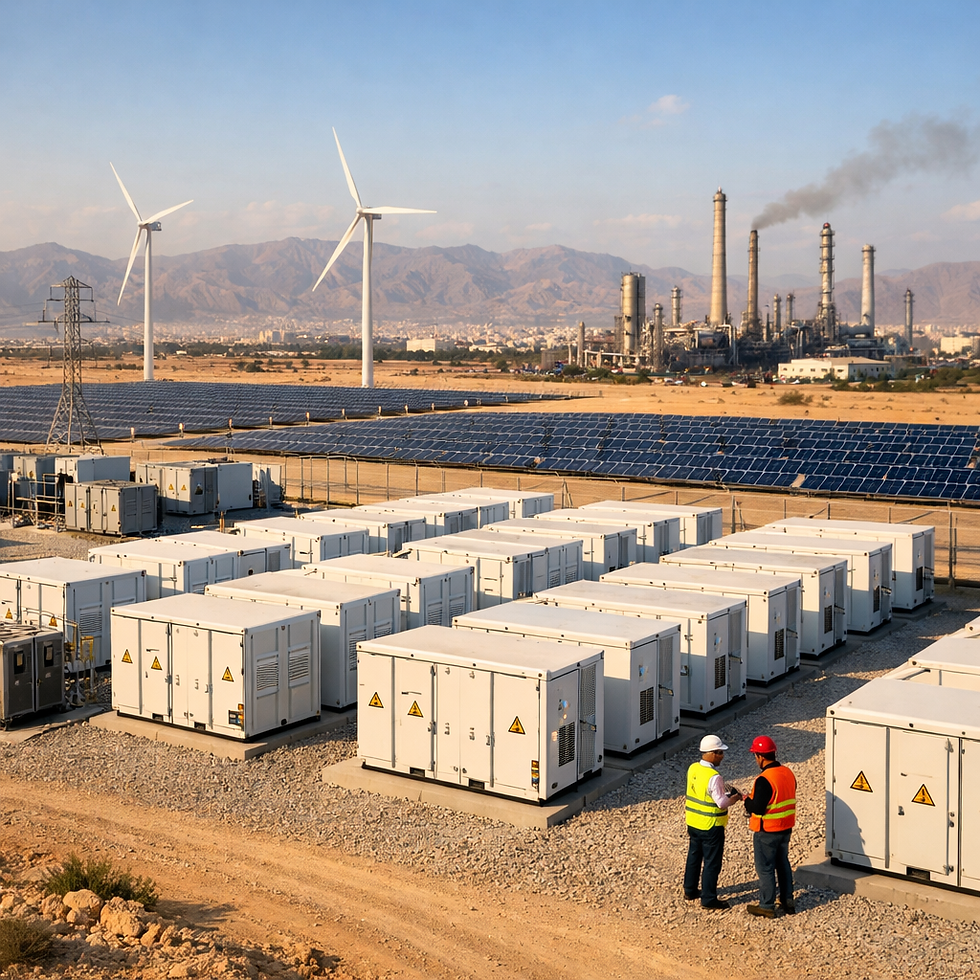
The scale of current BESS procurements is staggering. Saudi Arabia alone has launched a 12 GWh qualification round and simultaneously awarded 6 GWh in Storage Services Agreements (SSAs) this year. The United Arab Emirates, through the Abu Dhabi RTC project, is seeing an 11.275 GWh BESS component integrated into a 5.2 GW solar development. These figures underscore a regional commitment to long-duration, utility-backed storage, moving away from fragmented, smaller-scale initiatives. International contractors, export managers, and business development teams must recognize this as a critical window for engagement, particularly given the integrated nature of these projects, which extend beyond battery cells to encompass comprehensive grid interconnection infrastructure.
West Asia Battery Energy Storage Projects 2026: A Procurement Hotbed
Saudi Arabia stands as the undeniable epicenter of West Asia’s 2026 BESS procurement wave. The Saudi Power Procurement Company (SPPC) initiated a qualification round on April 24, 2026, for a second group of six BESS projects. Each of these projects is substantial, sized at 500 MW / 2,000 MWh, designed for four hours of dispatch. Qualification statements were due on May 5, 2026, at 14:00, signaling an aggressive timeline for project progression. This 12 GWh program alone represents a significant portion of the regional buildout, indicating SPPC's strategic intent to rapidly scale storage capacity across the Kingdom.
In parallel, ACWA Power signed 1.5 GW / 6 GWh in SSAs with SPPC on August 24, 2026, for the Haden, Muwayh, and AlKahfah projects. Each of these facilities mirrors the 500 MW / 2,000 MWh specification, operating under 15-year storage services agreements. This dual-track approach—simultaneous qualification rounds and SSA awards—demonstrates a mature procurement strategy aimed at securing both immediate capacity and a pipeline for future development. The combined investment for Saudi Arabia’s four-project storage program, previously reported, exceeds $1.16 billion, with each 500 MW project designed for four-hour delivery. This financial commitment solidifies the Kingdom’s position as a primary market for BESS developers and suppliers.
The United Arab Emirates is also making significant strides in utility-scale storage. Masdar, in partnership with the Emirates Water and Electricity Company (EWEC), awarded BYD the contract for 1,644 MW / 11.275 GWh of BESS as part of a 5.2 GW solar-plus-storage development in Abu Dhabi. This represents one of the largest single battery storage awards in the region, emphasizing the trend towards integrated renewable energy solutions. The sheer volume of storage capacity in this single project underscores Abu Dhabi’s ambition to move from pilot-scale utility storage to mega-project status, positioning the UAE as a critical market for long-duration BESS technologies and associated EPC services.
Beyond these direct utility procurements, the regional EPC market is also seeing substantial activity. Larsen & Toubro (L&T) reported on August 25, 2026, securing a “major” mandate for three BESS projects totaling 6 GWh across West Asia. This EPC package is comprehensive, encompassing not only the battery systems but also critical grid infrastructure such as grid interconnections, pooling substations, and underground cables. L&T classified this internally as an order valued between ₹5,000 crore and ₹10,000 crore, highlighting the significant commercial value embedded in these integrated power infrastructure projects. Such mandates confirm that the procurement scope extends far beyond battery cells, creating extensive opportunities for suppliers of electrical balance of plant, civil works, and grid integration services.
West Asia Grid Modernization Investment 2026: Expanding Regional Opportunities
The strategic expansion of BESS across West Asia is fundamentally an investment in grid modernization, aiming to enhance stability, integrate intermittent renewable sources, and optimize energy dispatch. While Saudi Arabia and the UAE lead in project volume, other regional players are actively shaping their own BESS mandates. Qatar, for instance, is tracked to prepare a 400 MW / 800 MWh national BESS mandate, with tender timing anticipated in H2 2026. This indicates a broader regional commitment to storage, extending beyond the largest economies. International firms tracking these developments can find upcoming tender opportunities on platforms like app.tendersgo.com by setting up alerts for specific countries and CPV codes related to energy storage.
Oman is another market showing significant potential, with a possible 500 MW / 1 GWh extension linked to the Ibri II solar project. An RFP for this capacity is expected in Q4 2026. This suggests that existing renewable energy hubs are natural points for BESS integration, providing a clear pathway for capacity expansion. The pattern emerging is one where BESS is not a standalone investment but rather an essential component of larger renewable energy and grid upgrade programs. This integrated approach means that procurement opportunities often bundle storage with generation assets or significant transmission and distribution network enhancements.
The nature of these procurements underscores a shift from simple component supply to comprehensive system integration. The L&T mandate, which includes grid interconnections, pooling substations, and underground cables, exemplifies this. For international suppliers, this means opportunities exist across the entire value chain: battery manufacturers, power conversion system (PCS) providers, engineering consultants, civil contractors, and suppliers of high-voltage transmission equipment. Development bank consultants and government procurement officials across the region are increasingly seeking partners capable of delivering turnkey solutions, rather than just individual parts. This complexity necessitates robust project management and regional expertise, which can be a differentiator for bidders.
The financial scale of these projects is attracting significant investor interest. The Saudi program’s $1.16 billion investment, coupled with L&T’s multi-crore mandate, demonstrates the commercial viability and strategic importance placed on BESS. This capital flow is creating a dynamic environment for Public-Private Partnerships (PPPs) and independent power producer (IPP) models, particularly for projects with long-term SSAs. For investors, the long-term capacity-style revenue streams, exemplified by ACWA Power’s 15-year agreements with SPPC, provide a stable and predictable return on investment, making West Asia an attractive destination for energy infrastructure capital.
West Asia Renewable Integration BESS Contracts: Procurement Implications and Access
The procurement processes for these multi-gigawatt-hour BESS projects provide clear signals for international suppliers and contractors. The Saudi program, managed by SPPC, demonstrates a structured qualification-first approach. Vendors must closely monitor SPPC prequalification deadlines, as inclusion in these rounds is a prerequisite for subsequent bidding on SSAs. This phased procurement allows SPPC to vet technical capabilities and financial strength before engaging in detailed commercial negotiations. Firms interested in these opportunities should regularly check tendersgo.com for updates on SPPC’s tender announcements and prequalification notices, filtering by relevant sectors and countries.
The L&T award confirms that the scope of West Asia storage procurement extends beyond just batteries. EPC packages frequently include substations, cables, and interconnection works. This broadens the EPC bid scope and generates significant subcontracting opportunities for specialized firms. Companies providing high-voltage switchgear, transformers, SCADA systems, and civil engineering services for foundation work will find ample opportunities within these integrated projects. Business development teams should target not only the primary procurement agencies but also the major EPC contractors like L&T, who are actively seeking sub-vendors and technology partners.
The UAE’s Abu Dhabi RTC project, with its massive 11.275 GWh BESS component, highlights the increasing use of long-term capacity-style revenue mechanisms and integrated solar-plus-storage tenders. This contrasts with standalone merchant BESS models, which are less prevalent in the current West Asian landscape. The involvement of entities like Masdar and EWEC signals a preference for robust, utility-grade solutions with long operational horizons. For suppliers, this means focusing on proven technologies, reliability, and comprehensive service agreements rather than purely cost-driven battery solutions. The long-term nature of these contracts also necessitates a strong regional presence or partnership strategy for ongoing maintenance and support.
Moreover, the sheer scale of these projects suggests a move towards standardized, repeatable deployments. While each project will have unique site conditions, the underlying technology and procurement frameworks are likely to become more consistent. This offers advantages for manufacturers who can scale production and for EPC firms who can refine their execution methodologies. Accessing these opportunities requires a proactive approach to tender intelligence, utilizing platforms that provide detailed tender documents, such as the PDF viewer available on app.tendersgo.com , to understand specific technical requirements and contractual clauses.
West Asia Energy Storage EPC Mandate: The Integrated Project Approach
The West Asian energy storage market is characterized by an integrated project approach, where BESS deployments are part of larger grid infrastructure and renewable energy initiatives. The L&T mandate for three BESS projects totaling 6 GWh perfectly illustrates this trend. The EPC package covers not only the battery systems but also critical balance-of-plant components, including grid interconnections, pooling substations, and underground cables. This holistic approach ensures seamless integration into the existing and future power network, addressing potential grid bottlenecks and enhancing overall system resilience.
This comprehensive scope means that procurement is not limited to battery cell manufacturers. There are substantial opportunities for suppliers of power electronics, such as inverters and converters, as well as for providers of sophisticated energy management systems (EMS) and battery management systems (BMS). The integration of pooling substations and underground cables also opens doors for specialized civil engineering firms, electrical contractors, and manufacturers of high-voltage transmission and distribution equipment. These are complex, multi-disciplinary projects demanding a wide array of technical expertise and supply chain capabilities.
The financial scale of these integrated EPC mandates is considerable. L&T’s internal classification of its West Asia mandate as a “major” order, valued between ₹5,000 crore and ₹10,000 crore, translates into hundreds of millions of U.S. dollars. This significant investment signals confidence in the long-term demand for such infrastructure. For international contractors, this implies the need to form consortia or strategic partnerships to bid on these large-scale projects effectively. A consortium approach can combine specialized technical expertise with local market knowledge and financial backing, making bids more competitive.
The emphasis on grid interconnections and pooling substations highlights the fundamental role of BESS in supporting grid stability and facilitating the evacuation of renewable energy. As West Asian nations accelerate their decarbonization efforts, the need for robust grid infrastructure that can accommodate large-scale intermittent generation becomes paramount. BESS acts as a critical enabler, providing frequency regulation, voltage support, and capacity firming. Therefore, companies specializing in grid stabilization technologies and smart grid solutions will find increasing demand in this evolving market. Tracking these integrated projects requires a broad search strategy, often involving keywords related to power infrastructure, substations, and renewable energy, in addition to battery storage, on platforms like search.tendersgo.com .
West Asia Power Infrastructure Procurement 2026: Regional Trends and Future Outlook
The overarching trend in West Asia’s power infrastructure procurement for 2026 is the strategic deployment of BESS as a foundational element for grid modernization and renewable energy integration. The region’s 2026 BESS buildout is now substantial enough to support repeated tenders in the multi-GWh range, particularly within Saudi Arabia and the UAE. This consistent demand creates a stable market for long-term engagement from international suppliers and service providers.
For procurement intelligence, the most actionable near-term targets are SPPC qualification windows in Saudi Arabia, EWEC/Abu Dhabi execution packages in the UAE, and EPC scopes that bundle battery systems with broader grid infrastructure. These specific entry points offer direct access to significant project opportunities. The commercial signal is unequivocal: West Asia storage is being procured as critical grid reliability and renewable integration infrastructure, not as isolated battery deployments. This means that proposals must articulate the broader system benefits and long-term value proposition, rather than focusing solely on battery specifications.
The emergence of Qatar and Oman with planned BESS mandates further solidifies the regional commitment. Qatar’s anticipated 400 MW / 800 MWh mandate in H2 2026 and Oman’s potential 500 MW / 1 GWh RFP in Q4 2026 indicate a ripple effect across the GCC. This regional expansion offers opportunities for firms to diversify their market presence beyond the largest economies. These smaller, yet still significant, mandates can be strategic entry points for companies looking to establish a foothold in West Asia’s rapidly growing energy storage sector.
The involvement of major players like ACWA Power, Masdar, EWEC, and L&T underscores the institutional backing and commercial viability of these projects. These entities are not only driving procurement but also shaping the technical standards and contractual frameworks for future developments. International firms should closely study the requirements and partnership models favored by these regional giants. The ability to offer solutions that align with their strategic objectives—such as long-term operational excellence, local content development, and advanced technological integration—will be crucial for success.
Looking ahead, the continued emphasis on long-duration storage (e.g., four-hour dispatch) suggests a growing demand for advanced battery chemistries and innovative system designs. While lithium-ion currently dominates, future tenders may increasingly explore alternatives that offer even longer durations or lower costs per cycle. This creates a dynamic environment for research and development, with opportunities for technology providers to introduce next-generation storage solutions. The regional focus on grid-scale, rather than distributed, BESS also indicates a preference for large, centralized assets that can provide maximum impact on grid stability and renewable energy firming. TendersGo, with its extensive coverage of 220+ countries and all sectors, remains a vital resource for tracking these evolving procurement landscapes and identifying new opportunities as they emerge across West Asia.