BRICS Pushes Local-Currency Trade, Grid Finance, and Supply Chains

New Delhi, India – The BRICS bloc, now expanded to 11 member nations, concluded its September 11–12, 2026 summit in New Delhi with a clear directive: accelerate the shift towards local-currency trade settlement and bolster intra-bloc infrastructure financing. Finance ministers and central bank chiefs from across the BRICS economies underscored the urgency for “practical solutions for cross-border payments” and for expanding “trade settlements and investments using BRICS local currencies.” This push, while respecting individual national priorities, signals a deepening commitment to financial autonomy and regional economic integration, creating new avenues for international contractors and suppliers tracking BRICS local currency trade settlement 2026 opportunities.

The bloc's renewed focus on local currencies is not merely a rhetorical stance. India’s Secretary for Economic Relations, Sudhakar Dalela, articulated the pragmatic view that local-currency settlement offers a tangible mechanism to reduce transaction costs in bilateral trade. This pragmatic approach, reflected in the New Delhi Declaration, seeks to foster broader participation of developing countries in higher-value manufacturing and production. Such initiatives will be driven by targeted trade and investment programs, technical cooperation, productive-capacity building, and crucial technology transfer, all of which will generate significant procurement opportunities across the expanded BRICS geography.
BRICS Cross-Border Payments and Supply Chains: A Phased Approach
The 2026 BRICS summit reaffirmed its commitment to enhancing cross-border payment efficiency, but notably stopped short of endorsing a common BRICS currency. Instead, the focus remains on incremental local-currency settlement and payment interoperability. This measured strategy reflects the complex economic realities and diverse financial systems within the 11-member bloc. The BRICS Payment Task Force has been mandated to continue its exploration of efficient cross-border payments and the interoperability of existing payment and messaging channels. However, a shared settlement architecture or a launch timeline for a unified “BRICS Pay” system remains undefined, indicating a cautious, evolutionary path rather than a revolutionary leap.
This phased approach nonetheless opens immediate avenues for financial technology providers and payment infrastructure developers. As individual BRICS nations advance their bilateral local-currency settlement mechanisms, demand will grow for secure, efficient, and scalable payment gateways and messaging systems that can bridge national financial infrastructures. Companies specializing in distributed ledger technologies, real-time gross settlement (RTGS) systems, and cross-border payment solutions should closely monitor developments originating from central banks and financial ministries across Brazil, Russia, India, China, South Africa, and the newer member states. The underlying goal is faster, cheaper, and safer cross-border payments through national-currency settlement, a direction that will necessitate substantial upgrades and integrations within the existing financial plumbing of member economies.
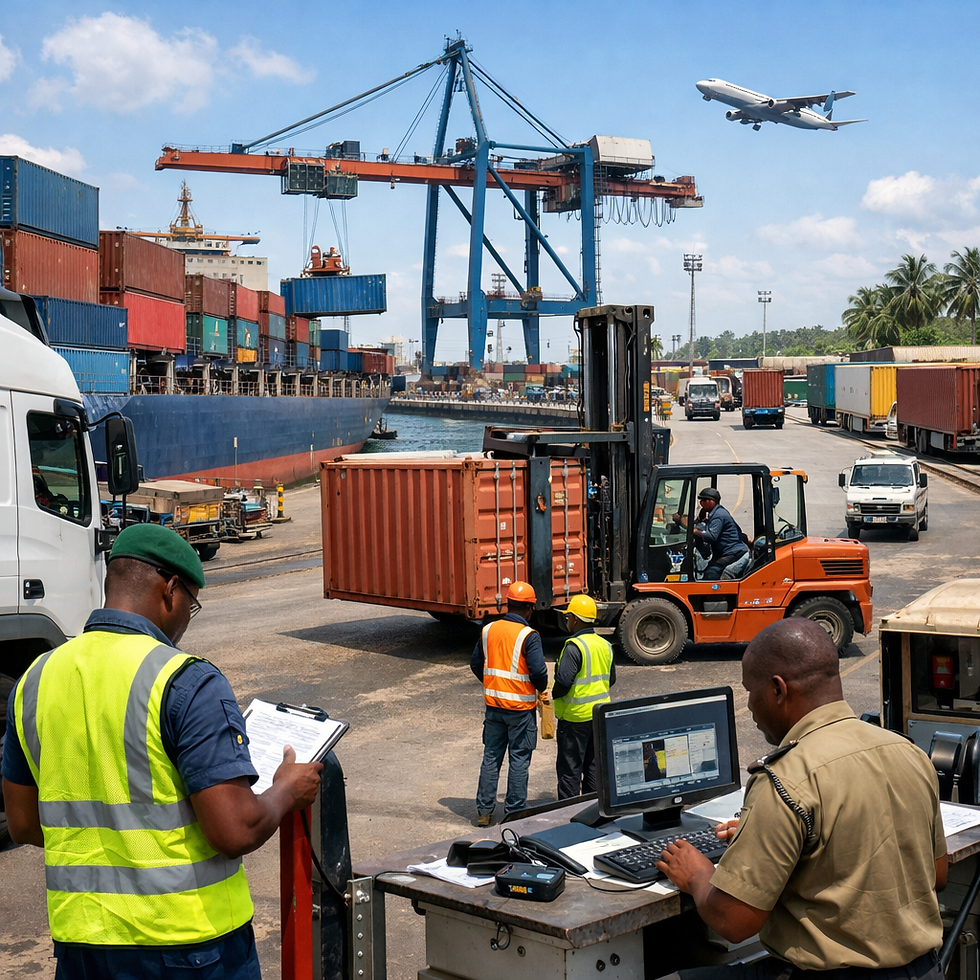
Moreover, the New Delhi Declaration explicitly linked local-currency settlement to the development of more resilient supply chains. This connection highlights a strategic imperative to de-risk global trade flows. The bloc emphasized support for transparent critical-mineral supply chains, a crucial area given the strategic importance of various resources across BRICS nations, from South Africa's platinum group metals to China's rare earths. Integration into resilient global value chains is a stated objective, which will require significant investment in logistics, port infrastructure, customs modernization, and digital trade platforms. International logistics firms, port operators, and technology providers specializing in supply chain visibility and optimization will find a growing market as BRICS members seek to fortify their trade networks. Tenders for these projects, often issued by national transportation ministries or port authorities, can be tracked efficiently through platforms like TendersGo , using keywords related to logistics, freight, and digital trade infrastructure.
New Development Bank: Fueling BRICS Infrastructure Financing
Central to the BRICS economic agenda is the New Development Bank (NDB), which continues to serve as the primary financing vehicle for the bloc’s infrastructure and sustainable development ambitions. The NDB’s operational model, which involves raising capital through member contributions and borrowing in both domestic and international capital markets, allows it to lend in local currencies to sovereign and sub-sovereign borrowers. This mechanism directly supports the broader BRICS objective of reducing reliance on dominant reserve currencies and strengthening local financial markets.
A significant development on September 10, 2026, underscored the NDB’s commitment to this strategy: the bank successfully raised 7 billion Chinese yuan through a bond sale in China. This issuance demonstrates the NDB’s ability to tap into member-country capital markets, providing a direct channel for funding projects within the bloc using local currency. Such bond issuances are critical for mobilizing capital that can then be deployed for large-scale infrastructure projects across diverse sectors, including transportation, energy, water, and urban development, within BRICS nations.
The NDB’s general strategy aims to increase local-currency financing to 30% of its overall lending portfolio. This ambitious target signals a substantial shift in project funding, creating a preference for tenders and procurement processes that can accommodate local-currency payments and local content requirements. International contractors and suppliers must adapt their financial strategies to engage with these projects, potentially forming partnerships with local entities to navigate the specific currency and regulatory environments. The bank’s multi-market, multi-currency approach offers flexibility but also requires a nuanced understanding of each project’s financial structure. Companies keen on participating in these NDB-financed initiatives should regularly monitor the bank’s project pipeline and funding announcements, which frequently precede calls for tenders in member countries.
BRICS Smart Grids Energy Storage Cooperation: A Growing Sector
While the 2026 research brief did not detail specific smart grid or energy storage projects, the overarching BRICS agenda for sustainable development and infrastructure financing strongly implies a growing focus on these critical sectors. The New Delhi Declaration’s emphasis on productive-capacity building and technology transfer, coupled with the NDB’s mandate for sustainable-development projects, creates fertile ground for collaboration in advanced energy solutions. Many BRICS nations, including China, India, and South Africa, face escalating energy demands and are actively pursuing decarbonization goals. This dual pressure drives significant investment in renewable energy generation, smart grid modernization, and large-scale energy storage solutions.
The push for local-currency financing from the NDB will likely extend to these energy projects, encouraging domestic manufacturing and procurement where possible. However, the advanced nature of smart grid technologies and high-capacity energy storage systems often requires international expertise and specialized components. This creates opportunities for global suppliers of grid modernization software, advanced battery technologies (lithium-ion, flow batteries, solid-state), grid-scale inverters, and integrated energy management systems. Governments and state-owned utilities in BRICS countries will increasingly issue tenders for pilot projects, feasibility studies, and full-scale deployments in these areas. For instance, India’s ambitious renewable energy targets and China’s leadership in battery manufacturing present significant markets for international collaboration on smart grid and energy storage initiatives. Tracking tenders related to "smart grid," "energy storage," "renewable energy integration," and "grid modernization" on platforms like TendersGo's energy sector listings will be crucial for firms looking to enter or expand in these markets.
Cross-border cooperation within BRICS on energy infrastructure could also manifest in shared research and development initiatives, joint ventures for manufacturing critical components, and standardized technical specifications to facilitate interoperability. This collaborative spirit, aligned with the declaration’s call for technology transfer, could lead to unique procurement opportunities for companies offering innovative solutions that can be adapted across diverse national grids. For example, Brazil’s extensive hydropower network could benefit from smart grid solutions that optimize dispatch and integrate intermittent renewables, while South Africa’s grid stability challenges present a strong case for large-scale battery storage deployment. These varied needs across the bloc underscore the broad scope for energy sector engagement.
BRICS Trade and Investment Declaration 2026: Broadening Participation
The 2026 New Delhi Declaration outlined a clear policy framework aimed at broadening the participation of developing countries in higher-value manufacturing and production. This strategic objective is to be achieved through a combination of trade and investment initiatives, technical cooperation, productive-capacity building, and technology transfer. For international businesses, this signals a shift towards opportunities that not only involve direct sales but also partnerships, joint ventures, and knowledge-sharing agreements designed to uplift local industrial capabilities across the BRICS member states.
The emphasis on productive-capacity building suggests a rise in tenders for industrial machinery, manufacturing plant construction, vocational training programs, and quality assurance systems. For example, countries like Egypt and Ethiopia, as newer BRICS members, are actively seeking to diversify their industrial bases and attract foreign direct investment in manufacturing. Tenders related to setting up industrial parks, supplying specialized production lines, or providing technical assistance for local enterprises will become more prevalent. Companies with expertise in industrial engineering, advanced manufacturing technologies, and capacity development will find these markets increasingly attractive. The declaration’s focus on technology transfer further encourages foreign firms to offer licensing agreements, R&D collaborations, and training programs, creating a more integrated approach to market entry and expansion.
Furthermore, the call for greater integration into resilient global value chains implies a need for investment in infrastructure that supports efficient trade. This includes upgrades to transportation networks (roads, railways, ports, airports), modern logistics facilities, and digital trade platforms. Procurement opportunities will emerge from national and regional development plans, often co-financed by the NDB or other multilateral development banks. For example, improving connectivity between Russia and China, or enhancing trade corridors within Africa involving South Africa and Egypt, will necessitate significant infrastructure projects. These large-scale undertakings will require international expertise in project management, engineering, and construction, with tenders often issued by national infrastructure ministries or state-owned enterprises. International firms can leverage TendersGo to set up alerts for specific infrastructure categories and countries within the BRICS bloc, ensuring they capture these emerging opportunities.
Procurement Implications and Forward Outlook
While the 2026 BRICS summit reporting did not detail specific open tenders or RFP deadlines, the policy directives and financing mechanisms discussed provide a clear roadmap for future procurement. The NDB’s successful 7 billion Chinese yuan bond issuance and its target of 30% local-currency lending directly translate into forthcoming project opportunities across infrastructure, energy, and sustainable development sectors. International contractors, export managers, and business development teams must now pivot their strategies to align with these financial realities.
The emphasis on local-currency financing means that suppliers should be prepared to engage in transactions denominated in currencies like the Chinese yuan, Indian rupee, Brazilian real, or South African rand. This may require establishing local banking relationships, understanding currency hedging strategies, and potentially forming joint ventures with local partners to mitigate currency risks and meet local content requirements. The call for broader participation in higher-value manufacturing and technology transfer suggests that procurement will increasingly favor proposals that include capacity-building components, training programs, and opportunities for local industrial development. This is particularly relevant for newer BRICS members seeking to industrialize and diversify their economies.
For firms tracking these developments, platforms like TendersGo become indispensable. By utilizing advanced filters for CPV/NAICS codes, specific countries, and keywords such as “infrastructure development,” “renewable energy,” “smart grid,” “manufacturing equipment,” and “logistics solutions,” businesses can proactively identify tenders aligned with the BRICS agenda. The absence of a common BRICS currency or a unified payment system in 2026 means that national procurement agencies will remain the primary issuers of tenders, but the NDB’s financing influence will steer these opportunities towards the bloc’s strategic priorities. The long-term trajectory indicates a growing volume of projects financed in local currencies, fostering more resilient regional supply chains and creating a diverse array of cross-border opportunities for those prepared to adapt to the evolving financial and trade landscape within the expanded BRICS community.