Mesoamerica’s Pacific Corridor Push Reshapes Regional Trade

The Pacific Corridor, Mesoamerica's primary freight artery, is undergoing a significant logistical upgrade in 2026, fundamentally reshaping regional trade flows and cross-border freight corridor efficiencies. This critical route, linking Mexico, Guatemala, El Salvador, Honduras, Nicaragua, Costa Rica, and Panama, currently handles nearly 90% of all cargo transiting Central America. International contractors, export managers, and trade advisors are closely watching developments as coordinated regional efforts, backed by substantial investment, aim to streamline operations, reduce transit times, and enhance supply chain predictability across the entire region. The Inter-American Development Bank (IDB) identifies this corridor as the central focus of Mesoamerican transport and logistics integration, signaling a strategic shift in how goods move from North to South and between Pacific and Atlantic markets.
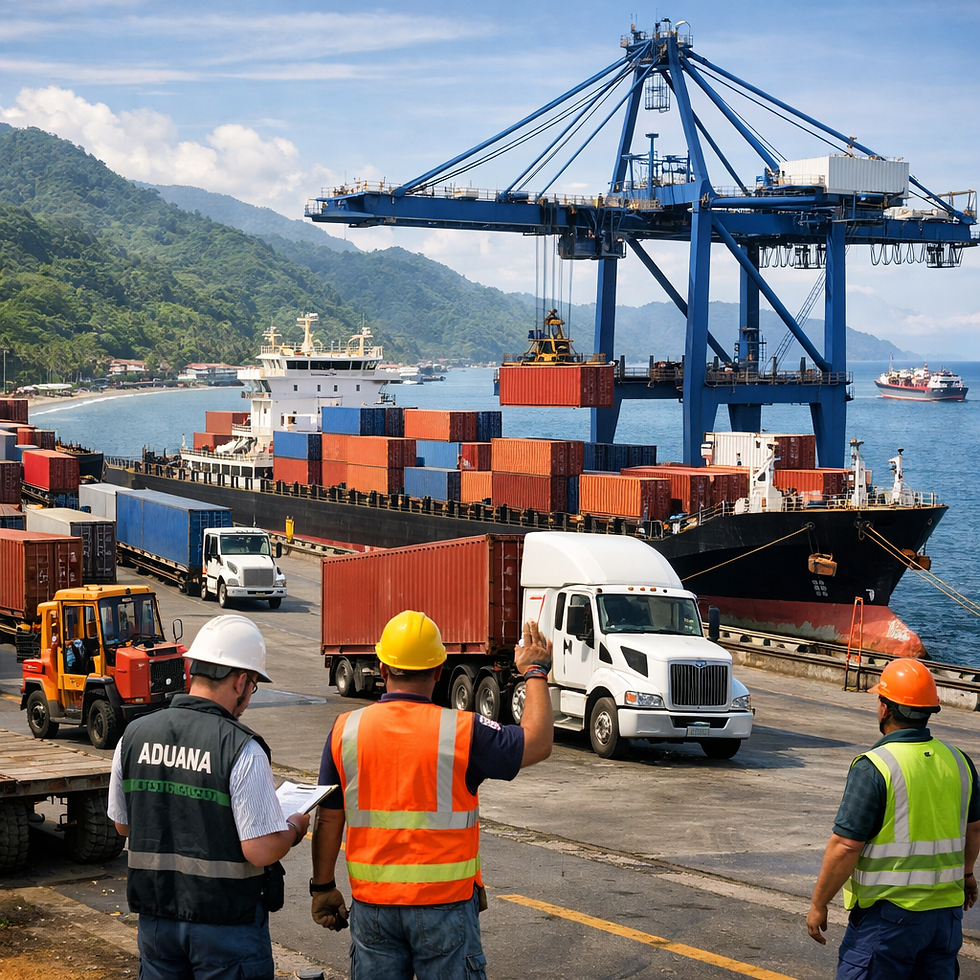
At the forefront of this regional transformation is Cargo Pass, a flagship fast-track logistics scheme. This initiative represents a USD 130 million investment in 2026, with projections indicating annual economic benefits exceeding USD 700 million. Such figures underscore the scale of ambition and the anticipated impact on trade facilitation across the seven core corridor nations. The focus extends beyond mere infrastructure, encompassing a comprehensive suite of digital customs solutions, harmonized regulatory frameworks, and enhanced border management protocols. For businesses tracking opportunities via platforms like TendersGo , this translates into a burgeoning pipeline of tenders related to logistics information systems, customs modernization, and specialized consulting services aimed at optimizing regional trade.
Strategic Investments and Institutional Architecture Driving Regional Integration 2026
The impetus for Mesoamerica’s Pacific Corridor logistics upgrade stems from a concerted regional strategy supported by significant institutional backing and technical cooperation. The IDB has committed substantial resources, including an earlier package of USD 920,000 in technical cooperation grants. This funding was split, with USD 400,000 allocated to the Strategic Program for Infrastructure Development and another USD 400,000 for the Strategic Program for Integration Development, supplemented by USD 120,000 in counterpart funds. These grants are specifically designed to support an operational study and develop investment plans to identify and prioritize transport and logistics projects along the corridor, with a particular emphasis on Guatemala, Honduras, and El Salvador, often referred to as the Northern Triangle.
The institutional framework driving these initiatives is distinctly regional, emphasizing multilateral cooperation over bilateral agreements. Key implementing bodies include the Commission for Regional Technical Transport (CTTR/CTRT), the Agenda Mesoamericana de Transporte, Movilidad y Logística (AMTML), and the Secretariat for Central American Economic Integration (SIECA). These organizations are central to coordinating efforts across Mexico, Belize, Guatemala, Honduras, El Salvador, Nicaragua, Costa Rica, Panama, and the Dominican Republic – the nine beneficiary countries named in the IDB’s broader regional integration agenda. Their collaborative approach ensures that upgrades to the Pacific Corridor contribute to a more cohesive and efficient regional trade network, rather than isolated national improvements.
Parallel to physical and digital infrastructure enhancements, significant progress is being made on harmonizing customs and border procedures. Ministers across the region have endorsed an updated regional customs code and rulebook, RECAUCA, alongside a new regional model for coordinated border management that spans land, sea, and air crossings. This regulatory alignment is crucial for unlocking the full potential of the Pacific Corridor. For international service providers specializing in customs software, border security solutions, and supply chain consulting, these developments signal a clear demand for expertise in implementing standardized, interoperable systems across multiple national jurisdictions. Tracking procurement notices from SIECA and national customs agencies through platforms like TendersGo's search engine will be essential for identifying these opportunities.
Key Milestones and Progress Across Mesoamerica in 2026
The year 2026 has been marked by a series of concrete advancements in Mesoamerican transport and logistics integration, underscoring the momentum behind the Pacific Corridor initiative. From June 29 to July 3, regional discussions advanced work on the Cargo Pass and related transport information systems, with direct support from the IDB. This period saw technical teams focusing on the interoperability and functionality of systems designed to enhance cargo traceability and efficiency across borders. Such progress indicates a maturation of the project from conceptualization to practical implementation, creating opportunities for specialized IT and logistics firms.
Further ministerial-level engagement occurred on July 13, where Central American customs integration was a central theme. Ministers reviewed the progress of Cargo Pass, deliberated on the updated customs framework (RECAUCA), and assessed the regional border-management model. This high-level attention signifies political commitment to the project's success and the ongoing drive towards a more unified regional approach to trade. Decisions made at these meetings directly influence procurement priorities for national customs administrations and regional bodies, impacting tenders for everything from software development to training programs for customs officials.
August 15 saw Belize’s active participation in a regional dialogue under the "América en el Centro" initiative, an IDB program specifically targeting Central America, Panama, and the Dominican Republic. Discussions during this event focused on critical infrastructure components such as roads, border crossings, customs modernization, logistics systems, and cargo traceability. Belize’s involvement highlights the broader regional scope of these integration efforts, extending beyond the immediate Pacific coastline to encompass all Mesoamerican project beneficiaries. This broad participation suggests a wider geographic distribution of upcoming tenders related to infrastructure upgrades and digital solutions.
Earlier in the year, on February 26, the EU–Central America Forum in Panama placed trade facilitation, export diversification, and sustainable investment at the core of its agenda. A key workshop during this forum addressed traceability and compliance with the EU Deforestation Regulation (EUDR). This external pressure from a major trading bloc like the European Union adds another layer of urgency and complexity to Mesoamerica's logistics upgrades. Companies offering solutions for supply chain transparency, certification, and compliance with international environmental standards will find a growing market as regional exporters adapt to these new requirements. Monitoring tenders related to agricultural supply chains and export compliance via TendersGo's sector-specific alerts would be a prudent strategy.
Trade Facilitation and Regulatory Implications for Regional Commerce
The push for Mesoamerican transport and logistics integration in 2026 carries profound implications for trade facilitation and regulatory environments across the region. Regional customs harmonization is moving forward decisively, with the updated RECAUCA and a coordinated border-management model explicitly on the ministerial agenda. This signifies a concerted effort to standardize clearance procedures, reduce arbitrary variations between countries, and create a more predictable operating environment for cross-border trade. For businesses involved in freight forwarding, logistics, and international trade, this harmonization promises reduced administrative burdens and faster transit times, directly impacting their operational efficiency and cost structures.
A critical component of this modernization is the deployment of digital customs systems. Central American trade officials have launched a synchronized digital customs clearance network across Guatemala, Honduras, and El Salvador. This initiative aims to significantly reduce freight delays and improve corridor connectivity by enabling electronic data exchange and pre-clearance processes. The shift from paper-based to digital systems creates substantial opportunities for IT firms specializing in customs software, data integration, and secure digital platforms. The success of this synchronized network in the Northern Triangle is likely to serve as a blueprint for wider regional adoption, expanding the market for such solutions.
Cargo Pass itself is intrinsically linked to enhanced traceability and accelerated border processing. Described as a system for moving cargo across borders "safely, efficiently, and with greater traceability," its implementation, supported by the IDB, will introduce new requirements for data submission and real-time tracking. This means that logistics providers will need to integrate their systems with national and regional platforms, while technology companies can bid on tenders for developing and maintaining these sophisticated traceability tools. The transparency offered by Cargo Pass also serves to reduce illicit trade and improve security along the corridor, benefiting legitimate businesses by creating a more secure and predictable supply chain.
Furthermore, external trade compliance pressures, particularly from the European Union, are increasingly shaping regional trade practices. The 2026 EU–Central America Forum's emphasis on traceability and compliance with the EU Deforestation Regulation (EUDR) highlights the need for Mesoamerican exporters to demonstrate sustainable sourcing and supply chain transparency. This regulation directly impacts commodity exports such as coffee, cocoa, palm oil, and wood products, which are significant for several countries in the region. Businesses offering certification services, supply chain auditing, and traceability software that can meet stringent EU standards will find a ready market as regional producers and exporters seek to maintain access to European markets. This also opens procurement avenues for specialized consultants offering training and capacity building on international trade compliance.
Procurement Implications and Tender Opportunities for International Suppliers
The ongoing transformation of Mesoamerica's Pacific Corridor presents a dynamic landscape of procurement opportunities for international suppliers in 2026 and beyond. Based on the detailed descriptions of Cargo Pass, digital customs initiatives, logistics information systems, and coordinated border management, the near-term procurement pipeline is likely to concentrate on studies, digital systems, border coordination technologies, and targeted small-scale corridor upgrades rather than exclusively large-scale civil works. This shift favors specialized service providers and technology firms over traditional heavy construction companies in the immediate future.
The most actionable implementing entities for tender monitoring include SIECA, program units linked to the IDB, national customs authorities, and transport ministries across the nine beneficiary countries: Mexico, Belize, Guatemala, Honduras, El Salvador, Nicaragua, Costa Rica, Panama, and the Dominican Republic. These entities will be issuing requests for proposals for a range of services and products essential for the corridor's modernization. International businesses should set up targeted alerts on TendersGo for these specific agencies and countries to capture emerging opportunities promptly.
Likely tender themes will span several critical areas. Expect calls for bids on logistics-time and cost studies, which are crucial for identifying bottlenecks and optimizing freight flows. Software and interoperability solutions for customs systems will be in high demand as countries work to integrate their digital platforms and ensure seamless cross-border data exchange. Furthermore, the emphasis on traceability means significant opportunities for developers of cargo traceability tools, from RFID solutions to blockchain-based systems. Border-post modernization, including equipment for inspection, security, and digital processing, will also feature prominently. Finally, corridor-impact assessments will be required to measure the effectiveness of implemented changes and inform future development phases.
Specific examples of potential tenders could include: a regional call for proposals for a unified freight tracking platform across Guatemala, Honduras, and El Salvador; procurement of advanced scanning equipment and digital manifest systems for key border crossings in Costa Rica and Nicaragua; or consulting services for developing a regional framework for multimodal logistics hubs in Panama and Mexico. Companies with expertise in these areas, particularly those offering solutions that can be scaled and integrated across multiple national systems, are well-positioned to capitalize on this wave of investment. Utilizing TendersGo's country-specific tender pages will allow suppliers to maintain a granular view of procurement activities in their target markets within Mesoamerica.
Key Figures Shaping Mesoamerica's Logistics Future
The transformation of Mesoamerica’s Pacific Corridor is underpinned by a series of impactful figures that illustrate the scale of ambition and the anticipated benefits. A direct investment of USD 130 million is allocated to the Cargo Pass initiative in 2026. This substantial sum is earmarked for critical upgrades and system implementations designed to accelerate cargo movement and enhance supply chain reliability across the region. This investment signals a serious commitment from regional governments and development partners to modernize the primary trade artery.
The projected annual economic benefits from Cargo Pass are estimated to exceed USD 700 million. This figure highlights the significant economic multiplier effect anticipated from reduced transit times, lower logistics costs, and increased trade volumes. Such a substantial return on investment underscores the strategic importance of this project for regional economic growth and competitiveness, attracting further interest from both public and private sector investors. These benefits will accrue to businesses operating across Mexico, Guatemala, El Salvador, Honduras, Nicaragua, Costa Rica, and Panama, making regional supply chains more attractive.
The Pacific Corridor’s dominance in regional trade is starkly illustrated by the fact that it carries nearly 90% of all cargo transiting Central America. This overwhelming proportion means that any efficiency gains or bottlenecks along this route have a disproportionate impact on the entire regional economy. The current upgrade efforts are therefore not just incremental improvements but foundational changes to the very backbone of Mesoamerican commerce, directly affecting the flow of goods for millions of people and thousands of businesses.
Earlier foundational support from the IDB included a technical cooperation package totaling USD 920,000. This initial funding, comprising grants and counterpart funds, was crucial for conducting feasibility studies, developing strategic plans, and building the institutional capacity necessary to launch larger-scale initiatives like Cargo Pass. These preparatory investments laid the groundwork for the current phase of implementation, demonstrating a long-term, phased approach to regional integration.
The breadth of the Mesoamerican Project beneficiaries, encompassing nine countries—Mexico, Belize, Guatemala, Honduras, El Salvador, Nicaragua, Costa Rica, Panama, and the Dominican Republic—underscores the region-wide impact of these initiatives. While the Pacific Corridor physically traverses seven of these nations, the broader integration agenda, including customs harmonization and logistics modernization, benefits all nine. This wide geographical scope means that the ripple effects of these improvements will be felt across a diverse range of economies, creating a more interconnected and efficient Mesoamerican trading bloc. International firms seeking opportunities should consider the broader regional context, as improvements in one country often necessitate complementary upgrades or services in neighboring states, creating interconnected tender opportunities.
Outlook for Mesoamerican Trade and Logistics
Mesoamerica’s concerted push to upgrade its Pacific Corridor in 2026 is fundamentally reshaping the regional trade landscape. The strategic combination of corridor logistics investment via initiatives like Cargo Pass, coupled with aggressive customs digitalization and border harmonization, marks a new era for cross-border commerce. This highly coordinated regional effort, driven by IDB-linked programs, SIECA, and national customs and transport ministries, is creating a more predictable, efficient, and transparent environment for trade. The focus on interoperability, traceability, and digital solutions suggests a sustained demand for technology and consulting services over traditional heavy infrastructure in the immediate future.
As these projects mature, international contractors and suppliers should anticipate a continued emphasis on smart logistics, data analytics for supply chain optimization, and solutions that enhance compliance with evolving international trade standards, such as the EUDR. The ongoing integration of digital customs networks across the Northern Triangle, and its potential expansion, will require robust cybersecurity solutions and expertise in large-scale system integration. The momentum generated by these initiatives in 2026 indicates a long-term commitment to transforming Mesoamerica into a more competitive and integrated trading bloc, offering a fertile ground for businesses specializing in advanced logistics, digital trade facilitation, and regional infrastructure development.