
Pacific Islands Forum 2026: Geopolitical Realignment Amid Climate Crisis

The Pacific Islands Forum (PIF) enters 2026 grappling with an intensified "polycrisis," a confluence of climate change, geopolitical competition, and transnational threats that is reshaping the security outlook across the Blue Pacific Continent. As regional leaders prepare for critical discussions, the procurement landscape for climate resilience, infrastructure, and defense-related services is undergoing significant shifts. International contractors, export managers, and development consultants are keenly observing these dynamics, understanding that the strategic priorities articulated by the 18 member states, including Australia, Fiji, Papua New Guinea, Samoa, Solomon Islands, Tonga, Tuvalu, and Vanuatu, will directly influence forthcoming tender opportunities.
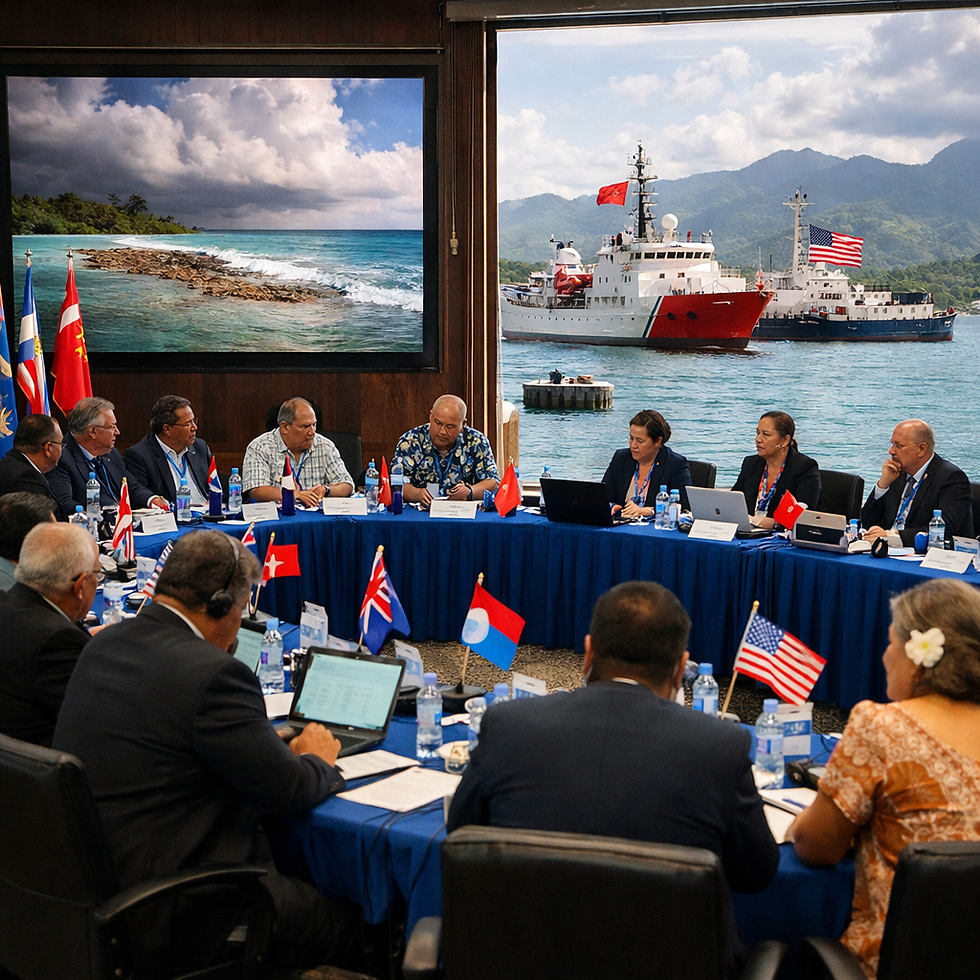
The Pacific Security Outlook Report 2026, released on March 25, 2026, by the Pacific Islands Forum Secretariat, underscores climate change as "the single greatest threat to our security, wellbeing, and prosperity." This declaration is not merely rhetorical; it frames every aspect of regional planning and resource allocation. Rising sea levels, increasingly strong weather events, and mounting pressure on food and water systems are directly impacting national budgets and driving demand for specialized solutions. The report details how these environmental stressors exacerbate existing vulnerabilities, creating a complex environment for development partners and private sector entities seeking to engage in the region. Understanding these deeply interconnected challenges is paramount for any firm aiming to secure contracts within the Pacific.
Climate Finance Gaps and Resilience Procurement in the Blue Pacific Continent
Despite the unequivocal recognition of climate change as an existential threat, a significant gap persists between the urgent need for climate finance and the actual flows of funds into the Pacific. The Boe Declaration on Regional Security and the overarching 2050 Strategy for the Blue Pacific Continent provide a robust framework for action, yet implementation remains constrained by funding shortfalls and capacity limitations. For instance, projections indicate that while Pacific Island Countries (PICs) require an estimated $3 billion annually for climate adaptation and mitigation by 2030, current commitments fall short by approximately 60%. This deficit creates both challenges and opportunities for innovative financing mechanisms and private sector involvement.
Procurement in this sector is increasingly focused on resilient infrastructure, early warning systems, and sustainable resource management. Fiji, for example, has seen a 15% increase in tenders related to coastal protection and nature-based solutions over the past two years, often supported by multilateral development banks. Similarly, Vanuatu's post-cyclone recovery efforts have spurred demand for resilient housing materials and disaster risk reduction consultancy services. International firms experienced in climate-smart infrastructure, such as sea wall construction, mangrove restoration, and climate-resilient agricultural systems, are finding fertile ground. TendersGo, with its extensive filtering capabilities, allows users to track these specific opportunities by CPV codes related to environmental protection, civil engineering, and disaster management across countries like Tuvalu and Kiribati, where land scarcity makes climate impacts particularly acute. The Forum Secretary General, Baron Waqa, has consistently highlighted the need for accessible, predictable, and adequate climate finance, signaling a continued push for international partners to meet their commitments, which will translate into more concrete project pipelines.
Geopolitical Competition and Pacific Security Outlook 2026
The Pacific's strategic importance has intensified geopolitical competition, adding another layer of complexity to the region's polycrisis. Major global powers are actively vying for influence, leading to increased development assistance, security cooperation agreements, and infrastructure investments. This competition, while potentially bringing much-needed resources, also introduces new security considerations and procurement complexities. The Pacific Security Outlook Report 2026 explicitly notes the challenges of navigating these competing interests while maintaining regional solidarity and adherence to the principles of the 2050 Strategy.
Security-related procurement is diversifying beyond traditional defense. For instance, maritime domain awareness projects across the exclusive economic zones of nations like Papua New Guinea and the Solomon Islands are seeing increased investment. These include tenders for surveillance equipment, patrol vessels, and training programs for maritime law enforcement. Cyber security infrastructure development is also emerging as a critical area, with several regional initiatives aimed at strengthening digital resilience against state-sponsored and transnational threats. Countries like Tonga and Samoa are looking to upgrade their digital backbone, creating opportunities for international IT service providers specializing in secure networks and data protection. The geopolitical currents mean that procurement decisions often weigh not just cost and capability, but also geopolitical alignment and long-term strategic partnerships. Firms looking to engage in this space must demonstrate a clear understanding of the regional political sensitivities and the Forum's emphasis on a "Pacific Way" of engagement.
Infrastructure Development and Connectivity Across the Pacific
Beyond climate resilience and security, core infrastructure development remains a critical priority for the Pacific Islands, driving a substantial volume of international tenders. Improved connectivity, both physical and digital, is seen as essential for economic growth, access to markets, and social development across the archipelagic nations. The fragmentation of the region, with vast ocean distances between islands and countries, necessitates significant investment in transport, energy, and digital networks.
For example, port upgrades and airport expansions are consistently high on national agendas. Fiji's ongoing efforts to modernize its port facilities at Lautoka and Suva have attracted bids from major international maritime construction firms. Similarly, the expansion of regional air hubs in Papua New Guinea and Samoa aims to improve intra-regional travel and international tourism, leading to tenders for runway construction, terminal upgrades, and air traffic control systems. Digital infrastructure is another burgeoning sector; submarine cable projects connecting remote islands to the global internet backbone are frequently announced, offering substantial contracts for specialized telecommunications companies. The recent completion of the East Micronesia Cable System, connecting Nauru, Kiribati, and Kosrae (FSM), highlights the scale of these undertakings. These projects are often financed through concessional loans from development banks, requiring adherence to stringent international procurement guidelines and environmental safeguards. TendersGo provides a comprehensive platform for tracking these large-scale infrastructure projects, enabling companies to filter opportunities by sector, country, and funding source, ensuring they do not miss critical bidding windows.
Development Partner Engagement and Procurement Implications
The multifaceted challenges facing the Pacific Islands have intensified engagement from a diverse array of development partners, each bringing their own priorities and procurement mechanisms. While traditional partners like Australia, New Zealand, the European Union, and the United States remain prominent, the increasing presence of non-traditional actors is reshaping the landscape. This diversification of funding sources creates a complex but potentially lucrative environment for international suppliers and consultants.
Australia, for instance, continues to be a leading donor, channeling significant aid into infrastructure, health, and education across the region. Its PacificAus Sports program, for example, has opened tenders for sports facility upgrades and coaching services in countries like Vanuatu and Solomon Islands. New Zealand’s Pacific Reset policy emphasizes sustainable development and climate resilience, leading to tenders in renewable energy projects and disaster preparedness. The European Union, through its Global Gateway strategy, is investing in digital and green transitions, evidenced by recent calls for proposals in sustainable energy solutions for small island states. The United States, through initiatives like Partners in the Blue Pacific, is increasing its engagement in maritime security and economic development, which will inevitably lead to more procurement opportunities aligned with its strategic interests. Firms must understand the specific procurement rules of each donor country and multilateral institution, as these can vary significantly. Utilizing platforms like TendersGo allows companies to receive targeted alerts based on donor country, ensuring they are aware of opportunities funded by specific international partners.
Health Security and Transnational Threats in the Pacific
Beyond climate and geopolitical concerns, the Pacific Islands face persistent health security challenges and a growing threat from transnational crime, as highlighted in the Pacific Security Outlook Report 2026. The COVID-19 pandemic exposed vulnerabilities in health systems across the region, prompting renewed focus on strengthening public health infrastructure, medical supply chains, and disease surveillance capabilities. This area represents a significant and ongoing procurement demand.
Countries like Fiji and Papua New Guinea are investing in upgrading hospital facilities, procuring essential medical equipment, and developing robust vaccination programs. Tenders for pharmaceutical supplies, diagnostic tools, and health information systems are consistently being issued. Furthermore, the fight against transnational crime—including illegal fishing, drug trafficking, and human smuggling—requires substantial investment in law enforcement capabilities and cross-border cooperation. This translates into procurement needs for border surveillance technology, forensic equipment, and specialized training programs for police and customs officials. For example, regional initiatives coordinated by the Pacific Islands Forum Secretariat aim to enhance information sharing and operational capabilities across member states, leading to joint procurement efforts for security software and communication systems. The regional approach to these threats means that tenders often involve multi-country implementation, requiring contractors with the capacity to operate across diverse island environments. Identifying these specific procurement streams requires detailed searches using NAICS or CPV codes for medical equipment, security services, and public administration, which TendersGo facilitates for its users.
Future Outlook: Navigating the Polycrisis with Strategic Procurement
The Pacific Islands Forum in 2026 operates within a complex and dynamic regional environment. The "polycrisis" identified by the Pacific Security Outlook Report 2026—encompassing climate change, geopolitical competition, and transnational threats—will continue to shape national and regional priorities. This necessitates a strategic approach to procurement that prioritizes resilience, sustainable development, and regional solidarity. The Boe Declaration and the 2050 Strategy for the Blue Pacific Continent will remain the guiding documents for all engagement, emphasizing Pacific ownership and leadership.
As leaders from the 18 member states convene, their discussions will undoubtedly focus on mobilizing increased and more accessible climate finance, balancing relationships with diverse development partners, and strengthening regional institutions like the Pacific Islands Forum Secretariat. This will translate into a sustained demand for international expertise and supplies across a range of sectors: climate-resilient infrastructure, renewable energy, digital connectivity, health security, and maritime surveillance. Companies that can demonstrate a deep understanding of these regional nuances, offer innovative and sustainable solutions, and commit to genuine partnerships will be best positioned to secure significant contracts. Tracking the policy pronouncements from the Forum and monitoring specific country-level tender announcements through platforms like TendersGo's search engine will be critical for identifying these evolving opportunities within the Blue Pacific Continent.





