
SCO Leaders Back New Trade Links, Logistics Corridors in Bishkek

BISHKEK – SCO leaders meeting here on September 1, 2026, cemented a new regional push for trade connectivity, endorsing a declaration that emphasizes enhanced cooperation across transport, logistics, and digital commerce within member states. The Bishkek Declaration, issued at the close of the summit, signals a coordinated policy framework designed to accelerate freight flows and integrate supply chains across the vast Eurasian landmass. This strategic pivot, coupled with a specific roadmap for ports and logistics centers, directly impacts international contractors, export managers, and business development teams tracking infrastructure and procurement opportunities across the Shanghai Cooperation Organization (SCO) region, particularly those focusing on SCO Bishkek Declaration trade connectivity 2026 , SCO ports logistics roadmap member states , and the burgeoning China-Kyrgyzstan-Uzbekistan railway SCO 2026 project.
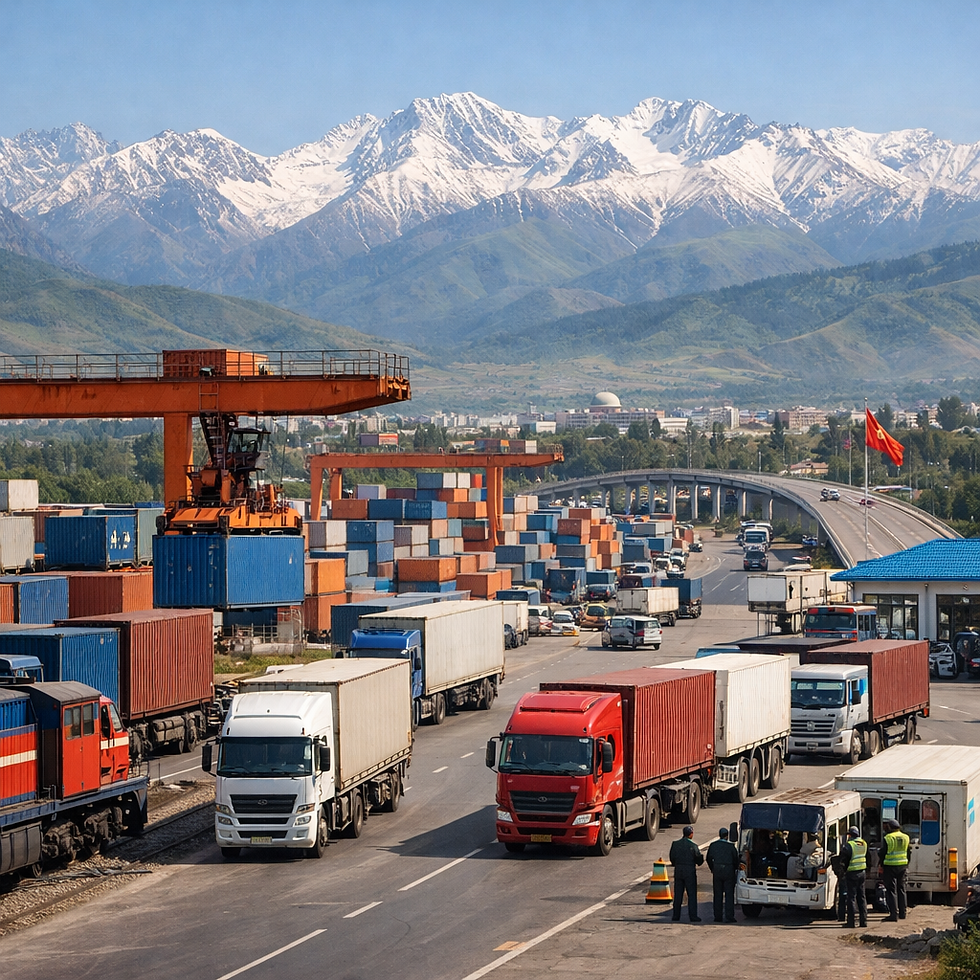
The policy pronouncements from Bishkek underscore a regional commitment to open, transparent, and non-discriminatory multilateral trade rules, explicitly calling for new and upgraded road and rail routes, multimodal transport corridors, and advanced logistics centers. The declaration also champions the integration of digital and energy-efficient technologies, a move that promises a wave of procurement in IT infrastructure, smart logistics systems, and sustainable transport solutions. For companies monitoring regional tenders, this signals a shift towards more integrated and technologically advanced cross-border trade operations, with a particular focus on modernizing customs, payments, and procurement digitization across the SCO’s diverse economies. The emphasis on fair market access and special treatment for developing countries further reinforces a policy environment conducive to trade facilitation and substantial corridor investments.
Eurasian Corridor Development and Procurement Outlook
The SCO's renewed emphasis on transport corridors extends far beyond mere rhetoric, manifesting in concrete projects like the China–Kyrgyzstan–Uzbekistan (CKU) railway, a flagship initiative poised to reshape regional logistics. Full-scale construction on the Kyrgyz section of the CKU railway commenced in June 2025, with Kyrgyz President Sadyr Japarov setting an ambitious 2030 completion target by late March 2026. This project, described as approximately 533 km long with roughly 305 km traversing Kyrgyzstan, represents a significant undertaking in civil engineering and infrastructure development. Earlier route engineering estimates had placed the total length around 480 km and over 304 km in Kyrgyzstan, indicating ongoing design refinement and optimization during the initial construction phases. The joint venture structure for the CKU railway sees China holding a 51% stake, with Kyrgyzstan and Uzbekistan dividing the remainder, highlighting a collaborative financing and implementation model.
The strategic importance of the CKU railway is underscored by its projected impact on cargo delivery times. Uzbek President Shavkat Mirziyoyev stated in May 2026 that the railway could reduce cargo delivery time by up to 10 days, while other estimates suggest a reduction of about a week. This efficiency gain is critical for freight moving between China, Central Asia, and potentially onward to Türkiye and Europe, positioning the CKU as a vital southern branch of the Eurasian Land Bridge. The route, extending from Kashgar through Torugart, Makmal, and Jalal-Abad to Andijan, is designed to create a new east-west corridor, offering a faster and more direct alternative to existing routes. The ongoing construction activities, including the drilling through of the first tunnel on the Kyrgyz section by September 5, 2026, confirm that the project is advancing steadily, with reports from August 31, 2026, indicating construction on the Kyrgyz side is in full swing. This sustained activity points to continued demand for civil works, tunnel excavation, and specialized construction services through the 2026-2030 period.
For international contractors and suppliers, the CKU railway presents a multi-year pipeline of procurement opportunities. These include tenders for railway track construction, bridge building, signaling systems, rolling stock, and associated infrastructure. The sheer scale of the project, with hundreds of kilometers of new track and numerous tunnels and bridges, necessitates a wide array of specialized equipment and expertise. Companies with experience in complex mountainous terrain and cross-border infrastructure projects will find particular relevance here. Beyond the physical railway, the broader SCO logistics agenda, encompassing digital customs and logistics alliances, opens avenues for IT solutions providers, particularly in areas like customs modernization, freight tracking, and digital payment systems. TendersGo users can set up specific alerts for CPV codes related to railway construction, civil engineering, and IT services across Kyrgyzstan, Uzbekistan, and China to capture these opportunities as they emerge through transportation tenders and IT tenders .
Trade Facilitation and Digital Integration Across SCO Member States
The Bishkek Declaration's commitment to cross-border e-commerce infrastructure and common approaches to online settlement of commercial disputes signals a significant push towards digitalizing regional trade. This initiative will require substantial investment in digital platforms, cybersecurity solutions, and standardized IT systems for customs agencies across SCO member states. Uzbekistan, for instance, has already proposed a "Digital Customs and Logistics Alliance" to simplify procedures and accelerate freight flows, reflecting a broader regional appetite for digital transformation in trade. Such an alliance would necessitate interoperable systems, potentially leading to tenders for software development, data management solutions, and digital identity verification services that can facilitate seamless cross-border transactions. This move aligns with global trends in trade facilitation and offers a fertile ground for technology providers.
The economic projections for the CKU railway highlight the scale of the anticipated trade growth. An industry report from 2026 projected annual freight throughput at 10–15 million tonnes, with projections reaching 13 million tonnes by 2030. This volume underscores the need for robust logistics infrastructure not just along the railway line, but also at key nodes and multimodal hubs across the region. The route is expected to cut transport distance by approximately 900 km and shave 7–8 days off transit time, making it highly competitive for goods moving between China and Central Asia. This efficiency gain is not limited to China, Kyrgyzstan, and Uzbekistan; it has broader implications for all SCO member states utilizing transit corridors, ports, and logistics hubs. Countries like Kazakhstan, Tajikistan, and even distant members like India and Pakistan, could benefit from improved connectivity and reduced transit times for goods flowing through this new artery, driving demand for enhanced logistics services and warehousing facilities.
The broader SCO logistics agenda, beyond the CKU railway, will likely spur investments in modern logistics centers equipped with advanced cargo handling capabilities, cold storage, and digital inventory management systems. These centers will serve as critical nodes for consolidating, deconsolidating, and distributing goods, enhancing the overall efficiency of regional supply chains. International firms specializing in logistics park development, warehousing solutions, and supply chain optimization will find numerous opportunities as SCO member states upgrade their infrastructure to meet the demands of increased trade volumes. The policy framework supporting fair market access and special treatment for developing countries within the SCO context also suggests a proactive approach to integrating smaller economies into regional trade networks, potentially leading to capacity-building projects and technical assistance tenders in logistics and trade facilitation for these nations. Tracking these diverse opportunities requires a comprehensive tender search platform like TendersGo, which provides coverage across China tenders , Kyrgyzstan tenders , and Uzbekistan tenders , among others in the region.
Regional Impact and Strategic Implications for SCO Members
While China, Kyrgyzstan, and Uzbekistan are the direct beneficiaries and implementers of the CKU project, the SCO logistics agenda holds profound implications for all member states. Kyrgyzstan, hosting the longest national segment of the railway and having hosted the summit in Bishkek, stands as a central player in this connectivity drive. The country’s strategic location makes it a critical transit hub, and the railway project is expected to bring significant economic benefits through transit fees, job creation, and associated infrastructure development. The ongoing construction activities in Kyrgyzstan, particularly the challenging tunnel and bridge works, offer prime examples of immediate procurement needs for specialized construction firms.
Beyond the CKU, the emphasis on multimodal transport corridors means that countries like Kazakhstan, with its extensive rail network and existing transit routes, will see opportunities to integrate more effectively into the broader SCO logistics framework. Tajikistan, another Central Asian SCO member, could also benefit from improved regional connectivity, potentially through feeder routes or enhanced cross-border transport links that connect to the main corridors. The SCO’s vision extends to improving trade links with its larger members such as Russia, India, and Pakistan, facilitating smoother movement of goods and reducing logistical bottlenecks across the entire Eurasian landmass. This broader regional ambition suggests that investments in border crossings, customs facilities, and road networks connecting to major railway lines will be prioritized across multiple SCO countries.
The policy signal from Bishkek is clear: the SCO is committed to enhancing economic integration through infrastructure and digital solutions. This commitment translates into a consistent demand for services and goods related to infrastructure development, digital trade, and logistics optimization across a wide geographical area. For international businesses, understanding the nuances of each country’s infrastructure development plans and procurement regulations is key. TendersGo provides granular insights into these national markets, allowing users to filter tenders by country, sector, and CPV codes, ensuring they do not miss out on opportunities arising from this coordinated regional push. The platform's capabilities, including AI summaries and unlimited alerts, are invaluable for staying ahead in this dynamic procurement environment.
Funding Mechanisms and Future Procurement Trajectories
While the research material does not identify a new SCO development bank loan or formal multilateral financing package for the Bishkek trade-connectivity decisions, the CKU project appears to be primarily driven by a trilateral state-backed structure. This implies that funding for the railway project is largely sourced from the participating governments and their state-owned enterprises, rather than a single, large development bank loan. This financing model can affect the nature of procurement, often leading to tenders issued by national ministries of transport, railway authorities, or joint venture companies established by the partner countries. For contractors, this means monitoring national procurement portals and the specific project websites associated with the CKU railway.
However, the broader SCO logistics agenda, particularly initiatives related to digital trade infrastructure and regional logistics centers, could attract financing from multilateral development banks (MDBs) in the future. Institutions such as the Asian Development Bank (ADB), the Asian Infrastructure Investment Bank (AIIB), and the Eurasian Development Bank (EDB) have a strong track record of supporting infrastructure and trade facilitation projects in Central Asia and beyond. While not explicitly mentioned in the Bishkek declaration, the strategic alignment of the SCO’s goals with the mandates of these MDBs suggests potential for co-financing or direct lending for future phases or related projects. Companies with experience in MDB-funded projects should continue to monitor these institutions for upcoming procurement notices that align with the SCO’s connectivity priorities.
The 2026 SCO Bishkek outcome represents a robust pro-corridor policy signal, elevating trade facilitation, logistics-center development, and transport connectivity as core regional priorities. For TendersGo users, the most actionable 2026 procurement angle remains the China–Kyrgyzstan–Uzbekistan railway and the evolving digital customs and logistics ecosystem. Opportunities for construction, equipment supply, and systems contracts are the most probable near-term prospects. As the CKU railway progresses towards its 2030 completion target and SCO member states implement the logistics roadmap, a continuous stream of tenders for civil works, specialized railway equipment, IT solutions for customs and logistics, and consulting services will emerge. Businesses should maintain a proactive stance, utilizing platforms like TendersGo for Asia tenders to track these developments and position themselves to capitalize on the region’s ambitious connectivity agenda.





