
Amazon Basin 2026: Critical Minerals Boom Raises New Cross-Border Risks

The Amazon Basin, a sprawling expanse covering nine distinct jurisdictions, is fast becoming a crucible where global demand for critical minerals collides with complex environmental, social, and geopolitical realities. In 2026, the region is witnessing an unprecedented surge in both industrial mining expansion and illicit extraction, particularly for rare earth elements, copper, nickel, and manganese. This dual pressure is reshaping cross-border dynamics, intensifying competition for strategic resources, and generating a new wave of procurement opportunities and risks for international contractors, export managers, and development consultants across Brazil, Bolivia, Peru, Ecuador, Colombia, Venezuela, Guyana, Suriname, and French Guiana.
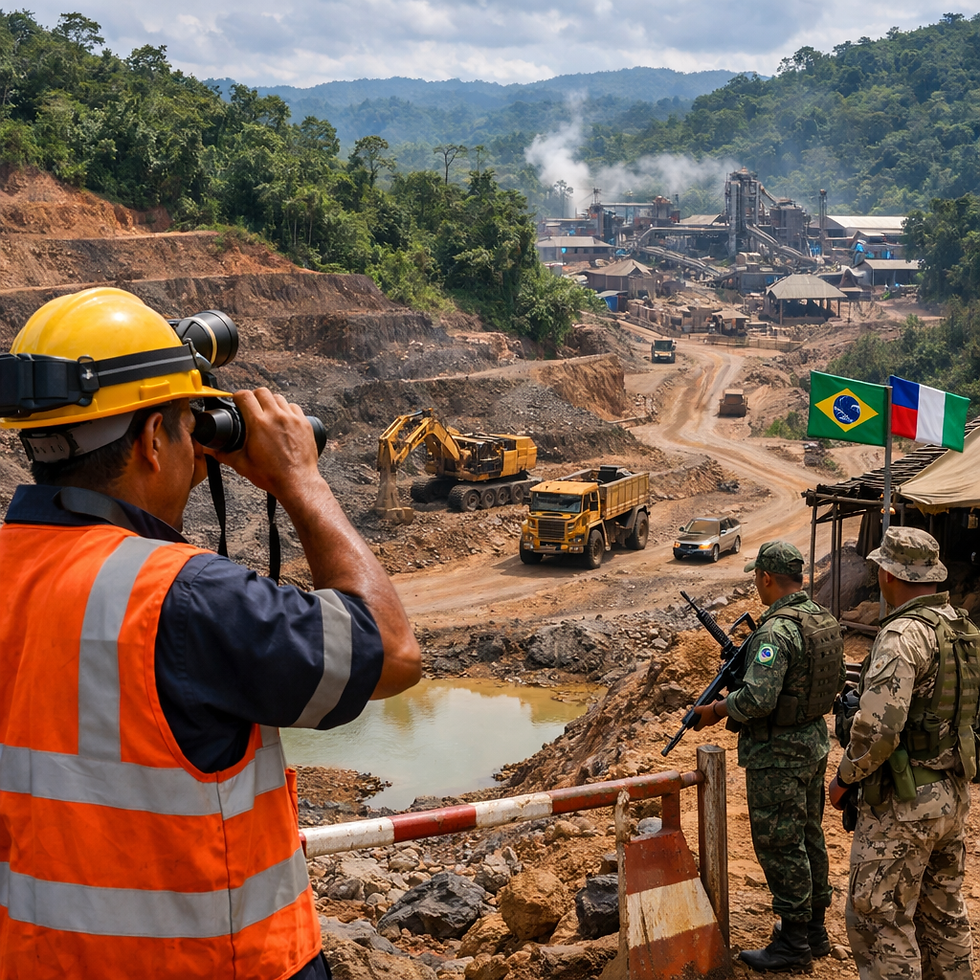
The global critical minerals market, currently valued at over $300 billion, is projected to more than double by 2035, with some projections indicating a quadrupling of demand by 2040. This insatiable appetite, driven by the electric vehicle revolution, renewable energy technologies, and advanced defense systems, places the Amazon’s vast, largely untapped reserves firmly in the crosshairs of international strategic interests. For entities tracking regional tenders on platforms like TendersGo , understanding this shift from a conventional mining narrative to a strategic resource and security narrative is paramount.
Brazil's Central Role in the Amazon Critical Minerals Boom
Brazil stands as the epicenter of Amazonian critical mineral activity, possessing significant known reserves and the most developed mining infrastructure within the basin. The country’s strategic importance was underscored by the 2025 announcement of Vale’s Novo Carajás Program, a monumental investment of approximately 70 billion reais, or $13.5 billion, through 2030. This initiative, championed by President Luiz Inácio Lula da Silva, aims to dramatically expand production of copper and high-grade iron ore in the Carajás region of Pará state. Such large-scale projects signal a clear pipeline for significant procurement needs, ranging from heavy machinery and processing equipment to environmental monitoring systems and logistics infrastructure.
The Carajás region, already a mining powerhouse, is experiencing intense exploration interest. A recent survey of mining records revealed 201 applications for copper, nickel, and manganese in the area. A striking 80 of these applications—roughly 40%—overlap directly with rural settlements. Applicants include mining giant Vale and its subsidiaries such as Vale Metais Básicos, Salobo Metais, and Mineração Onça Puma. This overlap is not accidental; a new norm published under the previous Bolsonaro administration now formally enables mineral extraction in agrarian reform areas. Under this regulation, mining companies must secure approval from the regional INCRA unit, which assesses compatibility with the National Agrarian Reform Program and establishes conditions for coexistence. While creating a formal pathway, this also elevates the potential for land disputes, social conflict, and complex compliance burdens for all parties involved.
Beyond Carajás, the Brazilian Amazon faces an immense backlog of over 7,700 pending applications to exploit energy transition minerals, according to an Igarapé Institute report. This backlog represents a substantial future pipeline for environmental licensing, social impact assessments, and subsequent procurement activities. Meanwhile, Brazilian authorities are grappling with a new wave of illegal extraction targeting rare earth elements. This illicit activity is directly linked to soaring global demand for these materials, essential components in electric vehicles, wind turbines, drones, and precision-guided military hardware. The dual challenge of formal expansion and unchecked illicit mining complicates governance and demands innovative solutions from security contractors, environmental consultancies, and technology providers.
Cross-Border Dynamics and Geopolitical Competition for Amazonian Resources
The Amazon Basin’s mineral wealth extends far beyond Brazil’s borders, encompassing Bolivia, Peru, Ecuador, Colombia, Venezuela, Guyana, Suriname, and French Guiana. This regional distribution means that mineral supply security cannot be viewed through a single-country lens; it is intrinsically linked to cross-border governance, criminal networks, and geopolitical competition. The United States, for instance, is actively seeking to diversify its critical mineral supply chains, aiming to reduce dependence on China. This strategic imperative is driving diplomatic efforts and financial commitments, such as the U.S. International Development Finance Corporation (DFC)'s $465 million financing for the Serra Verde rare earths mine in Brazil, setting a precedent for future Amazon-region critical minerals finance.
Expectations are high for a potential U.S.–Brazil rare earth agreement in the first half of 2026, which would likely trigger a cascade of downstream procurement opportunities related to processing, logistics, and stringent ESG compliance. The European Union is also deeply engaged, pursuing critical minerals deals with Brazil for copper, graphite, lithium, nickel, niobium, and rare earths. This European interest could translate into policy coordination, investment screening, and significant infrastructure financing, rather than solely trade agreements. Chinese firms, while facing increased scrutiny from Western powers, remain active across the mining and infrastructure value chains throughout South America, ensuring a complex, multi-polar competitive landscape for regional tenders.
In Bolivia, the lowland Amazon holds untapped deposits of tin and rare earths, alongside ongoing informal gold mining. Peru continues to grapple with illegal mining linked to organized crime and environmental degradation, with cross-border logistics routes flowing through its Amazonian territories. Colombia’s Vichada region is attracting interest for high-value minerals like tantalum, niobium, and gallium, while Ecuador’s mineral frontier remains politically sensitive, facing intense environmental and Indigenous-rights scrutiny. Venezuela’s governance weaknesses fuel elevated illicit mining and cross-border leakage risks, particularly with armed groups exploiting the resource-rich but poorly controlled borderlands. Even smaller nations like Guyana, Suriname, and French Guiana play strategically relevant roles in the broader Amazonian supply-chain mapping and exploration efforts.
Environmental Security and Supply Chain Fragility in 2026
The rapid acceleration of critical mineral extraction in the Amazon Basin in 2026 brings with it profound environmental and security implications. The region is increasingly described as potentially producing "sacrifice zones" where concentrated extraction leads to severe environmental harm. Core operational risks include widespread contamination of waterways, precipitous declines in fish populations, mercury pollution from artisanal gold mining, rampant deforestation, and encroachment on Indigenous lands. These risks are not merely localized; they represent systemic threats to the Amazon's ecological integrity and the livelihoods of its inhabitants.
Compounding these environmental dangers is the expansion of organized crime into remote supply corridors. In Colombia, Peru, and Venezuela, illegal mining is inextricably linked to organized crime and armed groups, thriving in areas of weak governance and facilitating illicit cross-border trade. This means that ensuring mineral supply security in the Amazon Basin cannot be separated from robust border enforcement, stringent anti-money laundering controls, sophisticated environmental monitoring, and meticulous Indigenous consultation and consent processes. International contractors offering solutions in satellite monitoring, geospatial intelligence, and anti-illicit mining systems will find significant demand. Development banks and international organizations are increasingly prioritizing projects that integrate security and environmental safeguards, creating a distinct market for specialized services.
The fragility of supply chains traversing these volatile regions is a major concern for global buyers. Ensuring the traceability of minerals from mine to market demands advanced technological solutions and robust governance frameworks. Procurement officials are looking for partners who can deliver not only extraction efficiency but also verifiable ethical sourcing and environmental stewardship. This shifts the focus of tenders from purely operational efficiency to a more holistic approach that incorporates social and environmental responsibility as fundamental components of project success.
Procurement Opportunities for International Suppliers
The dynamic landscape of the Amazon Basin in 2026 presents a diverse array of procurement opportunities for international suppliers across multiple sectors. The surge in both legal and illicit mining, coupled with heightened environmental and social concerns, necessitates specialized services and technologies. For companies utilizing TendersGo to track regional opportunities, key categories are emerging that extend beyond traditional mining equipment.
Initial exploration and assessment phases will continue to drive tenders for mine exploration services, geological surveys, and airborne geophysics. As projects advance, environmental impact assessments, tailings management solutions, and advanced water treatment and contamination remediation technologies will be in high demand. The sheer scale of the Amazon and the challenges of monitoring remote operations will create significant opportunities for satellite monitoring, geospatial intelligence, and drone-based surveillance systems. Furthermore, the need to combat illegal mining and secure supply chains will generate tenders for border surveillance, anti-illicit mining systems, and specialized security services. Companies with expertise in these areas, particularly those offering integrated solutions, will find a receptive market.
Infrastructure development remains a critical component. Upgrades to rail, road, and riverine logistics for mineral corridors will be essential to transport extracted resources efficiently and safely. This includes tenders for civil engineering, construction, and specialized transport equipment. As processing capabilities expand, there will be demand for processing and beneficiation plant equipment, alongside renewable power supply solutions for mining operations, reflecting a growing emphasis on sustainable energy sources. Buyers will include major mining firms like Vale and its subsidiaries, federal and state environmental authorities in Brazil, and mining regulators across the basin countries. Development finance-backed projects, often requiring stringent environmental and social compliance, will also be significant sources of tenders. Prospective suppliers should pay close attention to prequalification signals such as Indigenous consultation requirements, environmental licensing milestones, security and traceability compliance, anti-corruption clauses, and local content rules prevalent in Brazil and neighboring nations. Utilizing TendersGo with specific CPV/NAICS codes for these emerging categories can help identify relevant tenders efficiently.
Regulatory Frameworks and Compliance Burdens
Operating within the Amazon Basin's critical minerals sector in 2026 requires a deep understanding of evolving regulatory frameworks and significant compliance capabilities. Brazil's new norm allowing mining in agrarian reform areas, for example, necessitates a detailed request process with regional INCRA units, including an assessment of compatibility with the National Agrarian Reform Program. This creates a formal pathway but also imposes substantial compliance burdens and the need for expert navigation of local land tenure issues. Companies must demonstrate robust strategies for coexistence between mining activities and settlement communities, often requiring extensive social engagement and conflict resolution mechanisms.
Across the basin, federal and state environmental authorities are increasing their scrutiny. Environmental licensing processes are becoming more rigorous, demanding comprehensive impact assessments and detailed mitigation plans. Water management and remediation plans are particularly critical, given the high risk of contamination. International financing bodies, such as the DFC, are also embedding stringent environmental, social, and governance (ESG) criteria into their project funding. This means that firms seeking to participate in DFC-backed projects, or those aligned with EU critical minerals diplomacy, must demonstrate advanced capabilities in sustainable practices, biodiversity protection, and community engagement. Failure to meet these evolving standards can lead to project delays, financial penalties, and reputational damage.
Furthermore, the fight against illegal mining and associated organized crime is pushing for enhanced security and traceability compliance. Governments and international partners are seeking solutions that can ensure the provenance of minerals, combat illicit trade, and uphold human rights, particularly those of Indigenous communities. This includes anti-corruption measures, beneficial ownership disclosure requirements, and robust monitoring systems to prevent minerals from entering illegal supply chains. For procurement teams, this translates into a need for partners who can not only deliver technical expertise but also demonstrate unwavering commitment to ethical conduct and transparency. The strategic importance of critical minerals means that compliance is no longer a peripheral concern but a core component of project viability and international competitiveness. TendersGo users can set up alerts for tenders requiring specific certifications or compliance frameworks relevant to ESG and anti-corruption measures.
The Future of Amazonian Commodity Extraction Supply Chains
The trajectory of Amazonian commodity extraction supply chains in 2026 is one of increasing complexity, driven by global strategic demand and localized socio-environmental pressures. The critical minerals boom is fundamentally altering how resource extraction is perceived and managed across the nine basin jurisdictions. The conventional model of simply extracting and exporting raw materials is being challenged by the need for more secure, traceable, and responsibly sourced supply chains. This shift is generating demand for value-added services within the region, including local processing and beneficiation capabilities, which can create new economic opportunities but also require significant investment in infrastructure and technology.
The interplay between industrial expansion and illicit activities will continue to define the operational environment. Governments, often with international support, are investing in enhanced monitoring and enforcement capabilities to distinguish between legal and illegal operations. This includes advanced satellite imagery, ground-based surveillance, and intelligence-sharing initiatives across borders. For international contractors, this means opportunities in providing these critical security and monitoring technologies, as well as training and capacity building for local agencies. The emphasis is moving towards integrated solutions that combine technological prowess with a deep understanding of local socio-political dynamics.
Ultimately, the Amazon Basin is transforming into a strategic resource zone where economic development, environmental protection, and regional security are inextricably linked. The next wave of tenders will reflect this integrated approach, prioritizing projects that offer not just extraction efficiency but also robust monitoring, comprehensive compliance, effective logistics, and proactive remediation strategies. Companies that can demonstrate a holistic capability to navigate these complex challenges, while adhering to the highest standards of environmental and social governance, will be best positioned to seize the significant opportunities arising from the Amazon's critical minerals boom in the coming years. Tracking these nuanced opportunities through platforms like TendersGo , with its extensive filtering capabilities for specific sectors and compliance requirements, will be crucial for competitive advantage.





