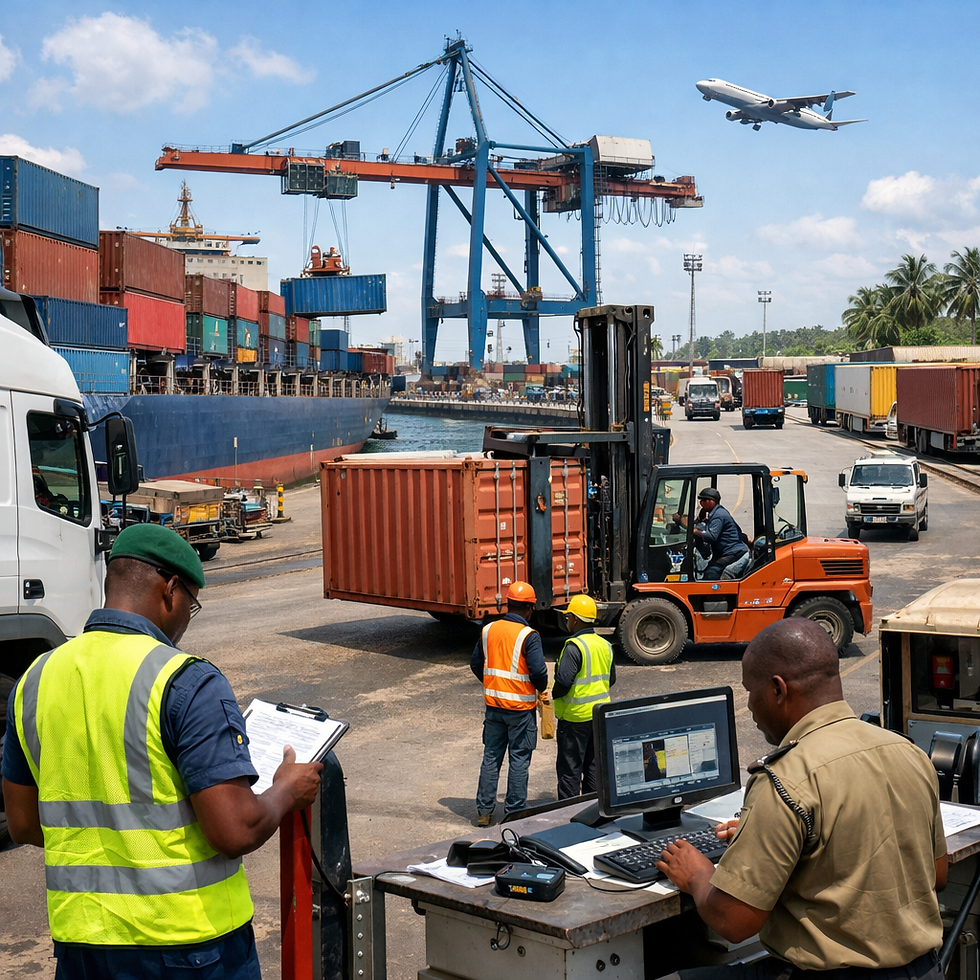
IGAD Trade Network Takes Shape as Cross-Border Commerce Expands

Aug 27
7 min read
IGAD Forges Ahead with Cross-Border Trade Network, Digital Infrastructure Opportunities Emerge Across East Africa The Intergovernmental Authority on Development (IGAD) is pushing forward with an ambitious regional trade agenda in 2026, signaling significant opportunities for international contractors, technology providers, and development consultants across East Africa. Key initiatives, including a new cross-border trade knowledge-sharing network, a five-year regional trade facilitation roadmap, and the operational launch of the Djibouti-Ethiopia-South Sudan-Uganda (DESSU) Corridor Authority, underscore a concerted effort to deepen economic integration and streamline commerce across Djibouti, Ethiopia, Kenya, Somalia, South Sudan, and Uganda. This strategic pivot towards formalized regional platforms and digital interoperability is set to generate a robust pipeline of procurement in border management systems, electronic customs solutions, and corridor infrastructure. The most immediate institutional development is the scheduled Consultative Meeting to Establish an IGAD Cross-Border Trade Knowledge-Sharing Network, slated for 20–21 August 2026 in Nairobi, Kenya. This meeting represents a clear institutional commitment by IGAD to formalize a regional platform for exchanging trader information, harmonizing border practices, and coordinating policy. Such a network will likely require significant investment in IT infrastructure, secure data exchange protocols, and training modules for national trade and customs officials. International firms specializing in knowledge management systems, secure network architecture, and capacity building for public sector entities should monitor developments closely. The establishment of this network is a direct response to the long-standing need for coherent, shared trade intelligence, which has historically been a bottleneck for efficient cross-border movement of goods and services within the IGAD region. The emphasis on knowledge sharing suggests a future demand for data analytics platforms that can process and disseminate real-time trade statistics, helping member states to identify and address bottlenecks proactively.
Regional Trade Facilitation Roadmap and Corridor Governance A critical framework guiding these regional efforts is the Horn of Africa Initiative’s trade facilitation roadmap, covering the period 2026–2031. This roadmap, validated in August 2026 by Djibouti, Ethiopia, Kenya, Somalia, and South Sudan, is structured around three distinct phases: Start-Up and Institutionalization, Delivery and Project Execution, and Review, Alignment, and Next-Generation Planning. The roadmap outlines 14 strategic objectives, with particular emphasis on digital interoperability, border management, corridor governance, integration of transport and logistics networks, and targeted support for small traders. This comprehensive approach indicates a sustained, multi-year commitment to modernizing trade infrastructure and processes. For international suppliers, this means a consistent demand for solutions that can integrate disparate national systems into a cohesive regional network. Opportunities will span from sophisticated customs IT integration projects to the deployment of electronic single windows and regional electronic cargo tracking systems. The focus on small traders also implies a need for user-friendly, accessible digital tools and simplified documentation processes that can be adopted at a grassroots level, potentially involving mobile-based solutions or localized training programs. Further solidifying the region’s commitment to structured trade facilitation is the establishment of the Djibouti-Ethiopia-South Sudan-Uganda (DESSU) Corridor Authority. Signed on 15 February 2026, this agreement between the four nations aims to coordinate trade, transport, and logistics along this vital economic artery. The Authority is slated to begin operations in early 2026, with immediate priorities including the setup of a secretariat, defining operational protocols, and creating a robust legal framework for corridor management and performance monitoring. This institutionalization of corridor governance marks a significant shift from ad hoc cooperation to a legally empowered entity responsible for optimizing one of Africa’s most critical trade routes. The DESSU Authority will require extensive technical assistance for its initial setup, including legal and institutional consulting, IT infrastructure for its secretariat, and systems for performance monitoring and data collection. Suppliers with expertise in public sector institutional development, logistics planning, and cross-border transport management systems will find substantial opportunities here. The Authority’s mandate suggests future tenders for infrastructure upgrades along the corridor, including weighbridges, logistics hubs, and potentially specialized transport equipment to enhance efficiency and reduce transit times.
Policy Framework and Digital Procurement Signals The overarching policy framework remains the IGAD Regional Trade Policy 2022–2026, which continues to drive regional integration efforts. This policy explicitly prioritizes the simplification and harmonization of trade documents, the implementation of Electronic Single Windows, and the deployment of electronic customs management systems across member states. It also champions regional electronic cargo tracking, harmonized cross-border freight regulations, sharing of official trade statistics, and the establishment of One-Stop Border Posts (OSBPs). Furthermore, the policy stresses customs enforcement and anti-smuggling cooperation, all designed to create a more open regional economic space and support broader obligations under the African Continental Free Trade Area (AfCFTA). The advancements in Mutual Recognition Agreements (MRAs) in August 2026 further underscore a regional move towards mutual acceptance of standards, inspection results, and conformity assessments, which will simplify trade flows and reduce non-tariff barriers. These policy directives translate directly into a strong signal for digital trade infrastructure procurement. The region is actively moving towards digital interoperability between national systems, which will generate demand for sophisticated customs IT integration solutions, single-window platforms, advanced cargo-tracking systems, and comprehensive border post modernization projects. Data-sharing platforms will be crucial for facilitating the seamless exchange of trade information between Djibouti, Ethiopia, Kenya, Somalia, South Sudan, and Uganda. International firms with proven track records in these areas should be actively tracking regional developments. TendersGo, with its extensive database covering 220+ countries and 145 languages, provides an essential tool for identifying these emerging opportunities, allowing users to set up unlimited alerts for specific CPV/NAICS codes related to customs modernization, logistics technology, and border infrastructure across the IGAD region. For instance, contractors can find tenders for "customs software" or "border security equipment" specifically within East African countries by using precise search filters on app.tendersgo.com.
Opportunities in Border Modernization and Small Trader Facilitation The emphasis on border and customs modernization is a recurring theme across all 2026 IGAD initiatives. The planned digital interoperability between national systems implies a future demand for a range of technological solutions. This includes integrated customs IT systems that can communicate across borders, sophisticated single-window solutions that consolidate all regulatory requirements into one digital portal, and advanced cargo-tracking systems that provide real-time visibility of goods in transit. Furthermore, border post modernization efforts will likely encompass not only IT upgrades but also physical infrastructure improvements to enhance efficiency and security. Data-sharing platforms will be paramount to facilitate the seamless exchange of trade information, ensuring transparency and reducing delays. International suppliers of these technologies and services, particularly those with experience in developing countries, are well-positioned to meet this growing demand. The specifics of these projects will often be detailed in tender documents, which can be accessed and reviewed using TendersGo's PDF viewer feature, providing critical insights into project scope and requirements. Beyond large-scale infrastructure, the 2026–2031 roadmap explicitly highlights the importance of simplifying cross-border trade for small traders. This suggests upcoming policy actions and procurement opportunities focused on reducing documentation burdens, streamlining border fees, and simplifying procedures for informal and micro traders. Such initiatives could involve the development of simplified digital platforms for trade declarations, targeted training programs for small business owners on new trade regulations, and the introduction of mobile payment solutions for border fees. Development consultants and technology firms specializing in inclusive digital solutions and capacity building for small and medium-sized enterprises (SMEs) should anticipate tenders in this area. The focus on small traders indicates a commitment to ensuring that the benefits of regional integration are widely distributed, fostering economic growth at all levels of the supply chain. This approach also aligns with broader development goals of poverty reduction and economic empowerment within the IGAD member states.
Procurement Pipeline and Institutional Landscape While no specific tender notices were identified in the available research, the 2026 agenda clearly points to a robust pipeline of procurement opportunities. These will predominantly be in critical areas such as corridor secretariat setup, advanced border management systems, electronic customs and single-window platforms, and sophisticated trade data-sharing systems. Furthermore, there will be significant demand for cargo tracking technology, border post upgrades, and comprehensive training and technical assistance for customs and trade officials across Djibouti, Ethiopia, Kenya, Somalia, South Sudan, and Uganda. The institutional landscape for these procurements is well-defined. IGAD serves as the primary regional coordinator, setting the overarching policy and facilitating cross-border collaboration. The Horn of Africa Initiative is the main platform for the five-country trade facilitation roadmap, orchestrating the implementation of its 14 strategic objectives. Crucially, the newly established DESSU Corridor Authority will be the specific institutional body responsible for managing and procuring services and goods related to the Djibouti-Ethiopia-South Sudan-Uganda trade corridor. This clear delineation of roles allows international bidders to target their efforts effectively. The DESSU Corridor Authority, in particular, represents a new focal point for procurement. Its initial operational phase will require a range of services, from IT consultants to establish its digital backbone, to legal experts to finalize its operational protocols and legal framework. Subsequent phases will likely involve tenders for infrastructure projects along the corridor, such as road and rail upgrades, logistics parks, and communication systems to support real-time data exchange. The regional commitment to One-Stop Border Posts (OSBPs) across the IGAD region also suggests ongoing opportunities for civil engineering firms, IT providers, and security system integrators. These OSBPs aim to consolidate border clearance processes, requiring integrated facilities and advanced technology to improve efficiency. For companies seeking to expand their footprint in East Africa, monitoring the procurement announcements from these specific regional bodies, accessible through platforms like tendersgo.com/country/djibouti-tenders or tendersgo.com/country/ethiopia-tenders, will be essential for identifying and responding to upcoming tenders. The strategic interpretation for international businesses is clear: the strongest tender signals in 2026 are centered around digital trade infrastructure, border systems, and the institutionalization of corridor governance, rather than solely large-scale physical construction projects. The policy architecture is demonstrably moving towards interoperable customs and trade systems across the Horn of Africa, which will consistently generate procurement opportunities for software, equipment, consulting services, training programs, and targeted border modernization works. The combination of IGAD’s knowledge-sharing network and the DESSU Authority signals a significant regional shift from policy dialogue to tangible, operational trade facilitation mechanisms. This evolution creates a fertile ground for international expertise and technology, as the region seeks to enhance its competitiveness and integrate more deeply into global supply chains. Businesses that can offer innovative, scalable solutions for digital transformation and cross-border logistics will find the IGAD region a dynamic and promising market in the coming years. Regular monitoring of tender announcements on platforms like app.tendersgo.com, with specific filters for "IGAD" or individual member states, will be crucial for capturing these opportunities.