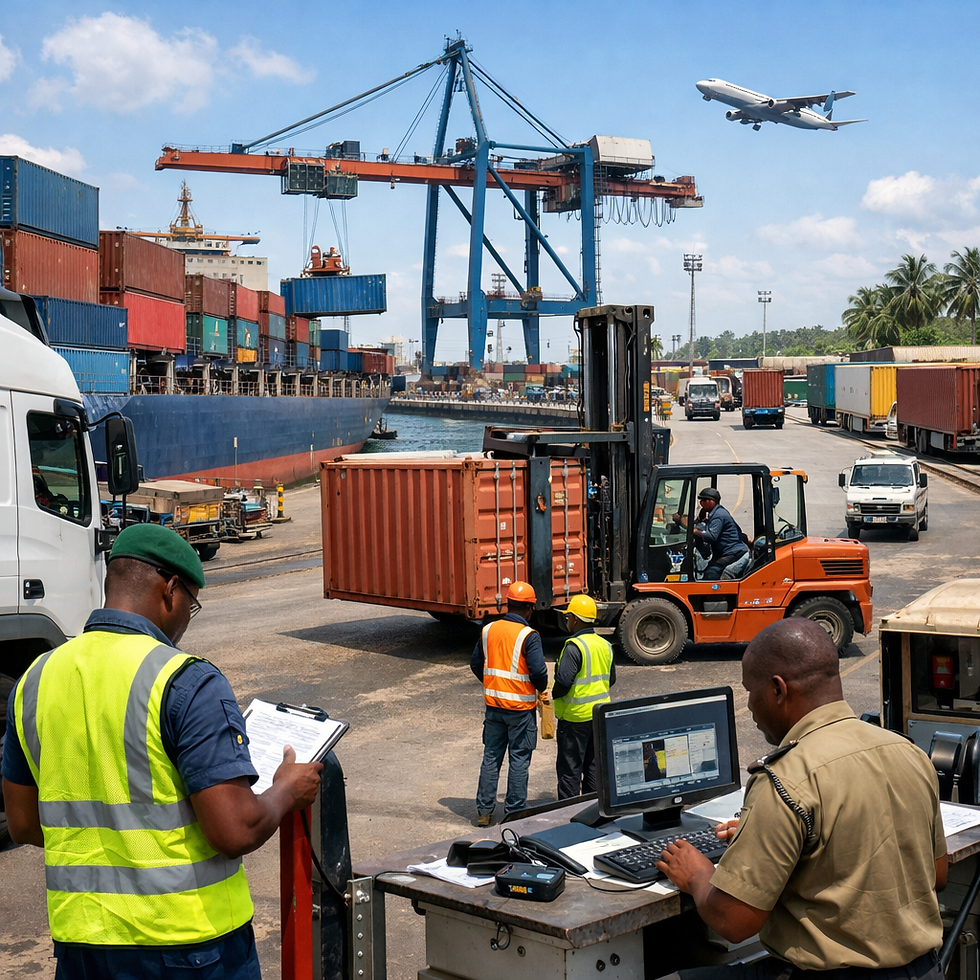
Mesoamerica’s Cargo Pass Could Redraw the Region’s Trade Corridors

The Inter-American Development Bank (IDB) has unveiled its ambitious Cargo Pass initiative, a USD 130 million program designed to fundamentally reshape freight movement across Mesoamerica's vital Pacific Corridor. This regional logistics overhaul, announced in February 2026, targets border modernization, enhanced traceability, and expanded cross-border logistics services, promising annual economic benefits exceeding USD 700 million. For international contractors, export managers, and development consultants, understanding the nuances of this program, its geographic scope, and the significant procurement implications is paramount as the region gears up for a major infrastructure and digital transformation.

The Cargo Pass initiative forms a critical component of the IDB's broader "América en el Centro" agenda, which coordinated 12 operations totaling USD 2.2 billion in 2025 across the region. This strategic push comes at a time when Mesoamerica faces pressing needs for infrastructure development and trade facilitation. The Pacific Corridor, stretching from Mexico through Panama, currently handles nearly 70% of regional cargo and an even higher 90% of Central America’s freight, underscoring its pivotal role in the region's economic arteries. The program's focus on this high-traffic spine indicates a targeted approach to unlock significant efficiencies and reduce the substantial logistics costs that have long hampered regional competitiveness.
Mesoamerica Cargo Pass Border Modernization 2026: A Regional Imperative
Mesoamerica's economic future hinges on its ability to move goods efficiently across borders. Current regional reporting highlights low pavement coverage and persistent border bottlenecks as major impediments, driving up logistics costs significantly. The Cargo Pass initiative directly addresses these challenges by focusing on technology, infrastructure upgrades, and regulatory harmonization at key border crossings. Guatemala, Honduras, and El Salvador, in particular, are slated for high-impact transport and logistics projects along the Pacific Corridor, supported by an IDB technical cooperation grant of USD 800,000, complemented by USD 120,000 in counterpart funds, totaling USD 920,000 for studies and investment planning.
The ambition extends beyond mere upgrades; Cargo Pass aims to forge a cohesive regional logistics ecosystem. This means not just faster border crossings but also improved connectivity between production centers and consumption markets across Mexico, Belize, Guatemala, Honduras, El Salvador, Nicaragua, Costa Rica, Panama, and the Dominican Republic. The regional integration body SIECA has consistently flagged border bottlenecks and customs coordination as major constraints, and the IDB's program directly responds to these long-standing issues. International firms specializing in border management systems, customs digitalization, and logistics software will find significant opportunities as the program progresses towards its more complete proposal expected in the first quarter of 2027.
Procurement under Cargo Pass will likely be phased, starting with technical studies and moving into digital systems and physical infrastructure. This staggered approach provides multiple entry points for international suppliers. For example, the initial stages will likely involve tenders for feasibility studies, environmental impact assessments, and detailed engineering designs for border infrastructure improvements. Companies with expertise in these areas, particularly those with experience in cross-border projects, should monitor announcements from the IDB, national customs authorities, and transport ministries across the beneficiary countries. TendersGo, with its extensive coverage of 220+ countries, offers a crucial platform for tracking these early-stage opportunities, allowing users to set up alerts for specific CPV codes related to logistics planning and border infrastructure consulting via app.tendersgo.com .
Central America Pacific Corridor Logistics Investment: Redefining Trade Flows
The Central American Pacific Corridor, already the primary conduit for regional trade, is poised for a significant transformation under the Cargo Pass initiative. The sheer volume of cargo, nearly 90% of Central America's total, underscores the economic impact of any improvements along this route. The IDB's investment is not just about incremental gains; it is about creating a truly regional logistics network that integrates ports, roads, and border facilities more seamlessly. This ambitious undertaking is part of a broader regional logistics master plan that estimates Central America requires USD 52.488 billion in logistics infrastructure investment by 2035 to maintain global competitiveness.
One notable development reinforcing this regional shift is the memorandum advancing a Central American railway corridor between Panama and Costa Rica, reported in 2026. While separate from Cargo Pass, this rail initiative signals a broader regional commitment to diversifying logistics options and reducing transport costs. The convergence of road and potential rail upgrades highlights a strategic effort to redefine the region's logistics geography. For companies specializing in railway infrastructure, signaling systems, and intermodal logistics, these parallel developments present a compounding opportunity. The IDB's focus on high-impact transport and logistics projects in countries like Guatemala, Honduras, and El Salvador will translate into numerous tenders for road construction, bridge rehabilitation, and port enhancements. These projects will require significant procurement of heavy machinery, construction materials, and specialized engineering services.
The procurement landscape for the Pacific Corridor logistics investment will be diverse. Expect calls for bids on civil works, such as upgrading existing road networks and constructing new bypasses around congested urban areas. Modernization of port facilities, particularly those along the Pacific coast, will also be a key area, involving tenders for cargo handling equipment, dredging services, and port management software. Furthermore, the emphasis on a "regional logistics ecosystem" implies significant investment in digital infrastructure. This includes tenders for integrated logistics platforms, supply chain visibility tools, and potentially even blockchain-based solutions for enhanced traceability. Firms offering these digital solutions, with proven track records in complex multi-country implementations, should actively monitor the IDB and national procurement portals. TendersGo’s advanced search functionalities, accessible at search.tendersgo.com , enable precise filtering by country, sector, and procurement entity, making it easier to identify these specific opportunities.
Mesoamerica Cross-Border Trade Facilitation Project: Digitalization and Harmonization
The Cargo Pass initiative places a strong emphasis on digitalization and harmonization to streamline cross-border trade. The IDB's strategy acknowledges that physical infrastructure alone is insufficient without parallel advancements in customs procedures, regulatory frameworks, and information exchange. The program's design explicitly targets the reduction of border delays through the implementation of advanced IT systems and interoperable platforms. This focus on "customs digitalization logistics costs" is a direct response to the inefficiencies that currently plague regional trade, often resulting in lengthy queues and increased expenses for businesses.
One of the core components of this cross-border trade facilitation will be the deployment of logistics traceability tools. These systems will allow for real-time tracking of cargo, improving transparency and reducing opportunities for fraud or delays. Furthermore, customs interoperability platforms are crucial for ensuring that data can flow seamlessly between national customs agencies across the region. This not only speeds up processing times but also enhances data accuracy and facilitates coordinated enforcement efforts. Companies specializing in customs management software, electronic data interchange (EDI) solutions, and supply chain visibility platforms will find a receptive market within the Cargo Pass framework. The phased rollout, with a more complete proposal expected in Q1 2027, suggests that early tenders for technical specifications and system architecture will precede larger implementation contracts.
The regional integration body SIECA will play a significant role in coordinating the harmonization of customs procedures and regulations, acting as a crucial counterpart to the IDB. This multi-country approach necessitates solutions that can adapt to varying national legal frameworks while maintaining regional consistency. Therefore, international providers with experience in developing and implementing scalable, flexible digital solutions for government agencies will be particularly well-positioned. The procurement of these services will likely involve competitive bidding processes managed by the IDB, national customs authorities in countries like Costa Rica, Panama, and El Salvador, and potentially SIECA itself. Staying informed about the specific requirements and timelines for these digital transformation projects will be critical for potential bidders. TendersGo provides dedicated country pages, such as country.tendersgo.com/costa-rica-tenders , which aggregate procurement notices directly from national sources, ensuring that international firms do not miss crucial announcements.
Panama Costa Rica Regional Freight Corridor 2026: Expanding Connectivity
While the Cargo Pass initiative focuses broadly on the Central American Pacific Corridor, specific developments highlight targeted efforts to enhance connectivity between key economies. The reported 2026 advancements in a Central American railway corridor memorandum between Panama and Costa Rica exemplify the region's commitment to expanding freight options beyond road transport. This bilateral effort, though distinct from the IDB's Cargo Pass, aligns perfectly with the broader objective of reducing logistics costs and improving transit times across the isthmus. Panama's explicit inclusion in the regional logistics modernization push underscores its strategic importance as a global trade hub.
The railway corridor project, if it progresses, would introduce a new dimension to regional freight logistics, offering an alternative or complementary mode of transport to the heavily utilized road network. Such a development would open up significant procurement opportunities for railway construction, rolling stock, signaling and telecommunications systems, and railway operations and maintenance services. The synergy between road and rail projects could create integrated multimodal logistics hubs, further enhancing the region's attractiveness for international trade and investment. Companies with expertise in large-scale infrastructure projects, particularly those involving cross-border railway development, should closely monitor the progress of this memorandum and any subsequent calls for studies or project implementation.
Beyond the railway, the Cargo Pass initiative will also drive investment in existing road infrastructure connecting Panama and Costa Rica, ensuring seamless flow along the Pacific Corridor. This includes improvements to border facilities at Paso Canoas, a critical crossing point, and upgrades to national road sections leading to and from major ports. International construction firms, civil engineering consultants, and suppliers of road construction materials will find numerous tenders emerging from these efforts. The IDB's involvement provides a structured procurement framework, often adhering to international best practices, which can be advantageous for experienced global players. Staying ahead of these opportunities requires constant monitoring of procurement notices from both national transport ministries and the IDB itself. TendersGo’s sector-specific insights, available at sectors.tendersgo.com/transportation-tenders , can help businesses identify relevant tenders within the transportation and logistics sectors.
Procurement Pathways: Opportunities for International Suppliers
The phased implementation of the Cargo Pass program, with a more detailed proposal due in Q1 2027, presents a structured yet evolving procurement landscape. International suppliers should anticipate a multi-pronged approach to tenders, covering technical studies, digital systems, and physical corridor upgrades. The IDB, as the lead financing institution, will be a central point of contact for many high-value contracts, particularly those requiring international competitive bidding. However, national customs authorities and transport ministries in countries like Guatemala, Honduras, El Salvador, Costa Rica, and Panama will also issue tenders for country-specific components of the program.
Near-term sourcing opportunities will likely focus on the design and planning phases. This includes tenders for consulting services related to border facility design, traffic flow analysis, environmental impact assessments, and detailed engineering for road and logistics hub improvements. Furthermore, the emphasis on digital transformation means early tenders for IT architecture design, cybersecurity assessments for customs systems, and feasibility studies for regional data exchange platforms. Companies with strong capabilities in these advisory and technical services should position themselves now to influence the early stages of project development. TendersGo provides unlimited alerts and AI summaries for all tenders, ensuring that even complex multi-document bids are easily digestible for international teams, accessible at tendersgo.ai .
As the program moves into its implementation phase, expected after 2027, the procurement scope will broaden considerably. This will include significant contracts for the construction and rehabilitation of border posts, road infrastructure, and logistics parks. Suppliers of specialized equipment, such as advanced cargo scanners, weigh-in-motion systems, and integrated surveillance technologies for border security, will find substantial demand. The digitalization component will lead to tenders for the development and deployment of customs management systems, electronic single window platforms, and regional traceability solutions. Given the multi-country nature of Cargo Pass, solutions that can be adapted and integrated across different national systems will be highly valued.
The involvement of regional bodies like SIECA further emphasizes the need for solutions that support harmonization and interoperability. International firms with experience in implementing regional IT solutions or large-scale public sector digital transformations will be strong contenders. Procurement officials from these agencies will be looking for robust, scalable, and secure systems that can withstand the demands of high-volume cross-border trade. Companies should also consider partnerships with local firms to enhance their understanding of regional specificities and to meet any local content requirements that may arise. TendersGo's B2B marketplace facilitates such collaborations, connecting international bidders with potential local partners and sub-contractors.
Long-Term Vision: Integrating Regional Logistics and Trade
The Cargo Pass initiative is not merely a collection of isolated projects; it is a strategic intervention designed to fundamentally alter Mesoamerica's trade dynamics for the next decade and beyond. The regional logistics master plan, targeting infrastructure needs through 2035, provides the long-term context for these investments. The anticipated USD 52.488 billion in logistics infrastructure investment required by Central America before 2035 highlights the sustained demand for international expertise and capital in the region. Cargo Pass, with its USD 130 million direct investment and over USD 700 million in projected annual economic benefits, represents a significant down payment on this larger vision.
The program's emphasis on creating a "regional logistics ecosystem" reflects a holistic approach to trade facilitation. This includes not only physical and digital infrastructure but also regulatory reforms and capacity building within national institutions. The goal is to reduce frictions in trade flows, making the region more competitive for both internal trade and international commerce. This will attract further foreign direct investment and stimulate economic growth across the beneficiary countries. For international investors, this enhanced logistics environment translates into reduced operational costs and improved market access, making the region a more attractive destination for manufacturing and distribution hubs.
The long-term implications for international contractors and suppliers are substantial. As the region's logistics capabilities improve, demand for related services will grow. This includes everything from warehousing and distribution solutions to freight forwarding and cold chain logistics. The IDB's focus on integrating regional transportation strategies and national logistics plans means that future tenders will likely be aligned with a coherent, long-term vision. Companies that can demonstrate a commitment to the region and offer sustainable, innovative solutions will be well-positioned to capitalize on these enduring opportunities. Monitoring the progress of Cargo Pass and its integration within the broader 2035 logistics master plan will provide invaluable insights for strategic business development. TendersGo, as the world's largest tender search engine, remains the essential tool for tracking every tender opportunity emerging from this transformative regional initiative.