BIMSTEC Pushes Maritime Transport Pact Into Regional Trade Reality

The Bay of Bengal Initiative for Multi-Sectoral Technical and Economic Cooperation (BIMSTEC) has officially ushered in a new era for regional trade logistics integration with the entry into force of its Maritime Transport Cooperation Agreement (AMTC) in 2026. This pivotal development, confirmed by the BIMSTEC Secretariat, establishes a concrete framework for BIMSTEC port operations, customs, and shipping coordination across a critical maritime corridor. The AMTC, now legally binding for Bhutan, India, Myanmar, and Thailand, marks a significant step beyond political declarations, creating tangible opportunities for international contractors, export managers, and business development teams targeting cross-border opportunities in South and Southeast Asia.

The AMTC’s operationalization in May 2026, following Myanmar’s ratification, signals a clear intent among the ratifying member states to harmonize legal and operational procedures for maritime transport. This initiative aims to reduce bottlenecks that have historically hampered the smooth movement of goods and services within the Bay of Bengal. For international suppliers and consultants, this translates into a demand for advanced port infrastructure, streamlined customs technologies, and enhanced shipping logistics, all driven by the agreement’s mandate to improve efficiency and connectivity. The TendersGo platform, with its extensive coverage of 220+ countries and all sectors, offers a vital resource for tracking these emerging opportunities, particularly through its regional intelligence section at continents.tendersgo.com , providing detailed alerts for countries like India, Thailand, and Myanmar.
BIMSTEC Maritime Transport Cooperation Agreement 2026: A New Legal Framework
The Agreement on Maritime Transport Cooperation (AMTC) was initially signed on April 3, 2025, during the 20th BIMSTEC Ministerial Meeting in Bangkok. Described by the BIMSTEC Secretariat as a key maritime connectivity milestone, its journey to legal reality was contingent on a specific ratification threshold. This threshold was met on May 13, 2026, when Myanmar deposited its instrument of ratification, becoming the fourth member state to do so. India was the first country to ratify the agreement, followed by Bhutan and Thailand. This sequence of ratifications underscores a shared commitment among these four nations to operationalize a coordinated approach to maritime trade.
The AMTC is designed to remain valid for five years, with an automatic renewal clause for another five years unless formally denounced by a party. This five-year cycle provides a stable planning horizon for governments and private sector entities looking to invest in long-term infrastructure and service contracts. The agreement’s core objective is to enhance port efficiency, streamline customs procedures, and improve shipping links. This directly impacts the demand for port modernization projects, digital customs solutions, and advanced logistics planning services across the Bay of Bengal. Organizations monitoring procurement trends can utilize TendersGo’s advanced search functionalities, including CPV/NAICS codes, to identify relevant tenders released by port authorities and maritime ministries in the ratifying nations.
While Bangladesh, Nepal, and Sri Lanka have not yet become parties to the operative pact, their eventual accession would significantly broaden the agreement's reach and impact. Bhutan’s parliamentary process, which recorded unanimous support for the agreement, highlights the national-level recognition of its strategic importance. The Bhutanese government explicitly linked the AMTC to its broader connectivity ambitions, including the Gelephu Mindfulness City project, by improving access to maritime facilities through neighboring states. This regional perspective is crucial for international firms seeking to understand the full scope of potential projects and partnerships, extending beyond immediate port infrastructure to inland logistics and multimodal transport corridors.
Operationalizing the Pact: India's Role and Regional Initiatives
India has emerged as the most active implementation hub for the AMTC thus far, demonstrating a clear strategic focus on leveraging the agreement for regional integration. The 2nd BIMSTEC Ports Conclave, hosted in India, served as a platform to operationalize the AMTC and widen cooperation in maritime trade, logistics, cruise tourism, and skill development. This proactive stance by India signals a pipeline of potential projects and initiatives, ranging from port upgrades to specialized training programs. International consultants specializing in maritime economics and port management will find opportunities in feasibility studies and technical assistance assignments emanating from these initiatives.
A significant development in this regard is India's announcement of a BIMSTEC Sustainable Maritime Transport Centre. This center will operate under the Indian Ocean Centre of Excellence for Sustainable Maritime Transport (IOCE-SMarT) at the Maritime Training Institute in Powai, Mumbai. The establishment of such a specialized institution is a direct response to the AMTC’s mandate for improved coordination and capacity building. This center is expected to generate a steady stream of procurement notices for training modules, technology transfer programs, and consultancy services aimed at standardizing maritime practices across the region. Companies offering solutions in maritime digitalization, environmental sustainability for shipping, and port security will find this center a key point of contact for future collaborations.
The institutional and political context surrounding the AMTC positions it as a major outcome of the Bangkok Vision 2030 process, closely linked to the 6th BIMSTEC Summit. The BIMSTEC Secretary General emphasized that the pact should increase intra-BIMSTEC trade, travel, and tourism by improving maritime connectivity in the Bay of Bengal. This broader vision suggests that while immediate procurement might focus on port infrastructure and customs systems, the long-term implications include opportunities in cruise line development, tourism infrastructure, and cross-border logistics services that facilitate greater movement of people and goods. TendersGo’s comprehensive database allows users to filter tenders by specific sectors, enabling targeted searches for these diverse opportunities across the BIMSTEC member states.
Procurement Implications for Port Operations, Customs, and Shipping
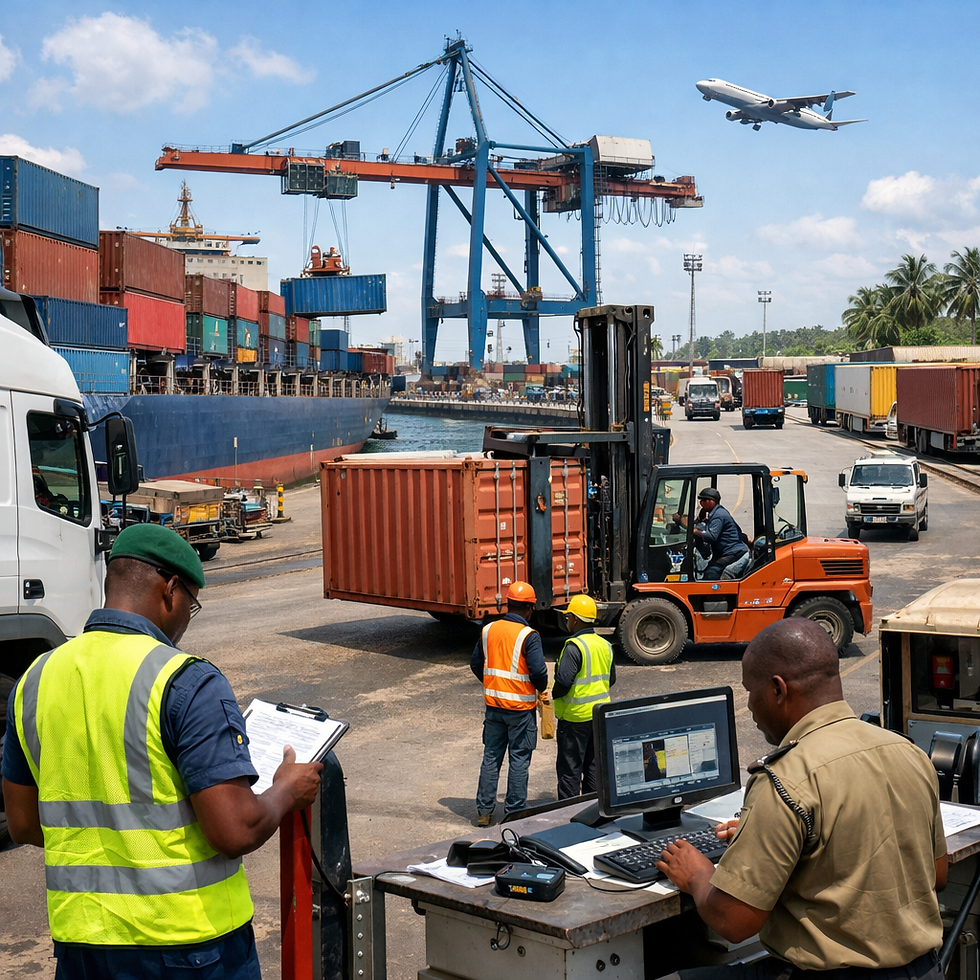
The AMTC's entry into force creates an immediate demand for harmonized legal and operational procedures in maritime transport, directly impacting procurement in several key areas. The agreement explicitly focuses on enhancing port efficiency, streamlining customs procedures, and improving shipping links. This translates into concrete tender opportunities for port modernization, including upgrades to cargo handling equipment, digital port management systems, and expanded berthing facilities. International contractors with expertise in port engineering, automation, and logistics technology will find a receptive market in the ratifying countries, particularly India, Thailand, and Myanmar.
Customs procedures represent another significant area for procurement. The AMTC’s objective to streamline customs operations will necessitate investment in advanced customs IT systems, electronic data interchange (EDI) platforms, and capacity building for customs officials. This includes demand for software solutions for cargo tracking, risk management, and expedited clearance processes. Companies specializing in trade facilitation software, customs consulting, and training programs for border agencies should actively monitor procurement portals of the respective customs authorities and maritime ministries. TendersGo’s AI-powered search features can assist in identifying these specialized tenders by filtering for keywords such as "customs automation," "port digitalization," and "maritime security."
Shipping coordination, a core tenet of the AMTC, will drive procurement in areas such as vessel traffic management systems (VTMS), navigational aids, and maritime communication infrastructure. Enhanced coordination also implies a need for standardized shipping documentation and improved information sharing platforms among port authorities. Furthermore, the agreement's focus on investment in shipping lanes and coastal logistics hubs suggests opportunities for dredging projects, channel maintenance, and the development of multimodal logistics parks near port areas. Firms involved in marine construction, logistics park development, and specialized shipping services should prepare for forthcoming tenders in these domains. The TendersGo platform ( app.tendersgo.com ) provides unlimited alerts and B2B marketplace features, enabling businesses to stay informed about these diverse and geographically dispersed opportunities.
Regional Connectivity and Trade Facilitation News
The AMTC is not merely a standalone agreement; it is a critical component of a broader regional push for enhanced connectivity and trade facilitation. While BIMSTEC has not yet published a regional trade-volume uplift attributable to the AMTC, the official language frames the pact as a mechanism to unlock smoother movement of goods, deeper economic integration, and investment in logistics infrastructure. This narrative is crucial for understanding the long-term trajectory of procurement opportunities. The agreement provides the legal basis for future port-led development and regional maritime logistics integration, rather than immediately altering tariff rates or customs duties.
The Bay of Bengal shipping network forms the immediate operational core, where port access and customs harmonization can lower costs for cargo moving between India’s eastern coast, Bangladesh, Myanmar, Sri Lanka, and Thailand. This geographical focus implies a direct impact on the tender landscape within these countries. For instance, port authorities in Chennai, Kolkata, Chittagong, Yangon, and Laem Chabang are likely to see increased activity related to upgrades and capacity expansion. The agreement's emphasis on harmonizing procedures also creates a demand for consulting services related to regulatory alignment and policy implementation across multiple jurisdictions.
Beyond the direct maritime sector, the AMTC also supports landlocked member states like Bhutan and Nepal by improving their access to maritime facilities through neighboring states. Bhutan’s parliamentary debate explicitly linked the agreement to its broader connectivity ambitions. This suggests potential for procurement in multimodal transport solutions, inland container depots (ICDs), and road/rail links connecting these landlocked nations to the Bay of Bengal ports. International development banks and agencies, often involved in financing such regional infrastructure projects, will be key sources of tender information. TendersGo’s ability to track tenders from development banks and government procurement officials makes it an indispensable tool for businesses targeting these complex, cross-border projects. The TendersGo AI summaries feature can further expedite the identification of relevant project details and requirements.
Monitoring Implementation Architecture and Future Opportunities
While no specific USD budget for AMTC implementation or a formal BIMSTEC implementation roadmap with budget lines has been publicly released, the verified information points to clear areas for future procurement. The most procurement-relevant actions will likely involve port modernization, shipping digitalization, training and capacity-building programs, and feasibility or technical assistance assignments linked to AMTC implementation. The establishment of the IOCE-SMarT-linked Maritime Transport Centre in Mumbai is the clearest named institution likely to generate future technical work, workshops, standards support, and coordination assignments.
Companies should closely monitor announcements from India’s Ministry of Ports, Shipping and Waterways, the Port Authority of Thailand, and Myanmar’s Department of Marine Administration. These national agencies will be instrumental in translating the AMTC’s provisions into actionable projects and procurement notices. Furthermore, the BIMSTEC Secretariat itself will be a source of implementation updates and calls for proposals related to regional coordination and capacity building initiatives. The absence of a specific tender ID or loan number at this stage does not diminish the future potential; rather, it indicates an early-stage environment where proactive engagement and intelligence gathering are paramount.
The next likely evidence to watch includes port authority notices, maritime ministry circulars, and BIMSTEC Secretariat implementation updates from India, Bangladesh, Thailand, Myanmar, Bhutan, Nepal, and Sri Lanka. These official communications will provide critical details on specific projects, funding allocations, and procurement timelines. International firms can set up customized alerts on TendersGo ( search.tendersgo.com ) using keywords relevant to maritime transport, customs, and port infrastructure, ensuring they receive timely notifications as these opportunities emerge across the BIMSTEC region. The PDF viewer feature on TendersGo also allows for direct access and review of tender documents, facilitating rapid assessment of project requirements and submission deadlines.
Strategic Engagement for International Contractors and Suppliers
The entry into force of the AMTC presents a strategic window for international contractors, export managers, and business development teams to position themselves within the evolving BIMSTEC regional trade landscape. The agreement’s focus on harmonizing legal and operational procedures for maritime transport will drive demand for a wide array of goods and services, from advanced port equipment to sophisticated customs software and specialized consulting expertise. Understanding the distinct roles of the ratifying members—Bhutan, India, Myanmar, and Thailand—and the broader aspirations of the non-ratifying states is essential for developing targeted engagement strategies.
For firms specializing in port infrastructure, opportunities will arise in the expansion and modernization of existing ports along the Bay of Bengal, particularly in India and Thailand, which possess significant maritime trade volumes. This includes tenders for dredging, berth construction, crane procurement, and the installation of intelligent port management systems. Companies offering digital solutions for customs and logistics will find a growing market in all member states seeking to streamline their trade processes and enhance efficiency. The emphasis on skill development and capacity building, particularly through initiatives like the BIMSTEC Sustainable Maritime Transport Centre, opens avenues for educational institutions, training providers, and technical assistance consultants.
Furthermore, the long-term vision of increased intra-BIMSTEC trade, travel, and tourism suggests a broader scope for investment in related sectors. This could include infrastructure for cruise tourism, coastal shipping services, and multimodal logistics corridors connecting inland areas to major ports. Strategic partnerships with local companies in BIMSTEC member states will be crucial for navigating regulatory environments and understanding local market dynamics. By leveraging platforms like TendersGo, which covers 145 languages and provides detailed country-specific tender information, international businesses can effectively identify, track, and respond to the procurement opportunities arising from the AMTC’s implementation, thus contributing to and benefiting from the Bay of Bengal’s emerging maritime trade reality.